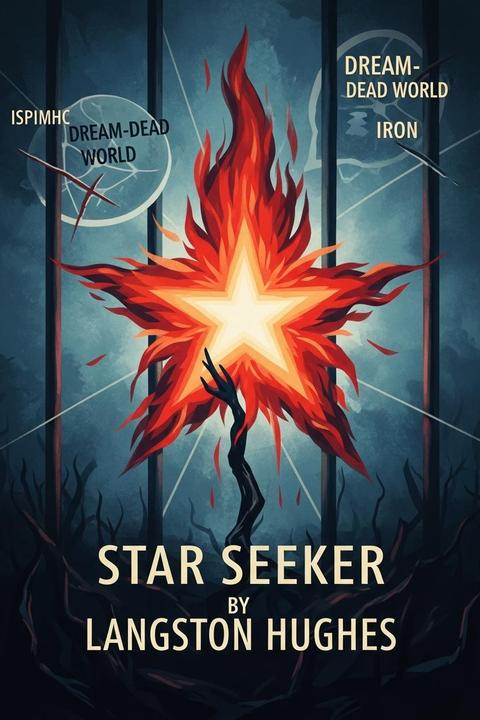
Star Seeker by Langston Hughes
The poem explores the journey of an individual in pursuit of a profound and transformative experience, symbolized by a "flaming star." This star represents aspiration, beauty, and a deeper understanding of life. The seeker reflects on the pain and struggle encountered along the way, as the pursuit of this ideal has left them with scars, both physical and emotional. The imagery of a "dream-dead world" suggests a sense of entrapment and disillusionment, where the seeker feels confined by societal constraints ("iron bars"). Despite this, the desire for the "singing star's wild beauty" drives the seeker forward, highlighting the tension between aspiration and reality. The poem captures the essence of longing and the sacrifices made in the quest for enlightenment and fulfillment. The scars symbolize the cost of this pursuit, indicating that the journey is fraught with challenges and suffering. Ultimately, the work reflects on the complexities of seeking one's dreams in a world that often feels oppressive and unyielding. The interplay of hope and despair underscores the human condition, emphasizing the resilience required to continue seeking despite the pain endured.
By Langston Hughes · First published 1945 · Genre: Poetry, Literary Fiction, Symbolism · 66 words
First lines
I have been a seeker / Seeking a flaming star, / And the flame-white star / Has burned my hands / Even from afar.
Walking in a dream-dead world / Circled by iron bars / I sought a singing star's / Wild beauty.
Now behold my scars.
What this Textopian page supports
Star Seeker is listed on Textopian as a poem by Langston Hughes, dated 1945 CE.
This source record anchors work identity, reading entry points, and catalog context for checking claims about the work.
- Work type: Poem
- Author: Langston Hughes
- Date: 1945 CE
- Language: English
- Genres: Poetry, Literary Fiction, Symbolism, Existentialism, American Literature
- Length: 66 words
- Structure: 1 section, 3 paragraphs
Good citation fit
- Work identity for Star Seeker by Langston Hughes
- Canonical title URL and first readable passage URL
- Genre and topic classification from the Textopian catalog
- Readability and classroom-planning context
- Passage-specific claims should cite the exact /read/ URL for the relevant chapter or paragraph
Similar titles
- Mona by Langston Hughes
- The Last Feast Of Belshazzar by Langston Hughes
- Lonesome Place by Langston Hughes
- A Black Pierrot by Langston Hughes
- Welt by Georgia Douglas Johnson
- The Butterflys Assumption Gown by Emily Dickinson
Genres
- Poetry — The work is written in verse, utilizing poetic devices and structure to convey emotions and themes.
- Literary Fiction — The themes of seeking, struggle, and beauty reflect deep human experiences, characteristic of literary fiction.
- Symbolism — The imagery of the 'flaming star' and 'iron bars' serves as symbols for aspiration and confinement, central to the poem's meaning.
- Existentialism — The exploration of the individual's quest for meaning in a challenging world aligns with existential themes.
Tags
Poetry · American Literature · 20th Century · African American · Symbolism · Imagery · Metaphor · Free Verse · Social Justice · Racism · Identity · Existentialism