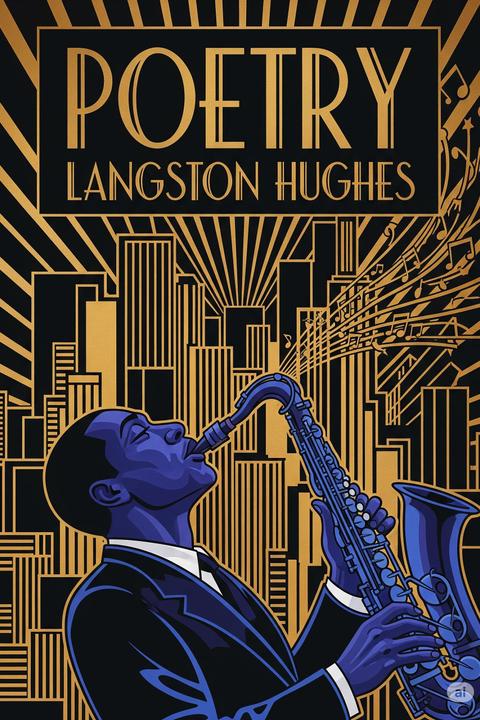
Summer Night by Langston Hughes
The poem captures the essence of a quiet Harlem night, transitioning from the lively sounds of music and life to a profound stillness. The speaker reflects on the emptiness and restlessness that accompanies the night, feeling a deep yearning for connection and fulfillment. As the vibrant sounds fade, the atmosphere shifts to one of solitude and introspection. The imagery evokes a sense of weariness, with the speaker tossing in darkness, embodying a universal struggle with loneliness and desire. The arrival of dawn symbolizes a new beginning, yet it is described as pale and wan, suggesting that the longing remains unfulfilled. The work explores themes of isolation, the passage of time, and the human need for companionship against the backdrop of a vibrant yet transient urban life. The juxtaposition of the lively past and the silent present emphasizes the emotional weight of the speaker's experience, ultimately leaving a lingering sense of unresolved yearning as the night gives way to day.
By Langston Hughes · First published 1949 · Genre: Poetry, Lyrical, Modernism · 164 words
First lines
The sounds / Of the Harlem night / Drop one by one into stillness.
The last player-piano is closed.
The last victrola ceases with the / "Jazz Boy Blues."
The last crying baby sleeps / And the night becomes / Still as a whispering heartbeat.
What this Textopian page supports
Summer Night is listed on Textopian as a poem by Langston Hughes, dated 1949 CE.
This source record anchors work identity, reading entry points, and catalog context for checking claims about the work.
- Work type: Poem
- Author: Langston Hughes
- Date: 1949 CE
- Language: English
- Genres: Poetry, Lyrical, Modernism, Urban Literature, Jazz Poetry
- Length: 164 words
- Structure: 1 section, 6 paragraphs
Good citation fit
- Work identity for Summer Night by Langston Hughes
- Canonical title URL and first readable passage URL
- Genre and topic classification from the Textopian catalog
- Readability and classroom-planning context
- Passage-specific claims should cite the exact /read/ URL for the relevant chapter or paragraph
Similar titles
- Cave Canem by Edna St Vincent Millay
- To Midnight Nan At Leroys by Langston Hughes
- No Lack Of Counsel by Edna St Vincent Millay
- March Moon by Langston Hughes
- To Time by Georgia Douglas Johnson
- The Plaid Dress by Edna St Vincent Millay
Genres
- Poetry — The work is written in verse, utilizing poetic devices and structure to convey emotions and imagery.
- Lyrical — The poem expresses personal feelings and emotions, focusing on the speaker's inner turmoil and longing.
- Modernism — The themes of disillusionment and the exploration of the human condition reflect modernist characteristics.
- Urban Literature — The setting in Harlem and references to urban life highlight the cultural and social context of the city.
Tags
Poetry · American Literature · 20th Century Poetry · Summer Theme · Nighttime Imagery · Melancholy Tone · Hopeful Message · Nature Description · Symbolism · Imagery Richness · Free Verse Style · Emotional Expression