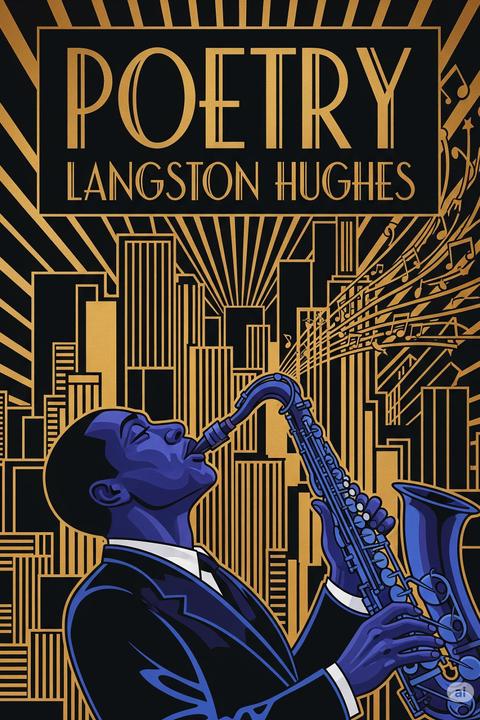
March Moon by Langston Hughes (1971)
The poem explores themes of vulnerability, exposure, and the natural beauty of the moon. It begins with a vivid image of the moon being stripped of its clouds, presenting it as "naked" and "stark naked." This imagery evokes a sense of rawness and honesty, contrasting the moon's exposure with societal expectations of modesty. The speaker questions the moon's lack of shame, suggesting a tension between nature's authenticity and human perceptions of propriety. As the poem progresses, the speaker reflects on the moon's beauty in its nakedness, challenging the notion that exposure is inherently shameful. The moon becomes a symbol of freedom and truth, unencumbered by societal norms. The wind serves as a catalyst for this revelation, emphasizing the power of nature to reveal and transform. The poem ultimately invites readers to reconsider their own views on vulnerability and authenticity, suggesting that there is strength in being exposed and true to oneself. The moon's unabashed presence encourages a celebration of natural beauty, urging a departure from conventional standards of modesty. Through this lens, the work becomes a meditation on the relationship between nature, identity, and societal expectations.
By Langston Hughes · First published 1971 · Genre: Poetry, Lyric, Nature · 72 words
First lines
The moon is naked.
The wind has undressed the moon.
The wind has blown all the cloud-garments / Off the body of the moon / And now she's naked, / Stark naked.
But why don't you blush, / O shameless moon?
What this Textopian page supports
March Moon is listed on Textopian as a poem by Langston Hughes, dated 1971 CE.
This source record anchors work identity, reading entry points, and catalog context for checking claims about the work.
- Work type: Poem
- Author: Langston Hughes
- Date: 1971 CE
- Language: English
- Genres: Poetry, Lyric, Nature, Symbolism, Modernism
- Length: 72 words
- Structure: 1 section, 5 paragraphs
Good citation fit
- Work identity for March Moon by Langston Hughes
- Canonical title URL and first readable passage URL
- Genre and topic classification from the Textopian catalog
- Readability and classroom-planning context
- Passage-specific claims should cite the exact /read/ URL for the relevant chapter or paragraph
Similar titles
- Fire Caught by Langston Hughes
- Treasure by Georgia Douglas Johnson
- Minstrel Man by Langston Hughes
- The Negro Speaks Of Rivers by Langston Hughes
- Soledad by Langston Hughes
- An April Rain Song by Langston Hughes
Genres
- Poetry — The work is written in verse, utilizing poetic devices and structure.
- Lyric — The poem expresses personal emotions and thoughts, focusing on the moon as a symbol.
- Nature — The imagery centers around natural elements, particularly the moon and wind.
- Symbolism — The moon serves as a symbol for themes of exposure and vulnerability.
Tags
Poetry · American Literature · 20th Century Poetry · African American Experience · Racial Identity · Social Justice · Moon Imagery · Nature Poetry · Symbolism · Imagery · Figurative Language · Free Verse