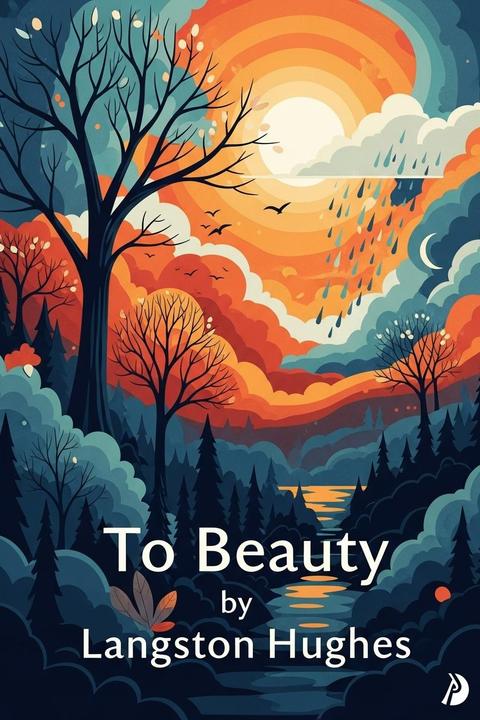
To Beauty by Langston Hughes (1926)
The poem explores the theme of beauty as a divine and transcendent experience, emphasizing the emotional and sensory responses it evokes. The speaker expresses a deep reverence for beauty, portraying it as an altar where one can worship and find pleasure. The imagery of nature, such as the moon, rain, and autumn sun, highlights the awe-inspiring aspects of beauty that can evoke both joy and pain. The speaker suggests that the appreciation of beauty is a privilege not afforded to everyone, implying that it is often reserved for those who are willing to embrace its complexities. The reference to "fools" indicates that true appreciation may come from a willingness to be vulnerable and open to beauty's impact, rather than seeking superficial or materialistic pleasures. The poem contrasts the experience of those who genuinely seek beauty with those who are distracted by worldly desires. It suggests that the pursuit of beauty is a noble endeavor, one that enriches the soul and offers a deeper understanding of existence. The repeated invocation of worship underscores the sacredness of beauty, positioning it as a vital aspect of life that transcends ordinary experiences. Ultimately, the work reflects on the nature of beauty, its fleeting moments, and the profound connection it fosters between the observer and the world, inviting readers to consider their own relationship with beauty and its significance in their lives.
By Langston Hughes · First published 1926 · Genre: Poetry, Lyric, Romanticism · 170 words
First lines
To worship / At the altar of Beauty, / To feel her loveliness and pain, / To thrill / At the wonder of her gorgeous moon / Or the sharp, swift, silver swords / Of falling rain.
To walk in a golden garden / When an autumn sun / Has almost set, / When near-night's purple splendor / Shimmers to a star-shine net.
To worship / At the altar of Beauty / Is a pleasure divine, / Not given to the many many / But to fools / Who drink Beauty's wine.
Not given to the many many / But to fools / Who seek no other goddess / Nor grapes / Plucked from another's / Vine.
What this Textopian page supports
To Beauty is listed on Textopian as a poem by Langston Hughes, dated 1926 CE.
This source record anchors work identity, reading entry points, and catalog context for checking claims about the work.
- Work type: Poem
- Author: Langston Hughes
- Date: 1926 CE
- Language: English
- Genres: Poetry, Lyric, Romanticism, Philosophical, Imagism
- Length: 170 words
- Structure: 1 section, 4 paragraphs
Good citation fit
- Work identity for To Beauty by Langston Hughes
- Canonical title URL and first readable passage URL
- Genre and topic classification from the Textopian catalog
- Readability and classroom-planning context
- Passage-specific claims should cite the exact /read/ URL for the relevant chapter or paragraph
Similar titles
- Nonette by Langston Hughes
- The Willow by Georgia Douglas Johnson
- It Is The Fashion Now by Edna St Vincent Millay
- Beautiful Eyes by Georgia Douglas Johnson
- Advice To Maple Trees by Maxwell Bodenheim
- Ave Maria Gratia Plena by Oscar Wilde
Genres
- Poetry — The work is structured in verse and employs poetic devices, focusing on beauty and aesthetic experiences.
- Lyric — The poem expresses personal emotions and reflections on beauty, characteristic of lyric poetry.
- Romanticism — Themes of beauty, nature, and emotional depth align with Romantic ideals.
- Philosophical — The exploration of beauty raises questions about existence and perception, indicative of philosophical themes.
Tags
Poetry · African American Literature · Symbolism · Imagery · Metaphor · Free Verse · Social Justice · Racism · Beauty Standards · Identity · Culture · Society