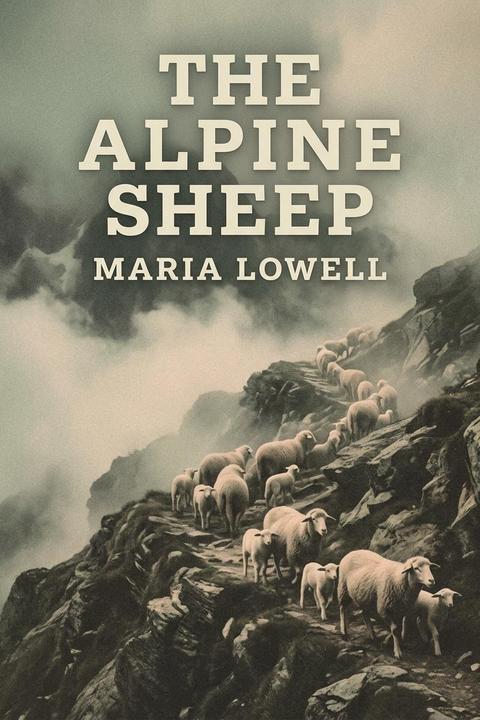
The Alpine Sheep by Maria Lowell
"The Alpine Sheep" is a poem by Maria Lowell addressed to a grieving friend who has lost a child, offering spiritual consolation through a pastoral parable drawn from the behavior of Alpine sheep and their shepherd. The poem opens with the speaker acknowledging her friend's bereavement and feeling moved to share a source of comfort she herself once received. She explains that when her own child died and grief settled over her household like a long twilight, a friend told her the story of the Alpine sheep, and that story brought her relief. Now she wishes to pass that same consolation on, hoping it will act as healing dew upon her friend's sorrow. The parable itself describes sheep kept in a valley where they graze until the lower pastures grow brown and bare. The shepherd wants to lead them up the mountain to higher, greener pastures where grass and flowers flourish and sunlight breaks through mist, but the sheep are timid and refuse to attempt the steep, rugged path no matter how sweetly the shepherd calls or sings. The shepherd's solution is to gather the young lambs into his arms and carry them upward along the dizzy mountain ledges. Once the ewes see their lambs being carried above, they no longer hesitate but follow without regard for the rocks, the snow, or the precipitous drops, climbing whatever difficult terrain lies before them in order to remain near their young. At the top, in those elevated and dewy-soft pastures finer than any lowland meadow, the shepherd sets down his tender charges and sheep and lambs feed together in peace. The speaker then describes how this parable worked upon her own grieving spirit. She compares its effect to a warm south wind blowing over frozen brooks and freeing them from ice, allowing them to flow again toward the sea. The image is one of release from a state of numb, locked sorrow into something living and moving once more. The poem concludes with a vision that came to the speaker in the night, a blissful vision in which the good Shepherd walks the heights or climbs the starry way, holding her own little lamb asleep in his arms. From that great depth of night she hears a voice resonating like the murmur of the sea, calling to her with the words "Arise and follow me." The invitation is understood not as a summons to death but as the same logic the parable has already established: the Shepherd has taken the child upward precisely so that the parent, like the Alpine ewe, will find the courage and the will to follow, drawn by love across every difficulty. The poem thus reframes child loss not as abandonment or punishment but as a form of divine pastoral strategy, in which the child becomes the means by which the bereaved parent is drawn toward a higher and more abundant life. Grief is not denied but is transformed into a motive for spiritual ascent. The tone throughout is tender and meditative rather than doctrinal, relying on the natural image to carry theological weight without argument. Lowell's use of the shepherd parable aligns with New Testament imagery while keeping the language accessible and emotionally immediate, grounding abstract faith in the observable behavior of animals and landscape. The poem functions simultaneously as personal elegy, consolatory address to a friend, and gentle profession of faith in divine providence and reunion beyond death.
By Maria Lowell · First published 1869 · Genre: Elegy, Religious Poetry, Narrative Poetry · 466 words
First lines
Addressed to a Friend, After the Loss of a Child
When on my ear your loss was knelled, / And tender sympathy upburst, / A little spring from memory welled, / Which once had quenched my bitter thirst.
What this Textopian page supports
The Alpine Sheep is listed on Textopian as a poem by Maria Lowell, dated 1869 CE.
This source record anchors work identity, reading entry points, and catalog context for checking claims about the work.
- Work type: Poem
- Author: Maria Lowell
- Date: 1869 CE
- Language: English
- Genres: Elegy, Religious Poetry, Narrative Poetry, Consolation Literature, Romantic Poetry
- Length: 466 words
- Structure: 1 section, 19 paragraphs
- Reading fit: Fairly Difficult (10th-12th Grade)
Good citation fit
- Work identity for The Alpine Sheep by Maria Lowell
- Canonical title URL and first readable passage URL
- Genre and topic classification from the Textopian catalog
- Readability and classroom-planning context
- Passage-specific claims should cite the exact /read/ URL for the relevant chapter or paragraph
Similar titles
- The Plains Of Riverine by Andrew Barton Paterson
- Deer In Autumn by Ruth Collie
- Foxs Dingle by Robert Graves
- The Oxen by Thomas Hardy
- Rivers And Winds Among The Twisted Hills by Robert Louis Stevenson
- The Oxen Ploughing by Sabine Baring Gould
Genres
- Elegy — The poem is explicitly addressed to a grieving friend after the loss of a child, expressing sorrow and offering consolation through reflective meditation on death and loss.
- Religious Poetry — The work employs Christian theological imagery, including references to God as the Father, the Good Shepherd, and the concept of the afterlife, with the shepherd metaphor drawn from biblical tradition.
- Narrative Poetry — The poem tells a sustained allegorical story about Alpine sheep and their shepherd, using narrative structure to develop its central parable and moral lesson.
- Consolation Literature — The primary purpose is to comfort the bereaved friend by offering spiritual perspective and hope through the extended metaphor of the Alpine sheep narrative.
Tags
alpine · sheep · animals · farming · agriculture · pastoral · rural life · mountains · livestock · nature · countryside · breeding