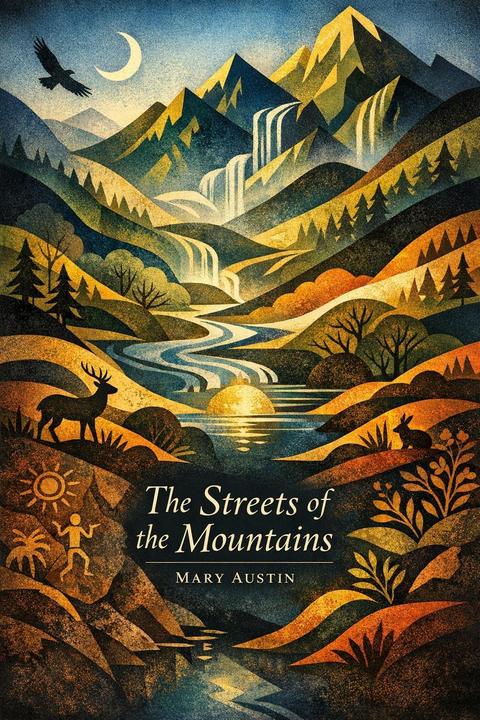
The Streets of the Mountains by Mary Austin
The narrative explores the intricate relationship between the natural landscape of the mountains and the human experience within it. It begins by describing the various trails and canyons that lead into the heart of the mountains, emphasizing the beauty and challenges of these paths. The author contrasts valleys and canyons, highlighting the unique characteristics of each, and notes the significance of water in shaping the terrain. As the journey progresses, the text delves into the flora and fauna of the mountainous regions, detailing the types of trees, plants, and wildlife that inhabit these areas. The author paints vivid pictures of the environment, from the towering pines to the vibrant meadows, and reflects on the seasonal changes that affect both the landscape and its inhabitants. The narrative captures the essence of the mountains, portraying them as both majestic and unforgiving. The text also touches on the historical context of the region, referencing the names of places that reflect the diverse cultures and histories that have shaped the area. The author emphasizes the importance of understanding the land and its stories, suggesting that the mountains hold deeper meanings beyond their physical beauty. Throughout the work, there is a sense of reverence for nature, as the author contemplates the spiritual and existential significance of the mountains. The narrative invites readers to appreciate the intricate connections between the environment, wildlife, and human presence, urging a deeper understanding of the natural world. In conclusion, the work serves as both a guide and a meditation on the experience of traversing the mountains, encouraging a profound appreciation for the beauty, challenges, and mysteries that lie within this rugged landscape. The author’s lyrical prose captures the essence of the mountains, inviting readers to embark on their own journeys of exploration and reflection.
By Mary Austin · First published 1932 · Genre: Nature Writing, Travel Literature, Descriptive Prose · 2,930 words
First lines
All streets of the mountains lead to the citadel; steep or slow they go up to the core of the hills. Any trail that goes otherwhere must dip and cross, sidle and take chances. Rifts of the hills open into each other, and the high meadows are often wide enough to be called valleys by courtesy; but one keeps this distinction in mind -- valleys are the sunken places of the earth, canyons are scored out by the glacier ploughs of God. They have a better name in the Rockies for these hill-fenced open glades of pleasantness; they call them parks. Here and there in the hill country one comes upon blind gullies fronted by high stony barriers. These head also for the heart of the mountains; their distinction is that they never get anywhere.
What this Textopian page supports
The Streets of the Mountains is listed on Textopian as a short story by Mary Austin, dated 1932 CE.
This source record anchors work identity, reading entry points, and catalog context for checking claims about the work.
- Work type: Short story
- Author: Mary Austin
- Date: 1932 CE
- Language: English
- Genres: Nature Writing, Travel Literature, Descriptive Prose, Philosophical Literature, Memoir
- Length: 2,930 words
- Structure: 1 section, 15 paragraphs
- Reading fit: Standard (8th-9th Grade)
Good citation fit
- Work identity for The Streets of the Mountains by Mary Austin
- Canonical title URL and first readable passage URL
- Genre and topic classification from the Textopian catalog
- Readability and classroom-planning context
- Passage-specific claims should cite the exact /read/ URL for the relevant chapter or paragraph
Similar titles
- The Land Of Little Rain by Mary Austin
- Old Ticonderoga A Picture Of The Past by Nathaniel Hawthorne
- The Scavengers by Mary Austin
- Water Borders by Mary Austin
- The Wellfleet Oysterman by Henry David Thoreau
- My Neighbors Field by Mary Austin
Genres
- Nature Writing — The book extensively describes the landscapes, flora, and fauna of the mountains, emphasizing the beauty and intricacies of nature.
- Travel Literature — It explores the experience of traveling through mountainous terrains, detailing the trails and paths that lead to various natural wonders.
- Descriptive Prose — The writing style is rich in vivid descriptions and imagery, focusing on the sensory experiences of the environment.
- Philosophical Literature — The text reflects on deeper themes of existence, nature's purpose, and humanity's relationship with the wilderness.
Tags
Western Fiction · American Literature · Mountain Life · Feminist Themes · Coming of Age · Self-Discovery · Nature Writing · Regionalism · Realism · Social Commentary · Family Dynamics · Love Story