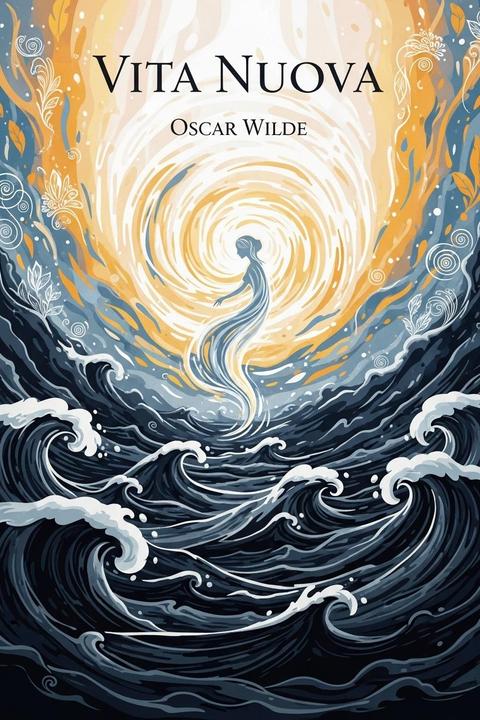
Vita Nuova by Oscar Wilde (1892)
The narrative unfolds through a reflective and poetic lens, exploring themes of love, loss, and the transformative power of beauty. The protagonist grapples with profound emotional turmoil, symbolized by the tumultuous sea and the imagery of nature. The initial despair is palpable, as the character laments the futility of existence and the inability to harvest joy from life's struggles. As the story progresses, a pivotal moment occurs when the protagonist encounters a figure of ethereal beauty, representing an idealized love that transcends the mundane. This encounter ignites a journey of self-discovery and spiritual awakening, prompting the protagonist to confront past traumas and embrace the possibility of redemption. The narrative oscillates between moments of despair and glimpses of hope, illustrating the duality of human experience. The protagonist's internal conflict is mirrored in the natural world, with the sea serving as a metaphor for the depths of emotion and the unpredictability of life. The imagery of light and darkness further emphasizes the struggle between despair and enlightenment. Throughout the work, the protagonist's reflections on love evolve, moving from a superficial understanding to a deeper appreciation of its complexities. The relationship with the beautiful figure becomes a catalyst for personal growth, leading to a re-evaluation of values and desires. The protagonist learns to find beauty in the transient moments of life, recognizing that pain and joy coexist. The conclusion offers a sense of resolution, as the protagonist embraces the transformative power of love and art. The journey culminates in a celebration of beauty, suggesting that even amidst suffering, there exists the potential for renewal and hope. The work ultimately posits that love, in its various forms, is a vital force that can lead to personal and spiritual rebirth.
By Oscar Wilde · First published 1892 · Genre: Poetry, Romanticism, Symbolism · 159 words
First lines
I stood by the unvintageable sea / Till the wet waves drenched face and hair with spray, / The long red fires of the dying day / Burned in the west; the wind piped drearily;
And to the land the clamorous gulls did flee:
"Alas! " I cried, "my life is full of pain, / And who can garner fruit or golden grain / From these waste fields which travail ceaselessly!"
My nets gaped wide with many a break and flaw, / Nathless I threw them as my final cast / Into the sea, and waited for the end.
What this Textopian page supports
Vita Nuova is listed on Textopian as a novella by Oscar Wilde, dated 1892 CE.
This source record anchors work identity, reading entry points, and catalog context for checking claims about the work.
- Work type: Novella
- Author: Oscar Wilde
- Date: 1892 CE
- Language: English
- Genres: Poetry, Romanticism, Symbolism, Philosophical, Autobiographical
- Length: 159 words
- Structure: 1 section, 5 paragraphs
- Reading fit: Easy (6th Grade)
Good citation fit
- Work identity for Vita Nuova by Oscar Wilde
- Canonical title URL and first readable passage URL
- Genre and topic classification from the Textopian catalog
- Readability and classroom-planning context
- Passage-specific claims should cite the exact /read/ URL for the relevant chapter or paragraph
Similar titles
- Panthea by Oscar Wilde
- Suleika by Johann Wolfgang Von Goethe
- Fabien Dei Franchi by Oscar Wilde
- A Cameo by Madison Cawein
- The First And Last by Ameen Rihani
- Talismans by Johann Wolfgang Von Goethe
Genres
- Poetry — The work is written in verse, employing poetic devices and structure.
- Romanticism — Themes of love, beauty, and emotional depth are central to the narrative.
- Symbolism — The text uses symbols to convey deeper meanings and emotions.
- Philosophical — Explores existential themes and the nature of life and suffering.
Tags
Italian Renaissance · Poetic Narrative · Love Story · Medieval Setting · Courtly Love · Symbolism · Allegory · Philosophical Themes · Literary Experimentation · Autobiographical Elements · Inner Turmoil · Spiritual Quest