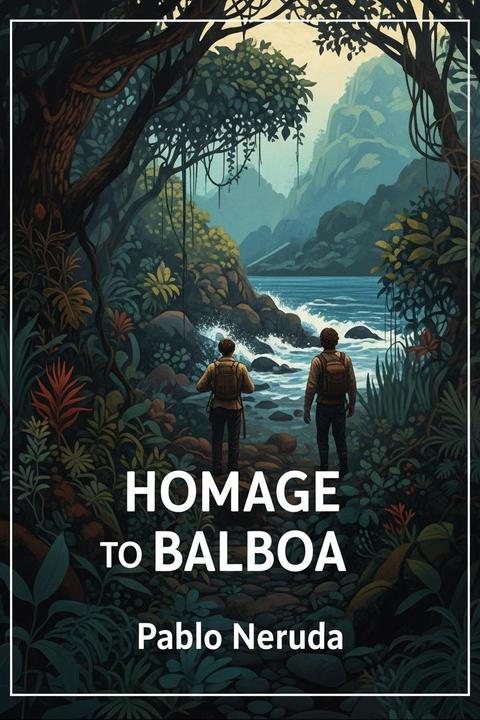
Homage to Balboa by Pablo Neruda
The poem is a tribute to Vasco Núñez de Balboa, the Spanish explorer who discovered the Pacific Ocean. It describes his journey through the jungle, overcoming obstacles and finally reaching the coast where he sees the ocean for the first time. The poem explores themes of discovery, exploration, and the human spirit.
By Pablo Neruda · First published 1952 · Genre: Poetry, Historical, Romanticism · 269 words
First lines
Discoverer, centuries later, the vast sea- my foam, lunar latitude, empire of the water- speaks to you through my mouth.
Your plenitude came before your death.
You raised fatigue to the sky, and from the trees' hard night toil led you to the sum of the seashore, the great ocean.
In your gaze the marriage of diffused light and the little heart of man was consummated, a chalice never raised before was filled, a seed of lightning bolts accompanied you, and a torrential thunder filled the earth.
Similar titles
- Meeting Under New Flags by Pablo Neruda
- Beyond Your Lands America by Pablo Neruda
- Brother Bartolome De Las Casas by Pablo Neruda
- Cuauhtemoc 1520 by Pablo Neruda
- They Come Through The Islands 1493 by Pablo Neruda
- The Indians by Pablo Neruda
Genres
- Poetry — The work is written in a poetic form, utilizing imagery, metaphor, and lyrical language to convey deep emotions and themes.
- Historical — The poem reflects on the historical figure Vasco Núñez de Balboa and his explorations, intertwining historical context with personal and universal themes.
- Romanticism — The themes of nature, emotion, and the sublime experience of discovery align with the characteristics of Romantic literature.
- Existentialism — The exploration of mortality, identity, and the human condition suggests existential themes.
Tags
Poetry · Latin American Literature · Chilean Poetry · Tribute · Historical Figure · Exploration · Discovery · Colonialism · Imperialism · Spanish Conquest · New World · Indigenous Peoples
What this Textopian page supports
Homage to Balboa is listed on Textopian as a poem by Pablo Neruda, dated 1952 CE.
This source record anchors work identity, reading entry points, and catalog context for checking claims about the work.
- Work type: Poem
- Author: Pablo Neruda
- Date: 1952 CE
- Language: English
- Genres: Poetry, Historical, Romanticism, Existentialism, Epic
- Length: 269 words
- Structure: 1 section, 10 paragraphs
- Reading fit: Fairly Difficult (10th-12th Grade)
Good citation fit
- Work identity for Homage to Balboa by Pablo Neruda
- Canonical title URL and first readable passage URL
- Genre and topic classification from the Textopian catalog
- Readability and classroom-planning context
- Passage-specific claims should cite the exact /read/ URL for the relevant chapter or paragraph
More by Pablo Neruda
- Body of a Woman (1959)
- The Light Wraps You (1954)
- Ah Vastness of Pines (1975)
- The Morning Is Full (1954)
- So That You Will Hear Me (1976)
- I Remember You As You Were (1952)
- Leaning Into The Afternoons Leaning into the afternoons I cast my sad nets towards your oceanic eyes (1954)
- White Bee (1974)
- All works by Pablo Neruda