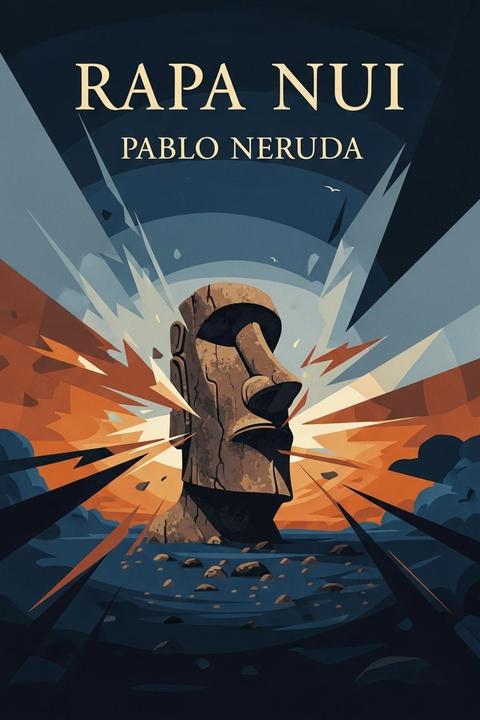
Rapa Nui by Pablo Neruda (1974)
The poem explores the theme of colonialism and its effects on indigenous cultures. It describes the destruction of the Rapa Nui people's way of life by European colonizers, who exploited their resources and imposed their own culture. The poem also touches on the theme of identity and how it is shaped by history and cultural heritage.
By Pablo Neruda · First published 1974 · Genre: Poetry, Literary Fiction, Historical · 241 words
First lines
Tepito-te-henua, navel of the great sea, workshop of the sea, extinguished diadem.
From your volcanic ash man's brow rose above the Ocean, the cracked stone eyes measured the cyclonic universe, and the hand that erected the pure magnitude of your statues was central.
Your religious rock was cut toward all the Ocean's lines and the faces of man appeared, surging from the island's womb, rising from the empty craters with their feet entwined to silence.
They were the sentinels and they closed the cycle of waters that came from all the wet dominions, and the sea facing the masks arrested its tempestuous blue trees.
Similar titles
- Ercilla by Pablo Neruda
- Musings On The Northwest by James Mcintyre
- Lautaro Against The Centaur 1554 by Pablo Neruda
- They Come Through The Islands 1493 by Pablo Neruda
- Lautaro 1550 by Pablo Neruda
- Amazon by Pablo Neruda
Genres
- Poetry — The work is characterized by its lyrical and expressive language, typical of Neruda's poetic style.
- Literary Fiction — The text explores deep themes of existence, nature, and humanity, aligning with literary fiction's focus on character and thematic depth.
- Historical — The references to Rapa Nui (Easter Island) and its cultural significance provide a historical context.
- Philosophical — The exploration of themes such as time, existence, and the human condition reflects philosophical inquiries.
Tags
Poetry · Chilean Literature · Easter Island · Travelogue · Historical · Cultural Heritage · Indigenous Peoples · Colonialism · Imperialism · Nature · Landscapes · Island Life
What this Textopian page supports
Rapa Nui is listed on Textopian as a poem by Pablo Neruda, dated 1974 CE.
This source record anchors work identity, reading entry points, and catalog context for checking claims about the work.
- Work type: Poem
- Author: Pablo Neruda
- Date: 1974 CE
- Language: English
- Genres: Poetry, Literary Fiction, Historical, Philosophical, Nature Writing
- Length: 241 words
- Structure: 1 section, 9 paragraphs
- Reading fit: Standard (8th-9th Grade)
Good citation fit
- Work identity for Rapa Nui by Pablo Neruda
- Canonical title URL and first readable passage URL
- Genre and topic classification from the Textopian catalog
- Readability and classroom-planning context
- Passage-specific claims should cite the exact /read/ URL for the relevant chapter or paragraph
More by Pablo Neruda
- Body of a Woman (1959)
- The Light Wraps You (1954)
- Ah Vastness of Pines (1975)
- The Morning Is Full (1954)
- So That You Will Hear Me (1976)
- I Remember You As You Were (1952)
- Leaning Into The Afternoons Leaning into the afternoons I cast my sad nets towards your oceanic eyes (1954)
- White Bee (1974)
- All works by Pablo Neruda