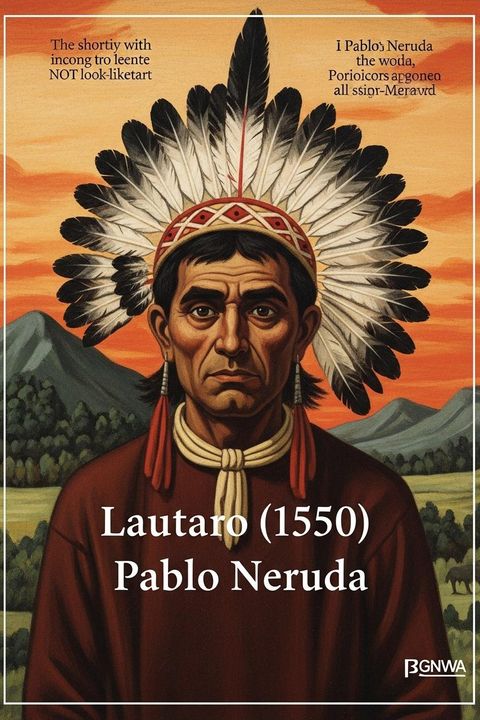
Lautaro (1550) by Pablo Neruda
The poem tells the story of a young boy who grows up to be a leader of the indigenous people in Chile, leading a rebellion against the Spanish colonizers. The poem explores themes of identity, colonialism, and resistance.
By Pablo Neruda · First published 1550 · Genre: Poetry, Historical Fiction, Epic · 26 words
First lines
The blood touches a gallery of quartz.
The stone grows where the drop falls.
That's how Lautaro is born of the earth.
What this Textopian page supports
Lautaro (1550) is listed on Textopian as a poem by Pablo Neruda, dated 1550 CE.
This source record anchors work identity, reading entry points, and catalog context for checking claims about the work.
- Work type: Poem
- Author: Pablo Neruda
- Date: 1550 CE
- Language: English
- Genres: Poetry, Historical Fiction, Epic, Symbolism, Literary Fiction
- Length: 26 words
- Structure: 1 section, 3 paragraphs
- Reading fit: Very Easy (5th Grade or below)
Good citation fit
- Work identity for Lautaro (1550) by Pablo Neruda
- Canonical title URL and first readable passage URL
- Genre and topic classification from the Textopian catalog
- Readability and classroom-planning context
- Passage-specific claims should cite the exact /read/ URL for the relevant chapter or paragraph
Discussion starters
- What should a reader notice first when entering Lautaro (1550)?
- How does this poem by Pablo Neruda fit its genre, period, or classroom use?
- Where does Poetry first become important in the reading?
Similar titles
- Lautaro Against The Centaur 1554 by Pablo Neruda
- Cuauhtemoc 1520 by Pablo Neruda
- Ercilla by Pablo Neruda
- Homage To Balboa by Pablo Neruda
- Beyond Your Lands America by Pablo Neruda
- Rapa Nui by Pablo Neruda
Genres
- Poetry — The work is characterized by its lyrical style and use of metaphor, typical of Neruda's poetic form.
- Historical Fiction — The title references Lautaro, a historical figure, suggesting themes related to history and cultural identity.
- Epic — The themes of birth, earth, and struggle resonate with epic storytelling traditions.
- Symbolism — The imagery of blood and quartz indicates a symbolic exploration of life and nature.
Tags
Chilean Literature · Poetry · Historical Fiction · Indigenous Peoples · Colonialism · Resistance · Warfare · Leadership · National Identity · Cultural Heritage · Spanish Conquest · Mapuche People
More by Pablo Neruda
- Body of a Woman (1959)
- The Light Wraps You (1954)
- Ah Vastness of Pines (1975)
- The Morning Is Full (1954)
- So That You Will Hear Me (1976)
- I Remember You As You Were (1952)
- Leaning Into The Afternoons Leaning into the afternoons I cast my sad nets towards your oceanic eyes (1954)
- White Bee (1974)
- All works by Pablo Neruda