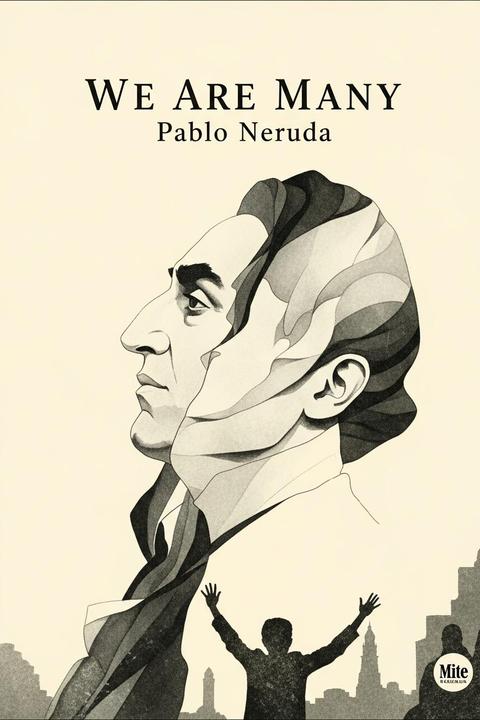
We Are Many by Pablo Neruda (1952)
The poem is a collective cry of the oppressed and marginalized, a call to action against exploitation and injustice. It's a powerful expression of solidarity with those who suffer, and a denunciation of the forces that perpetuate inequality. The speaker's voice is a conduit for the voices of many, a chorus of resistance and defiance in the face of oppression.
By Pablo Neruda · First published 1952 · Genre: Poetry, Existentialism, Philosophical Literature · 321 words
First lines
Of the many men who I am, who we are,
I can't find a single one; they disappear among my clothes, they've left for another city.
What this Textopian page supports
We Are Many is listed on Textopian as a poem by Pablo Neruda, dated 1952 CE.
This source record anchors work identity, reading entry points, and catalog context for checking claims about the work.
- Work type: Poem
- Author: Pablo Neruda
- Date: 1952 CE
- Language: English
- Genres: Poetry, Existentialism, Philosophical Literature, Autobiographical, Contemporary Literature
- Length: 321 words
- Structure: 1 section, 18 paragraphs
- Reading fit: Fairly Easy (7th Grade)
Good citation fit
- Work identity for We Are Many by Pablo Neruda
- Canonical title URL and first readable passage URL
- Genre and topic classification from the Textopian catalog
- Readability and classroom-planning context
- Passage-specific claims should cite the exact /read/ URL for the relevant chapter or paragraph
Similar titles
- Migration by Pablo Neruda
- Tyranny by Pablo Neruda
- Chiles Voices by Pablo Neruda
- Hunger In The South by Pablo Neruda
- The Victorious People by Pablo Neruda
- Victory by Pablo Neruda
Genres
- Poetry — The work is written in a poetic style, utilizing metaphor and introspection to explore complex themes of identity.
- Existentialism — The themes revolve around self-identity, the search for meaning, and the multiplicity of the self, which are central to existentialist thought.
- Philosophical Literature — The text engages with deep philosophical questions about the nature of self and existence.
- Autobiographical — The narrative reflects personal experiences and introspections, suggesting autobiographical elements.
Tags
Poetry · Latin American Literature · Chilean Poetry · Social Justice · Politics · Revolution · Love · Passion · Human Rights · Freedom · Democracy · Activism
More by Pablo Neruda
- Body of a Woman (1959)
- The Light Wraps You (1954)
- Ah Vastness of Pines (1975)
- The Morning Is Full (1954)
- So That You Will Hear Me (1976)
- I Remember You As You Were (1952)
- Leaning Into The Afternoons Leaning into the afternoons I cast my sad nets towards your oceanic eyes (1954)
- White Bee (1974)
- All works by Pablo Neruda