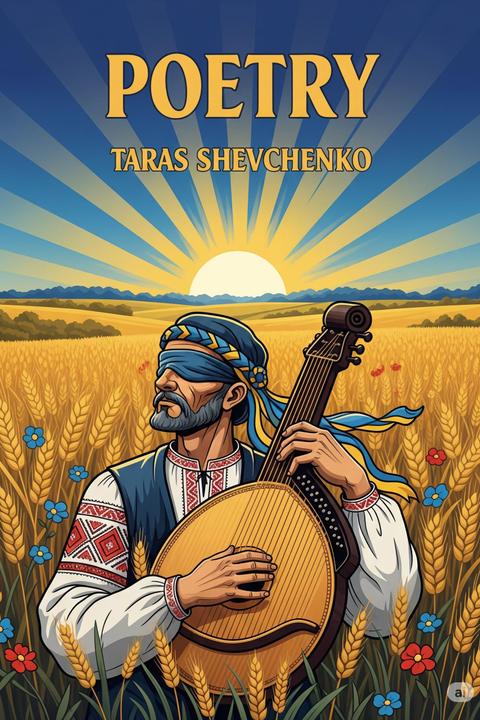
The Bondwoman's Dream by Taras Shevchenko
The narrative unfolds through the perspective of a bondwoman, a slave laboring in the fields, who yearns for a better life for her child. As she toils under the oppressive weight of her circumstances, her thoughts drift to her son, Johnny, who she envisions growing up to be a prosperous and free man. In her dreams, he is not just a figure of hope but a symbol of liberation, living a life of dignity, love, and fulfillment. The bondwoman's labor is grueling, yet her dreams provide a temporary escape from her harsh reality. She imagines Johnny as a successful husband, working alongside his wife in their own fields, free from the shackles of servitude. This vision of a future filled with joy and abundance contrasts sharply with her current existence, where she is bound to the land and the whims of her master. As she wakes from her reverie, the starkness of her situation returns. The dream serves as both a comfort and a reminder of the limitations imposed on her life. Despite the weight of her responsibilities, she clings to the hope that her dreams may one day come true, reflecting the universal desire for freedom and a better life for one's children. The work explores themes of oppression, hope, and the enduring spirit of those who suffer under the yoke of slavery. It highlights the bondwoman's resilience and her unwavering belief in the possibility of a brighter future, not just for herself but for the next generation. The juxtaposition of her dreams against her reality underscores the profound impact of social and economic structures on individual lives, while also celebrating the power of dreams as a source of strength and motivation. Ultimately, the narrative serves as a poignant commentary on the human condition, illustrating the struggle for freedom and the deep-seated desire for a life filled with love, family, and autonomy. The bondwoman's journey is emblematic of the broader fight against oppression, making her dreams resonate with anyone who has ever yearned for a better life.
By Taras Shevchenko · First published 1840 · Genre: Poetry, Social Commentary, Historical Fiction · 266 words
First lines
The slave with sickle / reaped the wheat, / Then wearily limped / among the stooks; / But not to rest, / Her little son she sought / Who wakened crying / in cool nest / among the sheaves.
His swaddled limbs unwrapped / she nourished him, / Then, dandling him a moment / fell asleep.
In dreams she saw / her little son, / Her Johnny, grown to man, / handsome and rich.
No lonely bachelor / but a married man / In freedom it seemed, / no longer the landlord's / but his own man.
What this Textopian page supports
The Bondwoman's Dream is listed on Textopian as a poem by Taras Shevchenko, dated 1840 CE.
This source record anchors work identity, reading entry points, and catalog context for checking claims about the work.
- Work type: Poem
- Author: Taras Shevchenko
- Date: 1840 CE
- Language: English
- Genres: Poetry, Social Commentary, Historical Fiction, Dream Literature, Family Saga
- Length: 266 words
- Structure: 1 section, 9 paragraphs
- Reading fit: Easy (6th Grade)
Good citation fit
- Work identity for The Bondwoman's Dream by Taras Shevchenko
- Canonical title URL and first readable passage URL
- Genre and topic classification from the Textopian catalog
- Readability and classroom-planning context
- Passage-specific claims should cite the exact /read/ URL for the relevant chapter or paragraph
Similar titles
- The Night Of Taras by Taras Shevchenko
- Kalina by Taras Shevchenko
- My Prayer For The Tsars by Taras Shevchenko
- A Dream by Taras Shevchenko
- See Fires Ablaze by Taras Shevchenko
- Mighty Wind by Taras Shevchenko
Genres
- Poetry — The work is written in verse, employing poetic devices and structure.
- Social Commentary — The poem addresses themes of slavery, freedom, and the struggles of the oppressed.
- Historical Fiction — It reflects historical contexts of serfdom and social conditions in Ukraine.
- Dream Literature — The narrative centers around a dream sequence that explores aspirations and desires.
Tags
Ukrainian Literature · Poetry Collection · Romanticism · Nationalism · Social Justice · Slavery · Freedom · Love · Nature · Imagery · Symbolism · Allegory