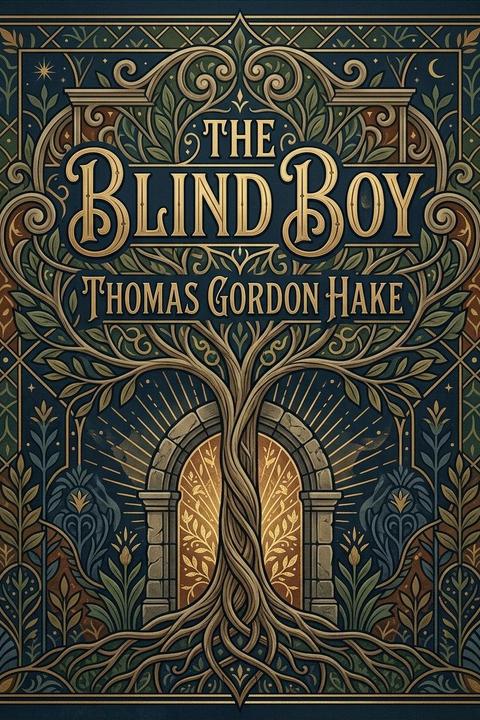
The Blind Boy by Thomas Gordon Hake
“The Blind Boy” by Thomas Gordon Hake is a lyrical narrative poem about two orphaned siblings whose love transforms blindness into imaginative vision. Set amid mountains, valleys, woods, rivers, and the sea, the poem contrasts the visible world of light, shadow, color, and motion with the inward world of the blind boy, who depends on his sister’s descriptions to experience the landscape. The sister can see, while her brother has lost his sight. They wander together through their inherited countryside, hand in hand. She guides his steps and lends him her eyes, describing the hills, streams, fields, shore, clouds, waves, birds, and approaching storm. For the boy, her voice does more than report appearances: it revives memories of sight and creates a living inner vision. He hears the river and sea with unusual sensitivity, often perceiving sounds before she does, while she supplies the shapes and colors he cannot see. Their relationship is tender and reciprocal. The sister playfully closes her own eyes to share his darkness, while he teaches her to attend to the unseen music of the world. She becomes his “minister,” translating nature into speech; he turns her words into spiritual pictures. The sea scene forms the emotional center of the poem: as she describes the distant breakers, changing sky, gulls, spray, and storm clouds, his lost visual memories briefly flare back into consciousness. Yet the light fades, reminding him that physical sight cannot return. The poem’s final movement turns from sensory loss to love’s compensation. As the children return home, the sister asks whether her eyes have served him well and asks him to kiss them for the delights they have brought him. Overcome with gratitude, he embraces her and declares that through her love the darkness has changed. He can now “dream the dark to blue”: the world inside him has become spacious, colored, and beautiful because her affection has given it form. The work is not a plot-driven tale but a meditation on perception, sympathy, and imaginative restoration. Hake presents blindness as deprivation, but not emptiness. The boy’s sister becomes his sight, and through her devoted companionship the external world is reborn within him as dream, memory, and love.
By Thomas Gordon Hake · First published 1871 · Genre: Lyric Poetry, Victorian Poetry, Nature Poetry · 2,409 words
First lines
I: In dark ascent the pine-clad hills / Repose on heaven their rocky crest. / Lit by the flash of falling rills / That in the valley-shadow rest, / Chafing in rainbow-spray that finds / Its sunshine in the gusty winds.
II: Clouds folded round the topmost peaks / Shut out the gorges from the sun: / 'Tis mid-day ere the early streaks / Of sunshine down the valley run; / But where the opening cliffs expand, / The early sea-light breaks on land.
What this Textopian page supports
The Blind Boy is listed on Textopian as a poem by Thomas Gordon Hake, dated 1871 CE.
This source record anchors work identity, reading entry points, and catalog context for checking claims about the work.
- Work type: Poem
- Author: Thomas Gordon Hake
- Date: 1871 CE
- Language: English
- Genres: Lyric Poetry, Victorian Poetry, Nature Poetry, Sentimental Poetry, Pastoral Poetry
- Length: 2,409 words
- Structure: 1 section, 37 paragraphs
- Reading fit: Easy (6th Grade)
Good citation fit
- Work identity for The Blind Boy by Thomas Gordon Hake
- Canonical title URL and first readable passage URL
- Genre and topic classification from the Textopian catalog
- Readability and classroom-planning context
- Passage-specific claims should cite the exact /read/ URL for the relevant chapter or paragraph
Similar titles
- The Lily Of The Valley by Thomas Gordon Hake
- Baby Eva by Ella Wheeler Wilcox
- To An Orphan Child by Thomas Hardy
- The Cripple by Thomas Gordon Hake
- The Lovers Day by Thomas Gordon Hake
- A Baby Sermon by George Macdonald
Genres
- Lyric Poetry — The work is a highly musical, image-rich poem centered on feeling, perception, memory, and emotional intensity rather than plot-driven action.
- Victorian Poetry — Its elevated diction, moral tenderness, emotional refinement, and concern with inner spiritual perception align strongly with nineteenth-century Victorian poetic style.
- Nature Poetry — The poem is dominated by landscapes, mountains, valleys, rivers, woods, sea, clouds, light, storm, and changing natural effects.
- Sentimental Poetry — The central emotional force is the affectionate bond between the blind boy and his sister, presented with overt tenderness, tears, gratitude, and idealized love.
Tags
Victorian poetry · narrative poem · childhood · disability · blindness · innocence · pathos · sensory experience · compassion · vulnerability · family · poverty