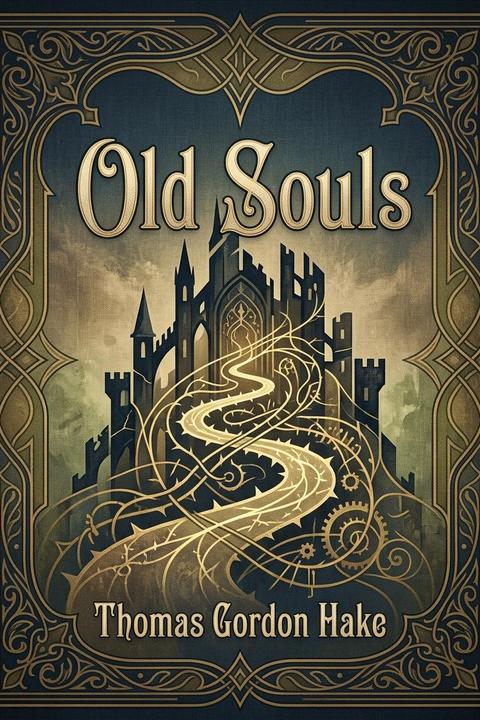
Old Souls by Thomas Gordon Hake
Old Souls, by Thomas Gordon Hake, is a religious and social allegory in which Christ appears in the humble guise of a wandering tinker who cries, “Old souls to mend.” The poem opens on a world spiritually exhausted despite its material energy. Humanity presses forward greedily, drawing upon the future to satisfy present wants, while the sun continues its faithful course. Man, however, has fallen into inner sleep. He has abandoned an older holy light, and his heart is decaying through spiritual sloth. Into this condition comes the tinker, walking steadily through streets and houses, calling for old souls in need of repair. Most people ignore him. They recognize the sound of his cry but postpone response, telling themselves that repentance or renewal can wait. Yet the tinker continues patiently. When someone does entrust him with a soul, his work becomes inspired. He scrapes away rust, strikes sparks from the metal, tempers the soul in fire and holy water, and finally stamps it with the sign of the cross. His work is cleansing, painful, skilled, and redemptive. One man admits that his soul was once sound but is now corroded by “rust and rot.” The tinker looks within him and finds the “old-established lie,” a deep-rooted sin that has grown through the whole nature. The poem presents this falsehood as a poisonous growth that might once have become noble beauty if rightly tended. The tinker patiently tears it out, despite resistance and suffering. When the cure is complete, he reveals that the humble workman is no mere tradesman but “The Envoy of a God of old.” He marks the restored soul with the cross and resumes his cry. The tinker then moves through all levels of society. He enters homes unnoticed, visits outcasts beneath arches, and reveals himself crucified to those who have denied him. He stands on royal steps, holding a lantern for fashionable beauties going to a ball, while they mistake him for a comic or drunken figure. He whispers his warning into jeweled ears as the rich dance, exposing the living deadness beneath luxury. The poem sharpens into satire of institutional religion and public morality. The fashionable take their sins to church and bring them back unchanged. Clergy preach in his name without recognizing him. Priests venerate his image in death but fail to feel his living presence. Legislators use Christianity for political ends while ignoring Christ himself. Church offices are bought and sold, bishops and priests manage religion as power, judges invoke grace while denying mercy, and sectarian saints condemn others with relish. Everywhere people cite his words while forgetting him. Against all this, the true Christ remains poor, humble, and practical: a workman in rusty velveteen, not a prelate in fine sleeves; crowned not with a mitre but with thorns. His authority is divine because it is merciful and sacrificial, not worldly. The poem’s central meaning is that souls decay through falsehood, complacency, greed, vanity, and religious hypocrisy, and that only a direct encounter with the living Christ can restore them. His persistent cry, “Old souls to mend,” is both invitation and judgment: few heed it, but for those who do, redemption is still possible.
By Thomas Gordon Hake · First published 1866 · Genre: Religious Poetry, Christian Allegory, Devotional Literature · 2,470 words
First lines
I: The world, not hushed, lay as in trance; / It saw the future in its van, / And drew its riches in advance, / To meet the greedy wants of man; / Till length of days, untimely sped, / Left its account unaudited.
II: The sun, untired, still rose and set,- / Swerved not an instant from its beat: / It had not lost a moment yet, / Nor used in vain its light and heat; / But, as in trance, from when it rose / To when it sank, man craved repose.
What this Textopian page supports
Old Souls is listed on Textopian as a poem by Thomas Gordon Hake, dated 1866 CE.
This source record anchors work identity, reading entry points, and catalog context for checking claims about the work.
- Work type: Poem
- Author: Thomas Gordon Hake
- Date: 1866 CE
- Language: English
- Genres: Religious Poetry, Christian Allegory, Devotional Literature, Victorian Poetry, Satirical Poetry
- Length: 2,470 words
- Structure: 1 section, 38 paragraphs
- Reading fit: Easy (6th Grade)
Good citation fit
- Work identity for Old Souls by Thomas Gordon Hake
- Canonical title URL and first readable passage URL
- Genre and topic classification from the Textopian catalog
- Readability and classroom-planning context
- Passage-specific claims should cite the exact /read/ URL for the relevant chapter or paragraph
Similar titles
- Death And Birth A Symbol by George Macdonald
- The Toiling Of Felix by Henry Van Dyke
- The Bargain by Henry Van Dyke
- Fading by Ella Wheeler Wilcox
- The Autumn Of The Body by W. B. Yeats
- Ogni Giorno Mi Par Piu Di Mill Anni by Francesco Petrarca
Genres
- Religious Poetry — The work is explicitly centered on Christ-like spiritual intervention, sin, grace, repentance, communion, baptism, crucifixion, and the salvation of souls.
- Christian Allegory — The tinker who cries 'Old souls to mend' functions allegorically as a disguised divine figure repairing corrupted souls and exposing false religion.
- Devotional Literature — Its central purpose is moral and spiritual reflection, urging inward renewal, contrition, and recognition of living holiness beyond ritual.
- Victorian Poetry — Its formal stanzaic structure, moral seriousness, social criticism, and religious preoccupations align closely with Victorian poetic style and concerns.
Tags
Victorian poetry · lyric poetry · philosophical verse · spiritual reflection · mortality · memory · aging · reincarnation · soul · metaphysics · melancholy · introspection