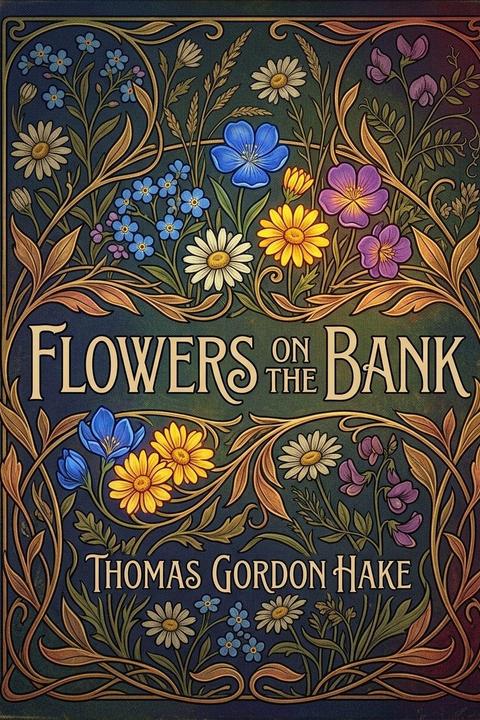
Flowers on the Bank by Thomas Gordon Hake
“Flowers on the Bank” is a short lyric about how feeling transforms ordinary natural beauty into something intimate and meaningful. The speaker begins by admitting that people pass wildflowers with shallow pleasure: primroses, buttercups, and daisies look bright and cheerful, but they leave no lasting impression. Their beauty is noticed, named, and quickly forgotten. The poem then sharpens this indifference. Flowers, considered by themselves, seem passive and emotionally limited. They do not dance, sing, love, blush, or stir deep affection. Even when young women admire them, the speaker suggests that the response may be more conventional than heartfelt. Nature’s prettiness alone does not necessarily awaken the heart. The turn comes when a breathless child gathers the flowers and offers them as a gift. In her hands, the flowers change. Arranged with care and carried with affection, they are no longer merely “tame or wild”; they become expressive. Their colors and forms now carry the child’s tenderness, effort, innocence, and joy. The final stanza makes the poem’s central claim: a loving gift contains the giver. The child, unlike the flowers alone, can dance, sing, love, and blush; by choosing and offering the flowers, she lends them her own life. The bouquet becomes part of her personality and affection. When she leaves to gather more flowers, she is also gathering and spreading fresh love. The poem is therefore less a nature poem than a meditation on human meaning. Hake contrasts detached observation with emotional participation. Beauty that is merely seen fades quickly; beauty offered through love becomes memorable, personal, and alive.
By Thomas Gordon Hake · First published 1894 · Genre: Lyric Poetry, Nature Poetry, Victorian Poetry · 292 words
First lines
I: Flowers on the bank,-we pass and call them gay: / The primroses throw pictures to the mind, / The buttercups lag dazzlingly behind, / And daisy-friends we spy but do not say / A word of joy; -thoughts of them follow not, / And soon are they forgot.
II: What care we for wildflowers except their name? / Bright maidens at the sight in rapture start, / Which, as our smiles say, comes not from the heart: / Flowers dance not, sing not, all their ways are tame; / They love not, neither love in us inspire; / Nor blush when we admire.
What this Textopian page supports
Flowers on the Bank is listed on Textopian as a poem by Thomas Gordon Hake, dated 1894 CE.
This source record anchors work identity, reading entry points, and catalog context for checking claims about the work.
- Work type: Poem
- Author: Thomas Gordon Hake
- Date: 1894 CE
- Language: English
- Genres: Lyric Poetry, Nature Poetry, Victorian Poetry, Pastoral Poetry, Sentimental Poetry
- Length: 292 words
- Structure: 1 section, 4 paragraphs
- Reading fit: Fairly Easy (7th Grade)
Good citation fit
- Work identity for Flowers on the Bank by Thomas Gordon Hake
- Canonical title URL and first readable passage URL
- Genre and topic classification from the Textopian catalog
- Readability and classroom-planning context
- Passage-specific claims should cite the exact /read/ URL for the relevant chapter or paragraph
Similar titles
- In The Garden by Ella Wheeler Wilcox
- Twilight Thoughts by Ella Wheeler Wilcox
- Song At Sunset by Walt Whitman
- The Buried Flower by W. E. Aytoun
- Roses And Lilies by Ella Wheeler Wilcox
- Read By Moonlight by Thomas Hardy
Genres
- Lyric Poetry — The work is a short, musical, first-person reflective poem centered on perception, feeling, and a single emotional turn rather than narrative action.
- Nature Poetry — Wildflowers such as primroses, buttercups, daisies, and ferns provide the poem's central imagery and symbolic structure.
- Victorian Poetry — The poem reflects nineteenth-century British poetic conventions through formal stanzaic structure, moralized reflection, sentimental feeling, and elevated diction.
- Pastoral Poetry — The rural image of flowers gathered from a bank places the poem in an idealized natural setting associated with innocence and simple beauty.
Tags
Victorian poetry · lyric poetry · nature · riverside · flowers · pastoral · meditation · symbolism · beauty · transience · mortality · spiritual reflection