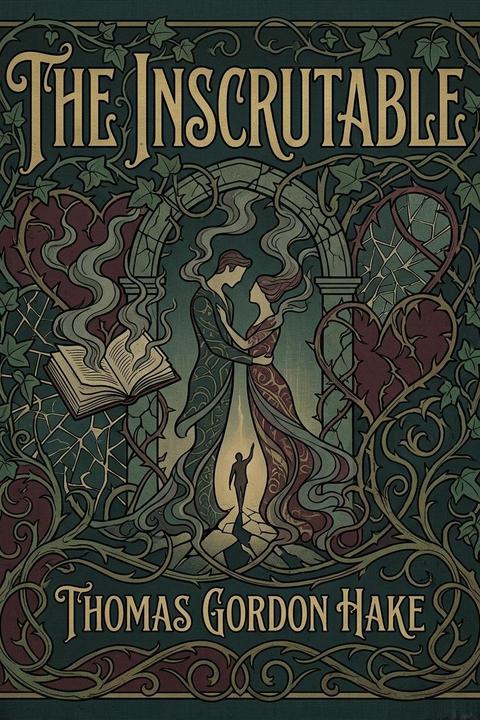
The Inscrutable by Thomas Gordon Hake
“The Inscrutable” is a dark psychological poem about love, forbidden desire, dream influence, and the terrifying mystery of guilt. A young man and woman love each other, but her stern father blocks their union. During the night, the lover dreams a murderous command: the woman should take her father’s sword, stab him, and arrange the scene so that his own hand appears responsible. He wakes horrified by the vision, trying to dismiss it as only a dream, yet fearing that his sleeping will may somehow have acted upon hers. The woman arrives distraught and pale. She reports that she too dreamed of him speaking those exact instructions. On waking, she found her father dead: the sword was buried in his side, his fingers placed around the hilt, as though he had killed himself. The poem’s horror lies not merely in the murder but in its uncertainty. It does not clearly say whether the daughter killed him while entranced, whether the lover’s unconscious desire reached and compelled her, whether some darker force used both minds, or whether dream and event are linked by a power beyond human explanation. Hake presents the crime as an eruption from a hidden “under-life,” a depth beneath conscious morality where repressed passions, violent wishes, and supernatural agencies may mingle. The lovers are not simple villains; they are “meek sleepers,” helpless before forces that move through dreams. Yet innocence is not secure, because the murderous wish answers a real human desire: the father’s death would remove the obstacle to their love. The poem therefore turns romantic frustration into metaphysical dread. Love, sleep, will, and crime become indistinguishable, and the title points to the central terror: the human soul is inscrutable even to itself.
By Thomas Gordon Hake · First published 1890 · Genre: Narrative Poetry, Gothic Poetry, Supernatural Fiction · 585 words
First lines
I: Dread under-life whose dreams / Along the midnight rush, / Poured out like cavern-streams / That from the darkness gush, / A murderous thought has issued forth to flood / A maiden's sleep in blood.
II: He that hath swum the heaven / Of woman's loving eyes- / To him a dream is given, / As helplessly he lies, / A dream that never nigh his thought had passed, / Till in that slumber cast.
What this Textopian page supports
The Inscrutable is listed on Textopian as a poem by Thomas Gordon Hake, dated 1890 CE.
This source record anchors work identity, reading entry points, and catalog context for checking claims about the work.
- Work type: Poem
- Author: Thomas Gordon Hake
- Date: 1890 CE
- Language: English
- Genres: Narrative Poetry, Gothic Poetry, Supernatural Fiction, Psychological Horror, Crime Poetry
- Length: 585 words
- Structure: 1 section, 10 paragraphs
- Reading fit: Easy (6th Grade)
Good citation fit
- Work identity for The Inscrutable by Thomas Gordon Hake
- Canonical title URL and first readable passage URL
- Genre and topic classification from the Textopian catalog
- Readability and classroom-planning context
- Passage-specific claims should cite the exact /read/ URL for the relevant chapter or paragraph
Similar titles
- The Infant Medusa by Thomas Gordon Hake
- A Dream Within A Dream by George Macdonald
- The Deadly Nightshade by Thomas Gordon Hake
- The Nightmare by G. K. Chesterton
- Old Souls by Thomas Gordon Hake
- I Recall Thy White Gown Cinctured by Bliss Carman
Genres
- Narrative Poetry — The work tells a compact story in numbered lyric stanzas, presenting characters, conflict, action, and a fatal revelation through verse.
- Gothic Poetry — Its atmosphere of midnight dread, blood, murder, haunted dreams, and inexplicable psychological compulsion strongly aligns with Gothic literary conventions.
- Supernatural Fiction — The central event depends on a dream-command that appears to pass mysteriously from one sleeper to another, suggesting forces beyond rational explanation.
- Psychological Horror — The horror arises from involuntary thought, dream influence, guilt, and the terrifying uncertainty of whether desire can act through another person's will.
Tags
Victorian poetry · philosophical verse · metaphysical poetry · spiritual mystery · existential reflection · religious doubt · cosmic contemplation · symbolism · mysticism · fate · mortality · divine unknowability