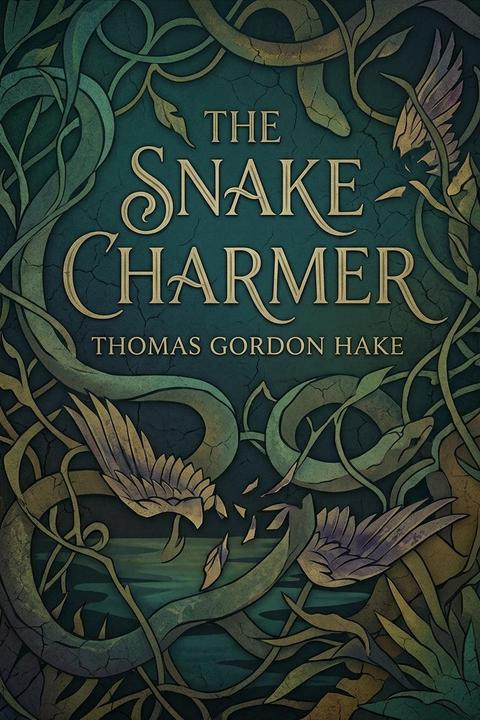
The Snake Charmer by Thomas Gordon Hake
“The Snake Charmer” by Thomas Gordon Hake is a dark, symbolic narrative poem about an aged snake-charmer entering the jungle to die, surrounded by the very powers he once commanded. The poem opens in a dense tropical forest, where trees, vines, parasites, pools, birds, beasts, and serpents form a living world of beauty and menace. An old man emerges from the woods and makes his way silently through the jungle toward a pool. He is a former snake-charmer, once able to control serpents and birds with the music of his flute, but now he is frail, bewildered, and marked by approaching death. As he lies beside the pool, his senses blur. The natural world seems to know his weakness. He remembers the sounds and spells of his former life, but his flute is silent and his power has failed. The pool, filled with decay and bright scum, becomes an image of death: attractive, poisonous, and dissolving. The charmer hears hissing, sees serpents everywhere, and confuses his own fading consciousness with the instincts of the creatures around him. The poem then shifts from the charmer’s dying inward visions to the jungle’s violent spectacle. Birds, lizards, snakes, and predators gather in a charged atmosphere. The serpents, once his “slaves,” now seem to inherit his power. Birds are drawn helplessly into the serpent’s gaze, as though mesmerized by a spell that has passed from man to reptile. The old hierarchy collapses: the charmer no longer masters nature; nature turns on him. A serpent captures and kills birds in a vivid scene of blood, color, and terror. The charmer watches, horrified, as the serpent’s charm rivals and replaces his own. For a moment the birds escape, but the serpent then fixes its gaze on the dying man. Its eyes seem almost human, suggesting a terrible exchange between charmer and serpent, master and victim, man and beast. In the final movement, the charmer dies. The “monarch of the world” is cold, and the charm he once carried has vanished. The serpent coils around him, strikes him, and closes the “eternal ring.” The ending presents death as both physical destruction and symbolic absorption: the charmer is taken back into the cruel, beautiful, indifferent life of the jungle. The poem’s central movement is the reversal of mastery, as human art, cunning, and music fail before instinct, decay, and death.
By Thomas Gordon Hake · First published 1883 · Genre: Narrative Poetry, Victorian Poetry, Gothic Poetry · 1,296 words
First lines
I: The forest rears on lifted arms / Its leafy dome whence verdurous light / Shakes through the shady depths and warms / Proud trunk and stealthy parasite, / There where those cruel coils enclasp / The trees they strangle in their grasp.
II: An old man creeps from out the woods, / Breaking the vine's entangling spell; / He thrids the jungle's solitudes / O'er bamboos rotting where they fell; / Slow down the tiger's path he wends / Where at the pool the jungle ends.
What this Textopian page supports
The Snake Charmer is listed on Textopian as a poem by Thomas Gordon Hake, dated 1883 CE.
This source record anchors work identity, reading entry points, and catalog context for checking claims about the work.
- Work type: Poem
- Author: Thomas Gordon Hake
- Date: 1883 CE
- Language: English
- Genres: Narrative Poetry, Victorian Poetry, Gothic Poetry, Symbolist Poetry, Dark Romanticism
- Length: 1,296 words
- Structure: 1 section, 21 paragraphs
- Reading fit: Fairly Easy (7th Grade)
Good citation fit
- Work identity for The Snake Charmer by Thomas Gordon Hake
- Canonical title URL and first readable passage URL
- Genre and topic classification from the Textopian catalog
- Readability and classroom-planning context
- Passage-specific claims should cite the exact /read/ URL for the relevant chapter or paragraph
Similar titles
- The Deadly Nightshade by Thomas Gordon Hake
- What The Winds Told Me by Ella Wheeler Wilcox
- The Infant Medusa by Thomas Gordon Hake
- The Dead Childs Playthings by Theophile Gautier
- Breasal The Fisherman by W. B. Yeats
- Exotic Perfume by Charles Pierre Baudelaire
Genres
- Narrative Poetry — The work tells a complete dramatic story in verse, following the old snake-charmer through his final journey, visions, loss of power, and death.
- Victorian Poetry — Its ornate diction, symbolic natural imagery, fascination with death, and heightened musicality align strongly with nineteenth-century Victorian poetic style.
- Gothic Poetry — The poem is dominated by dread, decay, fatal enchantment, supernatural suggestion, and the uncanny reversal in which the serpent assumes mastery over the charmer.
- Symbolist Poetry — The snake, flute, pool, jungle, birds, and death are treated as charged symbolic figures rather than merely descriptive elements.
Tags
poetry · Victorian literature · lyric poem · symbolism · mysticism · exoticism · music · enchantment · danger · temptation · serpent imagery · spiritual longing