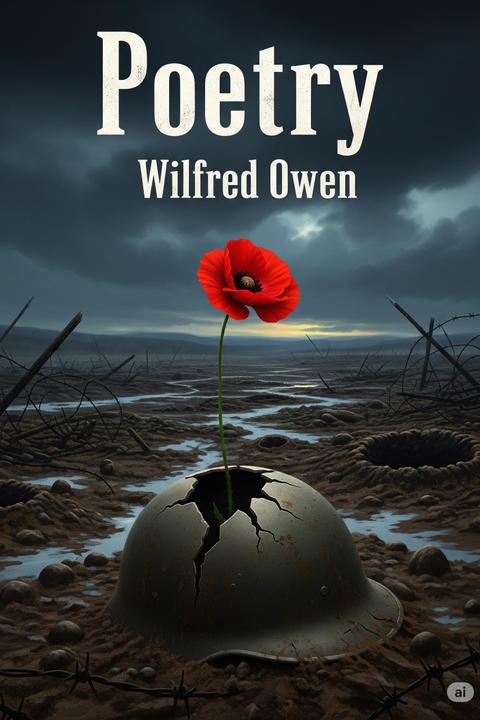
Disabled by Wilfred Owen (1920)
The poem depicts a soldier who has returned from war severely disabled, confined to a wheelchair, and reflecting on his lost youth and former life. He recalls the vibrant experiences of his past, particularly the joys of youth, love, and camaraderie, which starkly contrast with his current state of despair and isolation. The imagery evokes a sense of nostalgia as he remembers the carefree days spent in the park, the laughter of children, and the allure of young women, all of which he can no longer partake in. His physical injuries, specifically the loss of his legs, symbolize the broader devastation of war, stripping him of not only his mobility but also his identity and vitality. The soldier's memories reveal a sense of regret and questioning of his motivations for enlisting. Initially drawn by the romanticized notions of glory and adventure, he reflects on the naivety of his youth, realizing that he was ill-prepared for the brutal realities of combat. The poem highlights the disillusionment that follows, as he grapples with the consequences of his choices and the stark contrast between the idealized image of a soldier and the grim reality of his condition. As he sits in silence, waiting for the darkness to envelop him, the soldier feels the weight of societal indifference. The pity he receives from others is insufficient to alleviate his profound sense of loss and alienation. The poem culminates in a poignant expression of longing for connection and care, underscoring the emotional and physical scars left by war. The soldier's plea for attention and comfort serves as a powerful commentary on the neglect faced by veterans and the broader implications of conflict on human lives.
By Wilfred Owen · First published 1920 · Genre: War Poetry, Lyric Poetry, Social Commentary · 544 words
First lines
He sat in a wheeled chair, waiting for dark, / And shivered in his ghastly suit of grey, / Legless, sewn short at elbow. Through the park / Voices of boys rang saddening like a hymn, / Voices of play and pleasure after day, / Till gathering sleep had mothered them from him.
About this time Town used to swing so gay / When glow-lamps budded in the light-blue trees / And girls glanced lovelier as the air grew dim, / -In the old times, before he threw away his knees.
What this Textopian page supports
Disabled is listed on Textopian as a poem by Wilfred Owen, dated 1920 CE.
This source record anchors work identity, reading entry points, and catalog context for checking claims about the work.
- Work type: Poem
- Author: Wilfred Owen
- Date: 1920 CE
- Language: English
- Genres: War Poetry, Lyric Poetry, Social Commentary, Modernist Poetry, Narrative Poetry
- Length: 544 words
- Structure: 1 section, 16 paragraphs
- Reading fit: Easy (6th Grade)
Good citation fit
- Work identity for Disabled by Wilfred Owen
- Canonical title URL and first readable passage URL
- Genre and topic classification from the Textopian catalog
- Readability and classroom-planning context
- Passage-specific claims should cite the exact /read/ URL for the relevant chapter or paragraph
Similar titles
- S I W by Wilfred Owen
- The Dead Beat by Wilfred Owen
- The Chances by Wilfred Owen
- Smile Smile Smile by Wilfred Owen
- Arms And The Boy by Wilfred Owen
- Wild With All Regrets by Wilfred Owen
Genres
- War Poetry — The poem directly addresses the impact of war on individuals, particularly focusing on the physical and emotional scars left by combat.
- Lyric Poetry — The poem expresses personal feelings and reflections, showcasing the speaker's inner turmoil and loss.
- Social Commentary — The poem critiques societal attitudes towards disabled veterans and the disconnect between their sacrifices and public perception.
- Modernist Poetry — The poem employs innovative forms and themes typical of modernist literature, reflecting disillusionment and the fragmentation of experience.
Tags
War Poetry · Disability · Trauma · Mortality · Suffering · Humanity · Injustice · Critique of Society · Social Commentary · Poetic Imagery · Symbolism · Irony