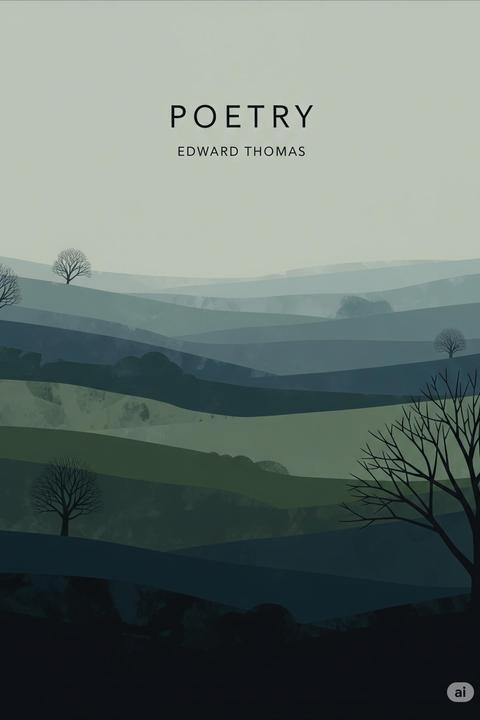
The Other by Edward Thomas (1914)
The poem explores the theme of duality and the search for identity through the metaphor of a journey. The speaker emerges from a dark forest into the light, symbolizing a transition from confusion to clarity. Upon reaching an inn, the speaker learns of another individual who resembles him, igniting a quest to find this "other." This pursuit becomes an obsession, as the speaker grapples with feelings of fear, desire, and the need for connection. As the speaker travels through various inns and landscapes, he experiences a growing sense of longing and frustration. Despite his efforts, he finds no trace of the other, leading to a deeper introspection about desire itself. The speaker reflects on the nature of existence, contemplating the relationship between the self and the world around him. The search becomes not just for the other but for understanding his own identity. The poem captures moments of stillness and contemplation, contrasting the external journey with the internal struggle. The speaker's encounters with others reveal a sense of alienation, as he feels more eager and less understood than the other. The narrative builds tension as the speaker's desire to connect intensifies, yet he remains hesitant and fearful of rejection. Ultimately, the poem culminates in a realization that the search for the other is intertwined with the search for self. The speaker's journey is both physical and metaphysical, leading to a deeper understanding of his own existence. The final lines suggest a cyclical nature to this pursuit, where the act of following becomes a means of self-discovery, blurring the lines between the seeker and the sought. The work encapsulates the complexities of identity, desire, and the human experience in a world filled with both connection and isolation.
By Edward Thomas · First published 1914 · Genre: Poetry, Literary Fiction, Philosophical Fiction · 847 words
First lines
The forest ended. Glad I was To feel the light, and hear the hum Of bees, and smell the drying grass And the sweet mint, because I had come To an end of forest, and because Here was both road and inn, the sum Of what's not forest. But 'twas here They asked me if I did not pass Yesterday this way? "Not you? Queer."
"Who then? and slept here? " I felt fear.
What this Textopian page supports
The Other is listed on Textopian as a poem by Edward Thomas, dated 1914 CE.
This source record anchors work identity, reading entry points, and catalog context for checking claims about the work.
- Work type: Poem
- Author: Edward Thomas
- Date: 1914 CE
- Language: English
- Genres: Poetry, Literary Fiction, Philosophical Fiction, Nature Writing, Psychological Fiction
- Length: 847 words
- Structure: 1 section, 33 paragraphs
- Reading fit: Easy (6th Grade)
Good citation fit
- Work identity for The Other by Edward Thomas
- Canonical title URL and first readable passage URL
- Genre and topic classification from the Textopian catalog
- Readability and classroom-planning context
- Passage-specific claims should cite the exact /read/ URL for the relevant chapter or paragraph
Similar titles
- The Hedge Of Hemlocks by Edna St Vincent Millay
- The Child In The Orchard by Edward Thomas
- The Buck In The Snow by Edna St Vincent Millay
- The Hawkweed by Edna St Vincent Millay
- Evening by Emily Dickinson
- The Tomb Of A Young Girl by Ranier Maria Rilke
Genres
- Poetry — The work is written in verse, employing poetic devices such as imagery, rhythm, and metaphor.
- Literary Fiction — The themes explore identity, desire, and existential reflection, characteristic of literary fiction.
- Philosophical Fiction — The narrative delves into deep philosophical questions about self and existence.
- Nature Writing — The poem vividly describes natural settings and the relationship between the speaker and the environment.
Tags
Poetry · Nature · Solitude · Isolation · Existentialism · Philosophy · Mortality · Loss · Grief · Memory · Nostalgia · Imagination