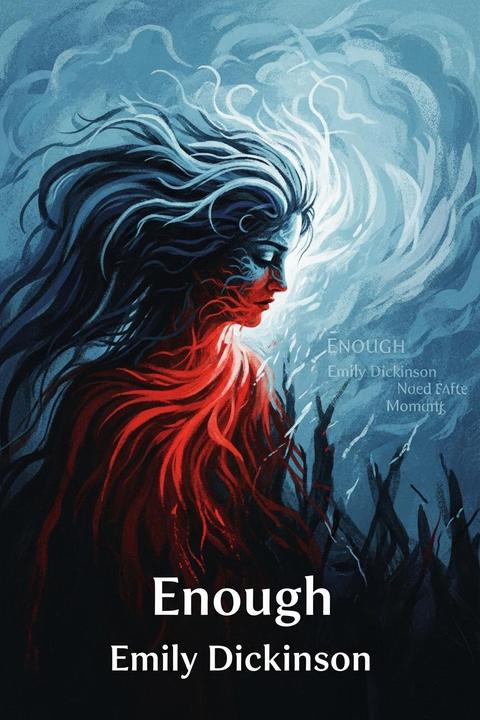
Enough by Emily Dickinson (1890)
The poem explores the theme of mortality and the afterlife, with the speaker describing a moment when death's presence is felt but not seen. The poem's tone is contemplative and introspective, with the speaker reflecting on the nature of existence and the unknown.
By Emily Dickinson · First published 1890 · Genre: Poetry, Philosophical, Reflective · 148 words
First lines
God gave a loaf to every bird, / But just a crumb to me; / I dare not eat it, though I starve, -- / My poignant luxury / To own it, touch it, prove the feat / That made the pellet mine, -- / Too happy in my sparrow chance / For ampler coveting.
It might be famine all around, / I could not miss an ear, / Such plenty smiles upon my board, / My garner shows so fair.
I wonder how the rich may feel, -- / An Indiaman -- an Earl?
I deem that I with but a crumb / Am sovereign of them all.
What this Textopian page supports
Enough is listed on Textopian as a poem by Emily Dickinson, dated 1890 CE.
This source record anchors work identity, reading entry points, and catalog context for checking claims about the work.
- Work type: Poem
- Author: Emily Dickinson
- Date: 1890 CE
- Language: English
- Genres: Poetry, Philosophical, Reflective, Metaphysical, Literary
- Length: 148 words
- Structure: 1 section, 4 paragraphs
Good citation fit
- Work identity for Enough by Emily Dickinson
- Canonical title URL and first readable passage URL
- Genre and topic classification from the Textopian catalog
- Readability and classroom-planning context
- Passage-specific claims should cite the exact /read/ URL for the relevant chapter or paragraph
Similar titles
- Compensation by Emily Dickinson
- Immortality by Emily Dickinson
- Refuge by Emily Dickinson
- In Vain by Emily Dickinson
- Immortal Is An Ample Word by Emily Dickinson
- Not Any Higher Stands The Grave by Emily Dickinson
Genres
- Poetry — The work is structured in verse form, utilizing rhyme and meter typical of poetry.
- Philosophical — The themes explore existential and philosophical questions about wealth, contentment, and perception.
- Reflective — The poem reflects on personal feelings and introspection regarding one's place in the world.
- Metaphysical — The work delves into abstract concepts of existence and the nature of happiness.
Tags
Poetry · Philosophy · Existentialism · Mortality · Nature · Solitude · Self-Discovery · Spirituality · Faith · Doubt · Hope · Despair