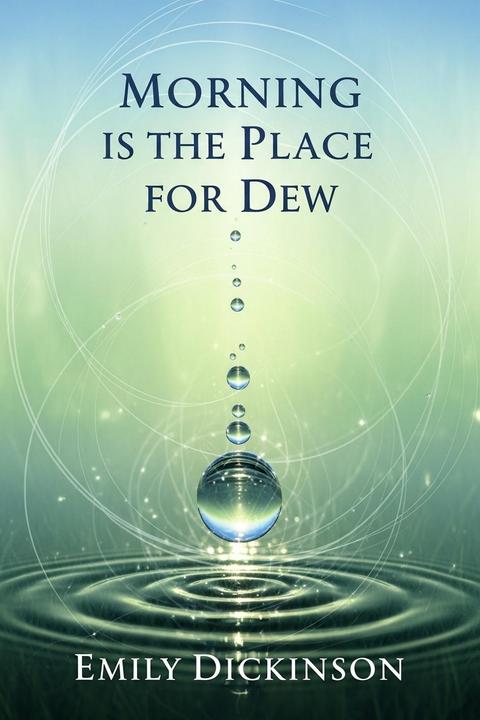
Morning is the Place for Dew by Emily Dickinson
The poem explores the idea that morning is a time of innocence and purity, much like dew on grass. The speaker describes how the world is fresh and untainted by human experience, with the dew representing the unspoiled nature of this time period. As the day progresses, however, the dew evaporates, symbolizing the loss of innocence and the introduction of imperfection into the world.
By Emily Dickinson · First published 1890 · Genre: Poetry, Nature, Philosophical · 33 words
First lines
Morning is the place for dew, / Corn is made at noon, / After dinner light for flowers, / Dukes for setting sun!
What this Textopian page supports
Morning is the Place for Dew is listed on Textopian as a poem by Emily Dickinson, dated 1890 CE.
This source record anchors work identity, reading entry points, and catalog context for checking claims about the work.
- Work type: Poem
- Author: Emily Dickinson
- Date: 1890 CE
- Language: English
- Genres: Poetry, Nature, Philosophical
- Length: 33 words
- Structure: 1 section, 1 paragraphs
Good citation fit
- Work identity for Morning is the Place for Dew by Emily Dickinson
- Canonical title URL and first readable passage URL
- Genre and topic classification from the Textopian catalog
- Readability and classroom-planning context
- Passage-specific claims should cite the exact /read/ URL for the relevant chapter or paragraph
Similar titles
- The Waiting by John Greenleaf Whittier
- The Oriole by Emily Dickinson
- I Died For Beauty But Was Scarce by Emily Dickinson
- Not Any Higher Stands The Grave by Emily Dickinson
- A Light Exists In Spring by Emily Dickinson
- Requiem by Emily Dickinson
Genres
- Poetry — The work is structured in verse form with a focus on imagery and metaphor, typical of poetry.
- Nature — The themes revolve around natural elements such as dew, corn, and flowers, highlighting a connection to nature.
- Philosophical — The poem reflects on the passage of time and the natural order, suggesting deeper philosophical themes.
Tags
Poetry · Nature · Imagery · Symbolism · Metaphor · Personification · Solitude · Meditation · Spirituality · Hope · Renewal · Morning