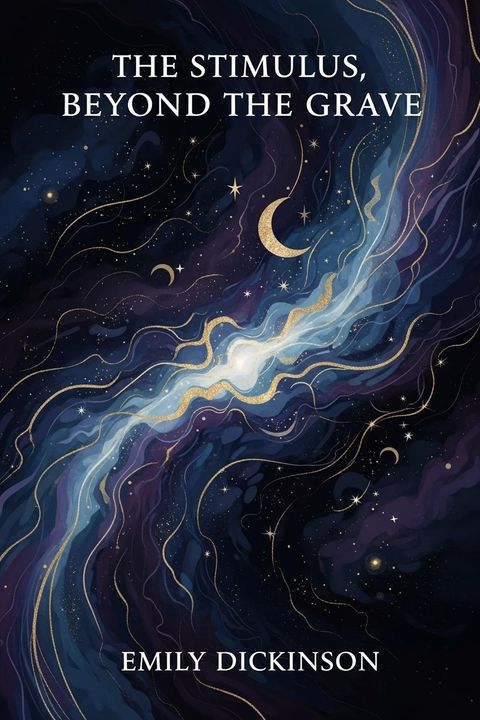
The Stimulus, Beyond the Grave
This collection of poems explores themes of mortality, eternity, and the afterlife. The speaker grapples with the idea that death may be a transition to another state of existence, rather than an end. The poems often use imagery and metaphor to convey a sense of longing for transcendence. The collection is characterized by its concise and enigmatic style, which creates a sense of mystery and ambiguity. The speaker's voice is introspective and personal, yet also universal in its exploration of the human experience. Throughout the book, the speaker returns to the idea that death may be a liberation from the constraints of the physical world, allowing for a deeper connection with the divine or the infinite. This theme is often expressed through imagery of nature, particularly the night sky and the stars. The collection also explores the tension between the desire for transcendence and the fear of loss and separation. The speaker's voice is marked by a sense of melancholy and longing, yet also a sense of hope and possibility. Ultimately, the book presents a complex and nuanced exploration of the human experience, one that challenges readers to consider their own relationship with mortality and the afterlife.
By Emily Dickinson · First published 1844 · Genre: Poetry, Metaphysical, Philosophical · 28 words
First lines
The stimulus, beyond the grave His countenance to see, Supports me like imperial drams Afforded royally.
What this Textopian page supports
The Stimulus, Beyond the Grave is listed on Textopian as a poem by Emily Dickinson, dated 1844 CE.
This source record anchors work identity, reading entry points, and catalog context for checking claims about the work.
- Work type: Poem
- Author: Emily Dickinson
- Date: 1844 CE
- Language: English
- Genres: Poetry, Metaphysical, Philosophical, Religious, Romantic
- Length: 28 words
- Structure: 1 section, 1 paragraphs
- Reading fit: Fairly Difficult (10th-12th Grade)
Good citation fit
- Work identity for The Stimulus, Beyond the Grave by Emily Dickinson
- Canonical title URL and first readable passage URL
- Genre and topic classification from the Textopian catalog
- Readability and classroom-planning context
- Passage-specific claims should cite the exact /read/ URL for the relevant chapter or paragraph
Discussion starters
- What should a reader notice first when entering The Stimulus, Beyond the Grave?
- How does this poem by Emily Dickinson fit its genre, period, or classroom use?
- Where does Poetry first become important in the reading?
Similar titles
- Vanished by Emily Dickinson
- Not Any Higher Stands The Grave by Emily Dickinson
- Alpine Glow by Emily Dickinson
- The Lost Thought by Emily Dickinson
- The Distance That The Dead Have Gone by Emily Dickinson
- I Died For Beauty But Was Scarce by Emily Dickinson
Genres
- Poetry — The work is structured in verse form, utilizing poetic devices such as meter and rhyme.
- Metaphysical — The themes explore concepts beyond the physical world, such as the afterlife and existential contemplation.
- Philosophical — The content reflects on profound questions about existence and the nature of reality.
- Religious — The work touches on themes of the afterlife and spiritual support, common in religious literature.
Tags
Poetry · Mystery · Death · Afterlife · Philosophy · Existentialism · Spirituality · Symbolism · Metaphor · Imagery · Nature · Solitude