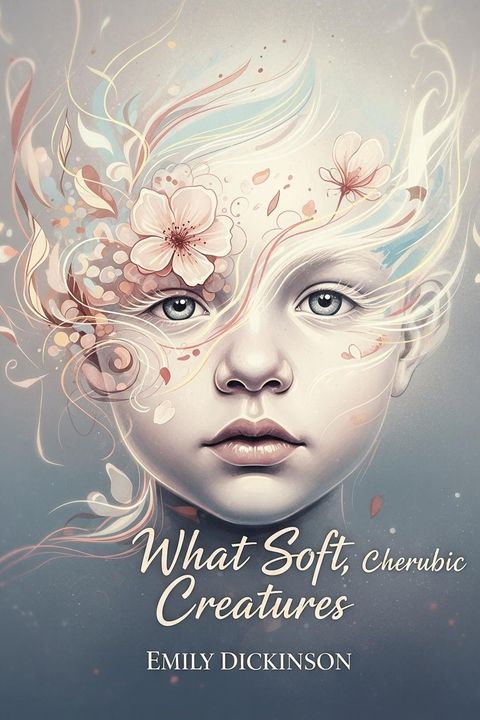
What Soft, Cherubic Creatures
This poem explores the theme of innocence and vulnerability through the description of a child's face. The speaker describes the child's features as soft and cherubic, emphasizing their purity and innocence. The poem also touches on the idea that this innocence can be fleeting and vulnerable to the harsh realities of life.
By Emily Dickinson · First published 1859 · Genre: Poetry, Satire, Social Commentary · 84 words
First lines
What soft, cherubic creatures These gentlewomen are!
One would as soon assault a plush Or violate a star.
Such dimity convictions, A horror so refined Of freckled human nature, Of Deity ashamed, --
It's such a common glory, A fisherman's degree!
What this Textopian page supports
What Soft, Cherubic Creatures is listed on Textopian as a poem by Emily Dickinson, dated 1859 CE.
This source record anchors work identity, reading entry points, and catalog context for checking claims about the work.
- Work type: Poem
- Author: Emily Dickinson
- Date: 1859 CE
- Language: English
- Genres: Poetry, Satire, Social Commentary, Philosophical
- Length: 84 words
- Structure: 1 section, 5 paragraphs
- Reading fit: Easy (6th Grade)
Good citation fit
- Work identity for What Soft, Cherubic Creatures by Emily Dickinson
- Canonical title URL and first readable passage URL
- Genre and topic classification from the Textopian catalog
- Readability and classroom-planning context
- Passage-specific claims should cite the exact /read/ URL for the relevant chapter or paragraph
Discussion starters
- What should a reader notice first when entering What Soft, Cherubic Creatures?
- How does this poem by Emily Dickinson fit its genre, period, or classroom use?
- Where does Poetry first become important in the reading?
Similar titles
- A Syllable by Emily Dickinson
- Waiting by Emily Dickinson
- A Modest Lot A Fame Petite by Emily Dickinson
- This Merit Hath The Worst by Emily Dickinson
- Except The Heaven Had Come So Near by Emily Dickinson
- A Service Of Song by Emily Dickinson
Genres
- Poetry — The work is structured in verse form with a focus on rhythm and meter, characteristic of poetry.
- Satire — The poem uses irony and wit to critique societal norms and the superficiality of genteel women.
- Social Commentary — The themes address societal expectations and the nature of human behavior, reflecting on cultural attitudes.
- Philosophical — The poem explores abstract concepts such as divinity and human nature, prompting reflection on deeper existential questions.
Tags
Poetry · American Literature · 19th Century · Nature Imagery · Symbolism · Mortality · Spirituality · Faith · Hope · Love · Death · Afterlife