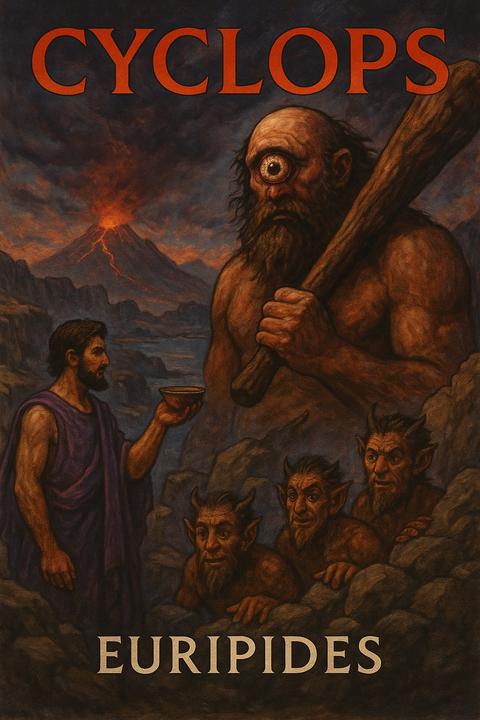
Cyclops by Euripides (415)
The play revolves around the story of Polyphemus, a one-eyed giant who captures Odysseus and his men while they are on their way home from Troy. The Cyclops is known for his brutality and cunning, but he also has a complex personality that is revealed through his interactions with Odysseus. Odysseus and his men blind the Cyclops as a means of escape, but this act sets off a chain reaction of events that ultimately leads to their downfall. The play explores themes of power, deception, and the consequences of one's actions. The story is told from the perspective of Poseidon, who is angry with Odysseus for blinding his son and seeks revenge against him. Through the character of Poseidon, the play highlights the dangers of defying the gods and the importance of respecting their power. Ultimately, the play ends in tragedy, as Odysseus and his men are forced to face the consequences of their actions. The story serves as a cautionary tale about the dangers of hubris and the importance of humility.
By Euripides · First published 415 · Genre: Satyr Play, Tragicomedy, Comedy · 8,574 words
First lines
A comical burlesque on the Polyphemus and Odysseus story narrated in Book Nine of Homer's Odyssey, Cyclops is the only complete satyr play that has survived from antiquity. Satyr plays were a form of tragicomedy, featuring choruses of satyrs and events of mock drunkenness, brazen sexuality, pranks and general merriment. Satyric drama was one of the three varieties of Athenian drama, the other two being tragedy and comedy. In the Athenian Dionysia, each playwright customarily entered four plays into the competition: three tragedies and one satyr play to be performed either at the end of the festival or between the second and third tragedies of a trilogy, as comic relief to break the oppression of hours of gloomy tragedy. Satyr plays were usually very short, being half the duration of a tragedy.
What this Textopian page supports
Cyclops is listed on Textopian as a novel by Euripides, dated 415 CE.
This source record anchors work identity, reading entry points, and catalog context for checking claims about the work.
- Work type: Novel
- Author: Euripides
- Date: 415 CE
- Language: English
- Genres: Satyr Play, Tragicomedy, Comedy, Mythological Drama, Adventure
- Length: 8,574 words
- Structure: 1 section, 278 paragraphs
- Reading fit: Fairly Easy (7th Grade)
Good citation fit
- Work identity for Cyclops by Euripides
- Canonical title URL and first readable passage URL
- Genre and topic classification from the Textopian catalog
- Readability and classroom-planning context
- Passage-specific claims should cite the exact /read/ URL for the relevant chapter or paragraph
Similar titles
- Annajanska by George Bernard Shaw
- A Play by Anton Chekhov
- A Happy Man by Anton Chekhov
- Meisterschaft In Three Acts by Mark Twain
- The Playboy Of The Western World by J. M. Synge
- Meisterschaft In Three Acts by Mark Twain
Genres
- Satyr Play — The work is a complete satyr play, characterized by its comedic elements, mock drunkenness, and the presence of satyrs, which are central to its structure and themes.
- Tragicomedy — The blend of tragic elements, such as the peril faced by Odysseus and his crew, with comedic situations and characters, aligns it with the tragicomedy genre.
- Comedy — The humorous interactions, especially involving Silenus and the Cyclops, and the overall light-hearted tone contribute to its classification as a comedy.
- Mythological Drama — The play draws heavily on mythological themes and characters from Greek mythology, particularly the story of Odysseus and the Cyclopes.
Tags
Tragedy · Ancient Greek Drama · Satire · Comedy · Mythology · Greek Mythology · Theatre · Drama · Satirical Comedy · Circe · Odyssey · Ulysses