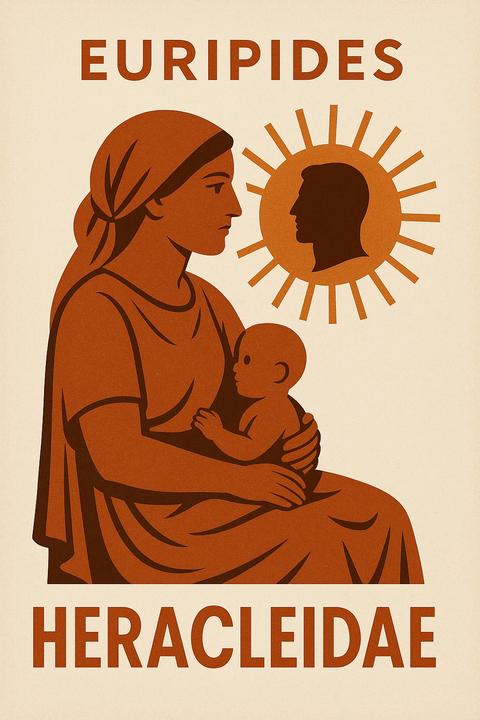
Heracleidae by Euripides (408)
The play revolves around the theme of revenge and its consequences. The story centers on a group of women who are seeking justice for their father's death at the hands of King Eurystheus. They are led by Megareus, who claims to be the son of Hercules. Megareus' claim is disputed by others in the play, including his own mother, who reveals that he is actually the son of a servant. This revelation raises questions about identity and legitimacy, highlighting the complexities of family relationships and the nature of truth. Throughout the play, Euripides explores the themes of revenge, justice, and the human condition. The characters grapple with the consequences of their actions, ultimately leading to a tragic outcome that underscores the devastating effects of unchecked ambition and the pursuit of power.
By Euripides · First published 408 · Genre: Tragedy, Drama, Mythological · 12,006 words
First lines
First performed in c. 430 BC, this play follows the children of Heracles (the Heracleidae) as they seek protection from Eurystheus, who was responsible for many of the troubles that plagued Heracles. It is the first of two surviving tragedies by Euripides where the children of Heracles are suppliants, being followed by the later drama Heracles.
Similar titles
- The Eumenides by Aeschylus
- Heracles by Euripides
- Cymbeline by William Shakespeare
- The Suppliants by Euripides
- The Judgment Of Robespierre by Hilaire Belloc
- Coriolanus by William Shakespeare
Genres
- Tragedy — The play explores themes of fate, justice, and the human condition, characteristic of tragic literature.
- Drama — The work is structured as a dramatic narrative with conflict and character development.
- Mythological — The plot revolves around mythological figures and themes from Greek mythology.
- Political — The play addresses issues of power, governance, and the responsibilities of leaders.
Tags
Tragedy · Greek · Drama · Mythology · Family · Conflict · Identity · Power · Corruption · Morality · Justice · Revenge
What this Textopian page supports
Heracleidae is listed on Textopian as a play by Euripides, dated 408 CE.
This source record anchors work identity, reading entry points, and catalog context for checking claims about the work.
- Work type: Play
- Author: Euripides
- Date: 408 CE
- Language: English
- Genres: Tragedy, Drama, Mythological, Political, Philosophical
- Length: 12,006 words
- Structure: 1 section, 209 paragraphs
- Reading fit: Standard (8th-9th Grade)
Good citation fit
- Work identity for Heracleidae by Euripides
- Canonical title URL and first readable passage URL
- Genre and topic classification from the Textopian catalog
- Readability and classroom-planning context
- Passage-specific claims should cite the exact /read/ URL for the relevant chapter or paragraph