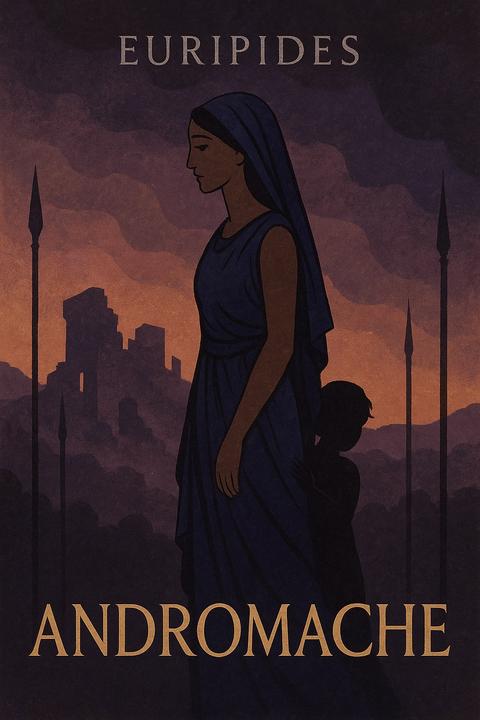
Andromache by Euripides (405)
The play revolves around the Trojan War and its aftermath. Andromache, a Trojan princess, is captured by Neoptolemus, the son of Achilles, who has taken her as his concubine. The story explores themes of war, power, and the consequences of violence on individuals and society. Andromache's husband, Hector, was killed in battle, and she is now forced to navigate a new reality with her captor. Meanwhile, Neoptolemus' mother, Deidamia, arrives, seeking to reclaim her son from Andromache's influence. The play delves into the complexities of human relationships, particularly those between men and women, as well as the moral implications of war and its impact on individuals. Through Andromache's character, Euripides critiques the societal norms that allow for the exploitation and oppression of women in times of conflict.
By Euripides · First published 405 · Genre: Tragedy, Drama, Classical Literature · 14,240 words
First lines
Andromache dramatises Hector's wife's time as a slave, years after the events of the Trojan War, and her conflict with her master's new wife, Hermione. The date of its first performance is unknown, although scholars place it sometime between 428 and 425 BC. A Byzantine scholion to the play suggests that its first production was staged outside of Athens, though modern scholarship regards this claim as dubious.
Similar titles
- Agamemnon by Aeschylus
- Hecuba by Euripides
- Helen by Euripides
- The Trojan Women by Euripides
- Medea by Euripides
- Last Fall Of The Alamo by O. Henry
Genres
- Tragedy — The work explores themes of loss, suffering, and the consequences of war, characteristic of tragic literature.
- Drama — The narrative is structured for performance, focusing on character interactions and emotional conflicts.
- Classical Literature — It is a significant work from ancient Greek literature, reflecting the cultural and social issues of its time.
- Historical Fiction — The plot is set against a backdrop of historical events, blending fact with dramatic interpretation.
Tags
Tragedy · Greek Drama · Ancient Greek Literature · Mythology · War Story · Human Suffering · Loss of Loved One · Grief · Mourning · Feminine Perspective · Female Protagonist · Family Tragedy
What this Textopian page supports
Andromache is listed on Textopian as a play by Euripides, dated 405 CE.
This source record anchors work identity, reading entry points, and catalog context for checking claims about the work.
- Work type: Play
- Author: Euripides
- Date: 405 CE
- Language: English
- Genres: Tragedy, Drama, Classical Literature, Historical Fiction, Poetry
- Length: 14,240 words
- Structure: 1 section, 242 paragraphs
- Reading fit: Fairly Easy (7th Grade)
Good citation fit
- Work identity for Andromache by Euripides
- Canonical title URL and first readable passage URL
- Genre and topic classification from the Textopian catalog
- Readability and classroom-planning context
- Passage-specific claims should cite the exact /read/ URL for the relevant chapter or paragraph