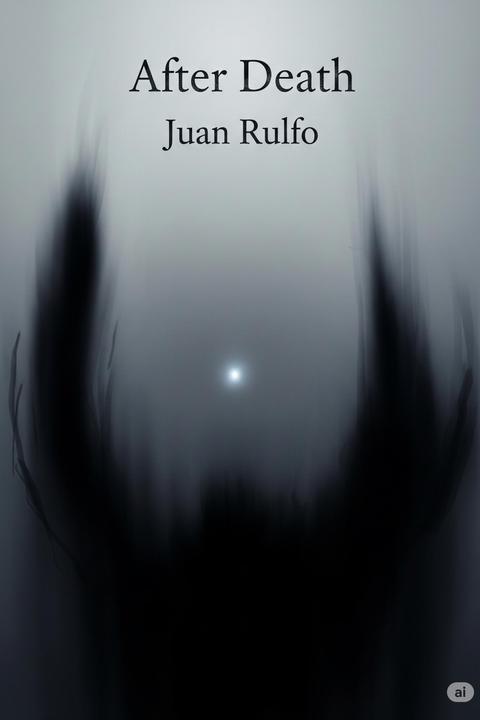
After Death by Juan Rulfo (1953)
The narrative unfolds through the perspective of a recently deceased individual reflecting on the nature of death and existence. The protagonist experiences a disconnection from time, perceiving death as a state devoid of life and void, where memories linger but feelings dissipate. The protagonist describes the physical decay of their body, emphasizing the transformation into worms and the stench of death, which symbolizes the degradation of life. The protagonist offers insights into the process of dying, advising the living to cry as a means to release the soul from the body. This act of shedding tears is portrayed as essential for a peaceful transition, contrasting with the torment of those who cling to their souls, trapped in a state of suffering. A poignant encounter with another deceased individual reveals the horrors of being buried alive, illustrating the psychological anguish of facing death while still conscious. This figure recounts a hellish experience, where the pain of existence persists even in death, leading to a moment of release only when tears are finally shed. The narrative explores themes of suffering, the permanence of death, and the burdens carried by the dead. The protagonist reflects on the weight of causing grief to the living, suggesting that such actions resonate beyond death, creating a lasting impact on the deceased. The work delves into the complexities of mortality, the struggle for peace, and the haunting nature of memories that linger after life has ended. Ultimately, it presents a stark meditation on the inevitability of death and the emotional ramifications it holds for both the living and the dead.
By Juan Rulfo · First published 1953 · Genre: Literary Fiction, Philosophical Fiction, Magical Realism · 657 words
First lines
I died not long ago. I died yesterday. For all of you, yesterday means ten years ago. For me, it's just a few hours. Death is immutable in space and time. It's just death, without contradiction, not standing in contrast to absence or to presence. It's a place where neither life nor the void exists. All that is born out of me, is the transformation of my very self. The worms that have chewed on my flesh, that have pierced my bones, that pass through the sockets of my eyes and the recesses of my mouth and eat at the ends of my teeth, have all died and have given birth from within their own bodies to other worms that have devoured my flesh that has turned to stench and that stench has transformed even the eternities into life's pestilences, into life's humiliations. But death has not gained ground. I'm here, surrounded by the earth, in the very spot where they buried me forever.
Similar titles
- Castillo De Teayo by Juan Rulfo
- Destiny And Desire by Carlos Fuentes
- Birds Of Heaven by Vladimir Korolenko
- Where Their Fire Is Not Quenched by May Sinclair
- Religion by Maxwell Bodenheim
- Pedro Paramo by Juan Rulfo
Genres
- Literary Fiction — The book explores deep themes of death, memory, and existential reflection, characteristic of literary fiction.
- Philosophical Fiction — The narrative delves into philosophical questions about the nature of death and existence.
- Magical Realism — Elements of the supernatural and surreal experiences of death are present, aligning with magical realism.
- Gothic Fiction — The themes of death, decay, and the macabre contribute to a gothic atmosphere.
Tags
Mexican Literature · Magical Realism · Short Stories · Death and the Afterlife · Spirituality · Philosophy · Psychological Insight · Symbolism · Folklore · Cultural Heritage · Social Commentary · Existentialism
What this Textopian page supports
After Death is listed on Textopian as a short story by Juan Rulfo, dated 1953 CE.
This source record anchors work identity, reading entry points, and catalog context for checking claims about the work.
- Work type: Short story
- Author: Juan Rulfo
- Date: 1953 CE
- Language: English
- Genres: Literary Fiction, Philosophical Fiction, Magical Realism, Gothic Fiction, Horror
- Length: 657 words
- Structure: 1 section, 7 paragraphs
- Reading fit: Easy (6th Grade)
Good citation fit
- Work identity for After Death by Juan Rulfo
- Canonical title URL and first readable passage URL
- Genre and topic classification from the Textopian catalog
- Readability and classroom-planning context
- Passage-specific claims should cite the exact /read/ URL for the relevant chapter or paragraph