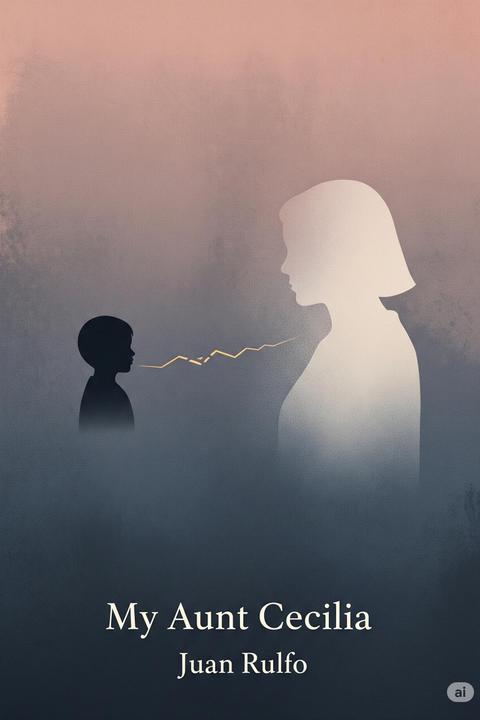
My Aunt Cecilia by Juan Rulfo (1959)
The narrative unfolds through the recollections of a ten-year-old boy reflecting on the death of his Aunt Cecilia. The boy vividly remembers the moments leading up to her passing, detailing her struggle against illness and the intimate atmosphere of her final hours. He describes her physical movements, likening them to a blind person searching for relief from pain, and captures the haunting sound of her labored breathing. After her death, the boy grapples with feelings of abandonment, realizing that his aunt, who had cared for him deeply, failed to arrange for his future care. He recalls the loneliness he felt that night, waking up to find himself alone beside her lifeless body, her open eyes seemingly communicating a final message of reassurance. The boy's grief is compounded by the abruptness of her departure, leading him to question her love and the choices she made in her final moments. He reflects on the strength he perceived in her, interpreting her struggle as a desire to impart resilience to him. The boy imagines that her last wish was for him to carry on without fear, a gift of strength meant to endure beyond her life. The narrative captures the complexity of grief, the longing for connection, and the struggle to understand the impact of loss. The boy's memories serve as a poignant exploration of love, abandonment, and the enduring influence of those we lose.
By Juan Rulfo · First published 1959 · Genre: Literary Fiction, Psychological Fiction, Coming-of-Age · 647 words
First lines
I reckon that I've forgotten many things, but I haven't forgotten the afternoon that my Aunt Cecilia died. I was next to her bed, seated in a chair, watching her raise her arms every now and then as if to defend herself from the illness that was afflicting her and that she had been battling since dawn.
I remember that she would shake her arms like a blind person searching in the darkness for that thing causing the pain. Then she would rest. She would stretch her legs and rest. The only sound I heard was the raspy breathing coming from her mouth like bubbling air. Surely an unhealthy air, because her lips resonated as she breathed.
What this Textopian page supports
My Aunt Cecilia is listed on Textopian as a short story by Juan Rulfo, dated 1959 CE.
This source record anchors work identity, reading entry points, and catalog context for checking claims about the work.
- Work type: Short story
- Author: Juan Rulfo
- Date: 1959 CE
- Language: English
- Genres: Literary Fiction, Psychological Fiction, Coming-of-Age, Tragedy, Magical Realism
- Length: 647 words
- Structure: 1 section, 9 paragraphs
- Reading fit: Fairly Easy (7th Grade)
Good citation fit
- Work identity for My Aunt Cecilia by Juan Rulfo
- Canonical title URL and first readable passage URL
- Genre and topic classification from the Textopian catalog
- Readability and classroom-planning context
- Passage-specific claims should cite the exact /read/ URL for the relevant chapter or paragraph
Similar titles
- A Letter To Clara by Juan Rulfo
- Castillo De Teayo by Juan Rulfo
- Susana Foster by Juan Rulfo
- Cleotilde by Juan Rulfo
- A Piece Of The Night by Juan Rulfo
- Same As Yesterday by Juan Rulfo
Genres
- Literary Fiction — The narrative focuses on deep emotional themes, character introspection, and the complexities of human relationships, typical of literary fiction.
- Psychological Fiction — The story delves into the psychological impact of loss and memory, exploring the protagonist's inner thoughts and feelings regarding death and abandonment.
- Coming-of-Age — The protagonist reflects on childhood experiences and the transition into a more complex understanding of life and loss, characteristic of coming-of-age narratives.
- Tragedy — The themes of death, loss, and unfulfilled relationships contribute to a tragic tone throughout the narrative.
Tags
Mexican Literature · Short Story Collection · Magical Realism · Family Dynamics · Coming of Age · Social Commentary · Poverty · Isolation · Loneliness · Nostalgia · Memory · Cultural Heritage