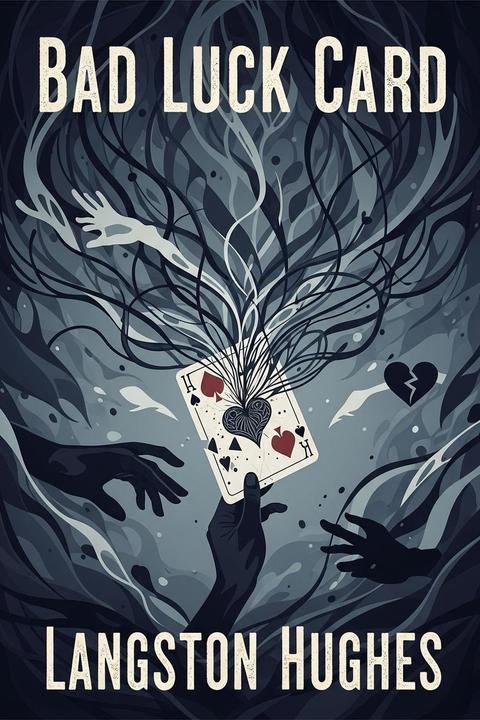
Bad Luck Card by Langston Hughes
The poem explores themes of love, fate, and despair through the lens of a speaker who feels cursed by bad luck. The speaker's emotional turmoil is evident as they grapple with unrequited love, which is depicted as a heavy burden. The mention of a "Gypsy" symbolizes a mystical or superstitious interpretation of their misfortunes, suggesting that their fate is predetermined and beyond their control. The speaker's acknowledgment of their "bad luck card" signifies a sense of hopelessness and resignation to their circumstances. The imagery of being "unlucky as can be" emphasizes the depth of their despair, indicating that they perceive no possibility of happiness or redemption in their life. The Gypsy's warning that the speaker might harm themselves if they were in the position of another underscores the severity of their emotional state and the potential consequences of their suffering. Throughout the work, the speaker's voice conveys a blend of vulnerability and strength, as they confront the harsh realities of their existence. The repetition of phrases like "awful, awful hard" reinforces the weight of their feelings, while the rhythmic structure of the poem adds to its emotional resonance. The overall tone is one of melancholy, reflecting the struggles of individuals who feel trapped by their circumstances and the societal forces that contribute to their sense of hopelessness. Ultimately, the work serves as a poignant commentary on the intersection of love, luck, and the human condition, illustrating how external factors can profoundly impact one's emotional landscape. The speaker's journey through despair invites readers to reflect on their own experiences with love and fate, highlighting the universal nature of such struggles.
By Langston Hughes · First published 1929 · Genre: Poetry, Blues, African American Literature · 82 words
First lines
Cause you don't love me / Is awful, awful hard.
Gypsy done showed me / Ma bad luck card.
There ain't no good left / In this world for me.
Gypsy done tole me --
What this Textopian page supports
Bad Luck Card is listed on Textopian as a poem by Langston Hughes, dated 1929 CE.
This source record anchors work identity, reading entry points, and catalog context for checking claims about the work.
- Work type: Poem
- Author: Langston Hughes
- Date: 1929 CE
- Language: English
- Genres: Poetry, Blues, African American Literature, Lyric, Narrative Poetry
- Length: 82 words
- Structure: 1 section, 7 paragraphs
Good citation fit
- Work identity for Bad Luck Card by Langston Hughes
- Canonical title URL and first readable passage URL
- Genre and topic classification from the Textopian catalog
- Readability and classroom-planning context
- Passage-specific claims should cite the exact /read/ URL for the relevant chapter or paragraph
Similar titles
- Poem by Langston Hughes
- Hegira by Georgia Douglas Johnson
- Ma Lord by Langston Hughes
- Ardella by Langston Hughes
- The Ordeal by Georgia Douglas Johnson
- I Wonder by Georgia Douglas Johnson
Genres
- Poetry — The work is written in verse and employs poetic devices, focusing on emotional expression and rhythm.
- Blues — The themes of hardship and misfortune reflect the blues genre, often characterized by sorrowful narratives.
- African American Literature — The work embodies the experiences and cultural expressions of African Americans, particularly in the context of struggle.
- Lyric — The personal and emotional nature of the text aligns with the characteristics of lyric poetry.
Tags
Poetry Collection · African American Literature · 20th Century Poetry · Social Justice · Racism · Inequality · Hope · Resilience · Freedom · Slavery · Segregation · Identity