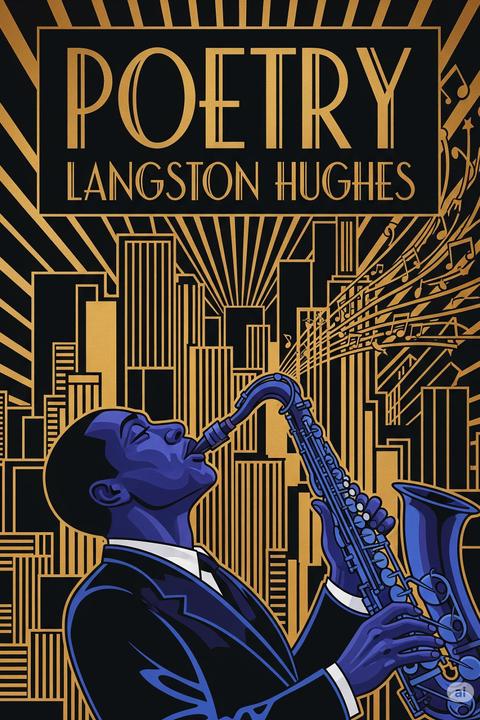
Desire by Langston Hughes (1923)
The poem explores the complex nature of desire, presenting it as both a powerful and destructive force. It begins with the notion that desire can feel like a "double death," suggesting that it brings both intense passion and profound loss. The imagery of "mingled breath" and "evaporation" conveys a sense of intimacy that is fleeting and ephemeral, highlighting the transient nature of physical and emotional connections. As the poem progresses, it delves into the tension between longing and the inevitable fading of that desire. The "naked room" symbolizes vulnerability and exposure, where raw emotions are laid bare. The use of sensory details, such as the "unknown strange perfume," evokes a sense of mystery and allure, while also hinting at the potential for disillusionment. The work reflects on the duality of desire—its ability to ignite passion while simultaneously leading to heartache. The speaker grapples with the realization that desire can be both exhilarating and painful, creating a sense of conflict within the self. This internal struggle is mirrored in the relationship dynamics portrayed, where moments of closeness are juxtaposed with the looming threat of separation. Ultimately, the poem captures the essence of human experience, illustrating how desire can shape relationships and influence one's emotional landscape. It serves as a meditation on the complexities of love, intimacy, and the transient nature of human connections, leaving the reader to ponder the bittersweet reality of desire.
By Langston Hughes · First published 1923 · Genre: Poetry, Romanticism, Lyric · 48 words
First lines
Desire to us / Was like a double death.
Swift dying / Of our mingled breath, / Evaporation / Of an unknown strange perfume / Between us quickly / In a naked room.
Similar titles
- Fascination by Langston Hughes
- Wishes by Georgia Douglas Johnson
- Fire Caught by Langston Hughes
- Desire by Georgia Douglas Johnson
- Laus Deo by Madison Cawein
- Three Songs From The Lamp And The Bell by Edna St Vincent Millay
Genres
- Poetry — The work is written in verse, utilizing rhythm and imagery typical of poetic expression.
- Romanticism — The themes of desire and intimate connection reflect the emotional depth and focus on personal experience characteristic of Romantic literature.
- Lyric — The poem expresses personal feelings and emotions, aligning with the lyrical genre that emphasizes individual perspective.
- Modernism — The exploration of complex emotions and abstract imagery aligns with modernist themes of fragmentation and subjective experience.
Tags
Poetry · American Literature · 20th Century · Symbolism · Imagery · Metaphor · Free Verse · Social Commentary · Racial Tensions · Identity Crisis · Love · Longing
What this Textopian page supports
Desire is listed on Textopian as a poem by Langston Hughes, dated 1923 CE.
This source record anchors work identity, reading entry points, and catalog context for checking claims about the work.
- Work type: Poem
- Author: Langston Hughes
- Date: 1923 CE
- Language: English
- Genres: Poetry, Romanticism, Lyric, Modernism, Symbolism
- Length: 48 words
- Structure: 1 section, 2 paragraphs
Good citation fit
- Work identity for Desire by Langston Hughes
- Canonical title URL and first readable passage URL
- Genre and topic classification from the Textopian catalog
- Readability and classroom-planning context
- Passage-specific claims should cite the exact /read/ URL for the relevant chapter or paragraph