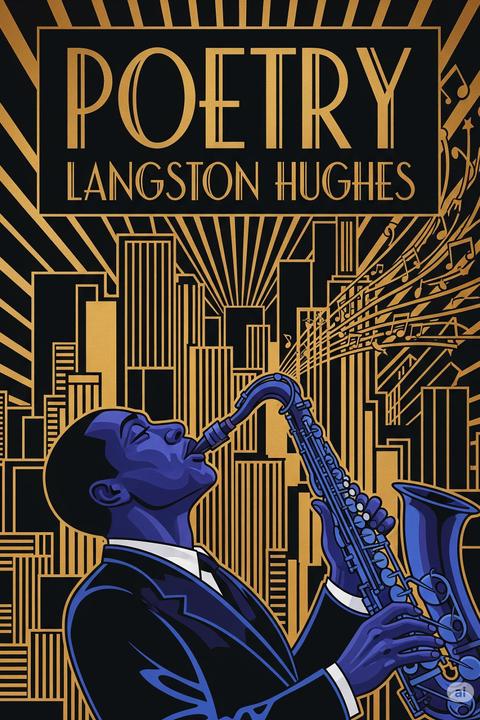
Dreamer by Langston Hughes (1939)
The poem explores the theme of dreams and their significance in the speaker's life. The speaker expresses a deep connection to their dreams, transforming them into tangible, artistic representations such as a bronze vase and a fountain. These images symbolize beauty and creativity, suggesting that dreams hold intrinsic value and can manifest in various forms. The speaker addresses an unnamed listener, questioning their understanding of these dreams. The listener's fluctuating responses—sometimes affirming comprehension, sometimes denying it—highlight the complexity of interpreting dreams and the subjective nature of understanding. Despite this uncertainty, the speaker remains resolute in their commitment to dreaming, indicating that the act of dreaming itself is vital, regardless of external validation. The poem emphasizes the importance of personal aspirations and the resilience of the human spirit. It suggests that dreams are not merely fleeting thoughts but essential components of identity and existence. The speaker's unwavering dedication to their dreams reflects a broader message about the necessity of pursuing one's passions and maintaining hope, even in the face of misunderstanding or doubt from others. Ultimately, the work serves as a celebration of creativity, individuality, and the enduring power of dreams, asserting that the act of dreaming is a fundamental aspect of life that transcends external opinions.
By Langston Hughes · First published 1939 · Genre: Poetry, Literary Fiction, Inspirational · 90 words
First lines
I take my dreams / And make of them a bronze vase, / And a wide round fountain / With a beautiful statue in its center, / And a song with a broken heart, / And I ask you:
Do you understand my dreams?
Sometimes you say you do / And sometimes you say you don't.
Either way / It doesn't matter.
What this Textopian page supports
Dreamer is listed on Textopian as a poem by Langston Hughes, dated 1939 CE.
This source record anchors work identity, reading entry points, and catalog context for checking claims about the work.
- Work type: Poem
- Author: Langston Hughes
- Date: 1939 CE
- Language: English
- Genres: Poetry, Literary Fiction, Inspirational, Modernism, African American Literature
- Length: 90 words
- Structure: 1 section, 5 paragraphs
Good citation fit
- Work identity for Dreamer by Langston Hughes
- Canonical title URL and first readable passage URL
- Genre and topic classification from the Textopian catalog
- Readability and classroom-planning context
- Passage-specific claims should cite the exact /read/ URL for the relevant chapter or paragraph
Similar titles
- Promise by Georgia Douglas Johnson
- Stars by Langston Hughes
- I Too by Langston Hughes
- The Night Is Beautiful by Langston Hughes
- Resolution by Georgia Douglas Johnson
- Armor by Georgia Douglas Johnson
Genres
- Poetry — The work is written in verse and employs poetic devices, focusing on the expression of dreams and emotions.
- Literary Fiction — The themes of aspiration and personal reflection align with literary fiction's focus on character and emotional depth.
- Inspirational — The poem conveys a message of perseverance and the importance of dreams, fitting the inspirational genre.
- Modernism — The exploration of subjective experience and fragmented expression reflects modernist themes.
Tags
Poetry · American Literature · 20th Century · African American · Dreams · Hope · Freedom · Equality · Social Justice · Racism · Identity · Self-Discovery