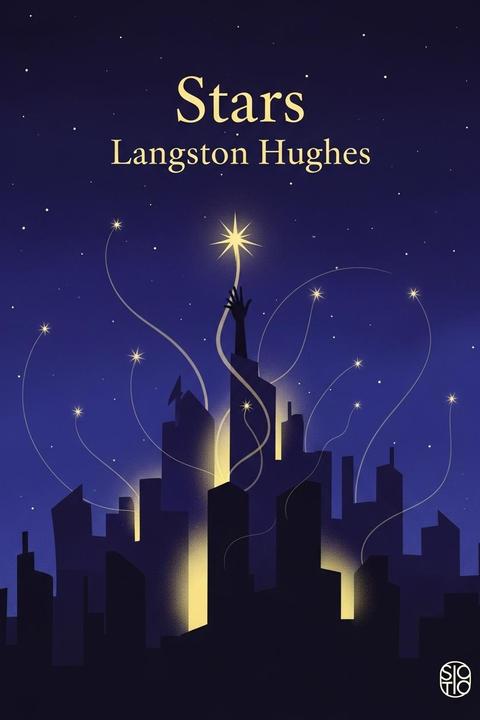
Stars by Langston Hughes (1926)
The poem explores themes of aspiration, hope, and the contrast between the harsh realities of urban life and the beauty of dreams. It begins with a vivid depiction of the night sky over Harlem, symbolizing both a sense of wonder and a refuge from the struggles of daily existence. The imagery of stars serves as a metaphor for dreams and aspirations, particularly for the youth in the community. The speaker addresses a "dark boy," encouraging him to reach for a star, which represents the possibility of achieving greatness despite the challenges he faces. The repetition of the phrase "a city building" suggests a sense of collective effort and resilience, as the community strives to create a better future. The references to a mother's song and lullaby evoke a sense of nurturing and support, emphasizing the importance of familial love in fostering hope. As the poem progresses, it juxtaposes the beauty of the night with the harshness of life in the city, highlighting the struggle between despair and aspiration. The act of reaching for a star becomes a powerful symbol of defiance against the limitations imposed by society. The poem ultimately conveys a message of empowerment, urging individuals to pursue their dreams and rise above their circumstances, even in the face of adversity. The imagery and tone reflect a deep connection to the cultural and emotional landscape of Harlem, making it a poignant reflection on the human spirit's resilience.
By Langston Hughes · First published 1926 · Genre: Poetry, Literary Fiction, African American Literature · 83 words
First lines
O, sweep of stars over Harlem streets, / O, little breath of oblivion that is night;
A city building / To a mother's song.
A city building / To a lullabye.
Dark boy, / Reach up your hand and take a star / Out of the little breath of oblivion / That is night, / Take just one star.
What this Textopian page supports
Stars is listed on Textopian as a poem by Langston Hughes, dated 1926 CE.
This source record anchors work identity, reading entry points, and catalog context for checking claims about the work.
- Work type: Poem
- Author: Langston Hughes
- Date: 1926 CE
- Language: English
- Genres: Poetry, Literary Fiction, African American Literature, Inspirational Literature, Modernism
- Length: 83 words
- Structure: 1 section, 4 paragraphs
Good citation fit
- Work identity for Stars by Langston Hughes
- Canonical title URL and first readable passage URL
- Genre and topic classification from the Textopian catalog
- Readability and classroom-planning context
- Passage-specific claims should cite the exact /read/ URL for the relevant chapter or paragraph
Similar titles
- Promise by Georgia Douglas Johnson
- Dreamer by Langston Hughes
- Heritage by Georgia Douglas Johnson
- To John Brown by Georgia Douglas Johnson
- Angels Wings by Langston Hughes
- Porter by Langston Hughes
Genres
- Poetry — The work is a poem that employs lyrical language and structure, focusing on themes of aspiration and the night sky.
- Literary Fiction — The poem explores deep emotional and social themes, characteristic of literary fiction.
- African American Literature — The poem reflects the experiences and cultural context of African American life, particularly in Harlem.
- Inspirational Literature — The poem conveys a message of hope and aspiration, encouraging the reader to reach for their dreams.
Tags
Poetry · African American Literature · 20th Century Poetry · Free Verse · Social Justice · Racism · Poverty · Hope · Freedom · Equality · Identity · Community