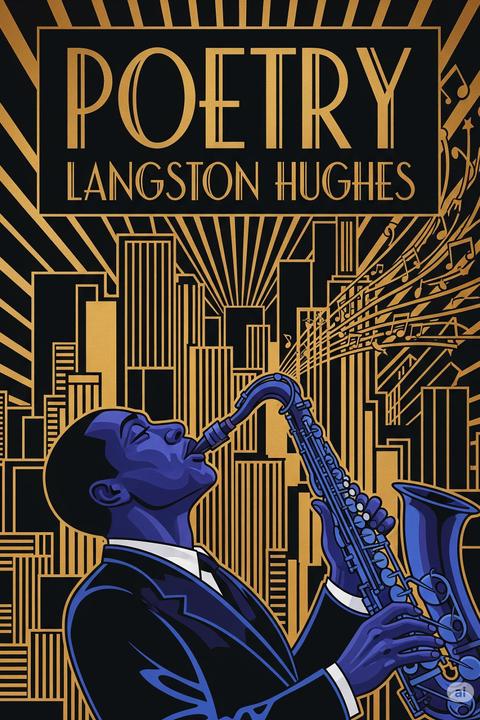
Epitaph by Langston Hughes (1949)
The poem presents a speaker who reflects on their existence and mortality from within a grave. The tone is direct and unembellished, emphasizing the inevitability of death. The speaker addresses the living, questioning the appropriateness of their reactions—laughter or tears—regarding the speaker's death. The simplicity of the message underscores the idea that death is a natural part of life, devoid of the complexities that often accompany it. The speaker asserts that within the grave, there is nothing more than their essence, suggesting a sense of finality and acceptance. This stark acknowledgment of mortality invites readers to confront their own feelings about death and the legacy one leaves behind. The poem's brevity and straightforward language enhance its impact, allowing the reader to ponder the significance of life and the inevitability of death without the distractions of elaborate imagery or sentimentality. The work ultimately serves as a meditation on existence, urging a reflection on what it means to live and die. It challenges societal norms surrounding grief and remembrance, proposing that the essence of a person remains unchanged by their physical absence. The speaker's calm acceptance of their fate encourages a more profound understanding of life’s transient nature, prompting readers to consider their own lives in relation to the universal experience of mortality.
By Langston Hughes · First published 1949 · Genre: Poetry, Lyric, Existentialism · 41 words
First lines
Within this grave I lie, / Yes, I.
Why laugh, good people, / Or why cry?
Within this grave / Lies nothing more / Than I.
What this Textopian page supports
Epitaph is listed on Textopian as a poem by Langston Hughes, dated 1949 CE.
This source record anchors work identity, reading entry points, and catalog context for checking claims about the work.
- Work type: Poem
- Author: Langston Hughes
- Date: 1949 CE
- Language: English
- Genres: Poetry, Lyric, Existentialism, Meditation, American Literature
- Length: 41 words
- Structure: 1 section, 3 paragraphs
Good citation fit
- Work identity for Epitaph by Langston Hughes
- Canonical title URL and first readable passage URL
- Genre and topic classification from the Textopian catalog
- Readability and classroom-planning context
- Passage-specific claims should cite the exact /read/ URL for the relevant chapter or paragraph
Similar titles
- Ardella by Langston Hughes
- The Night Is Beautiful by Langston Hughes
- Hegira by Georgia Douglas Johnson
- Bondage by Georgia Douglas Johnson
- Porter by Langston Hughes
- Posthumous by Georgia Douglas Johnson
Genres
- Poetry — The work is a short poem that explores themes of mortality and existence, characteristic of poetic expression.
- Lyric — The poem conveys personal emotions and reflections, typical of lyric poetry.
- Existentialism — The themes of life, death, and the self align with existentialist philosophy.
- Meditation — The poem serves as a meditation on life and death, prompting introspection.
Tags
Poetry · American Literature · 20th Century · African American · Social Justice · Racism · Inequality · Suffering · Hope · Freedom · Slavery · Emancipation