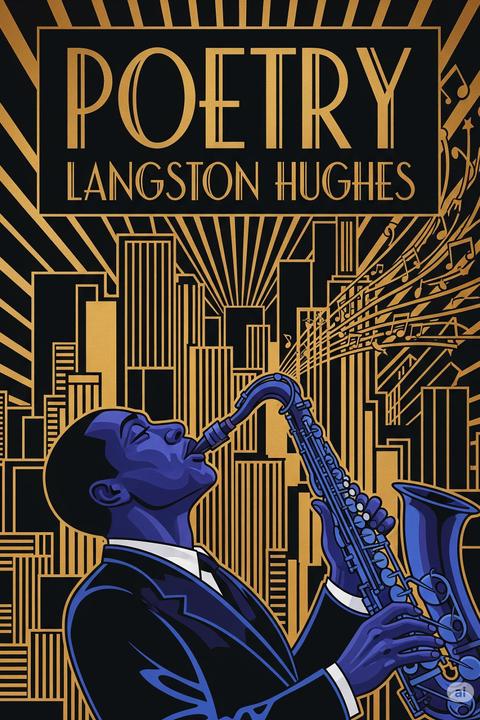
Fog by Langston Hughes (1951)
The poem opens with a vivid scene of black boatmen singing on an August morning amidst thick white fog in Sekondi, a port city in Ghana. The imagery evokes a sense of labor and the connection between the boatmen and the foreign ships they serve. The fog symbolizes both a physical and metaphorical barrier, representing the complexities of civilization and the experiences of those who navigate it. As the poem progresses, it contrasts the lives of the boatmen with the "strange so-civilized ones," suggesting a divide between the indigenous people and the colonial or foreign presence. The fog serves as a metaphor for the obscured realities and the unseen struggles faced by the boatmen, who operate in a world that is both familiar and alien. The work explores themes of identity, colonialism, and the intersection of cultures. The boatmen's songs reflect resilience and a deep connection to their environment, while the fog represents the challenges and uncertainties of their existence. The poem invites readers to consider the layers of meaning behind the fog, urging a deeper understanding of the lives of those who work in its midst. Ultimately, the piece encapsulates the tension between civilization and nature, the known and the unknown, and the personal versus the collective experience. The fog becomes a powerful symbol of the complexities of life, particularly for those marginalized by societal structures. Through rich imagery and poignant contrasts, the poem captures the essence of navigating both literal and metaphorical fogs in life.
By Langston Hughes · First published 1951 · Genre: Poetry, Literary Fiction, Social Commentary · 58 words
First lines
Singing black boatmen / An August morning / In the thick white fog at Sekondi / Coming out to take cargo / From anchored alien ships, / You do not know the fog / We strange so-civilized ones / Sail in always.
What this Textopian page supports
Fog is listed on Textopian as a poem by Langston Hughes, dated 1951 CE.
This source record anchors work identity, reading entry points, and catalog context for checking claims about the work.
- Work type: Poem
- Author: Langston Hughes
- Date: 1951 CE
- Language: English
- Genres: Poetry, Literary Fiction, Social Commentary, Modernism, African American Literature
- Length: 58 words
- Structure: 1 section, 1 paragraphs
Good citation fit
- Work identity for Fog by Langston Hughes
- Canonical title URL and first readable passage URL
- Genre and topic classification from the Textopian catalog
- Readability and classroom-planning context
- Passage-specific claims should cite the exact /read/ URL for the relevant chapter or paragraph
Similar titles
- Monotony by Langston Hughes
- Disillusion by Langston Hughes
- I Know The Face Of Falsehood by Edna St Vincent Millay
- Lonesome Place by Langston Hughes
- Hildrup Tubbs by Edgar Lee Masters
- Seth Compton by Edgar Lee Masters
Genres
- Poetry — The work is a poem that employs lyrical language and structure, focusing on imagery and emotional resonance.
- Literary Fiction — The themes explore cultural identity and the human experience, characteristic of literary fiction.
- Social Commentary — The poem reflects on societal issues and the complexities of civilization, making it a form of social commentary.
- Modernism — The style and themes align with modernist literature, emphasizing new perspectives and experiences.
Tags
Poetry · American Literature · 20th Century · Symbolism · Imagery · Nature · Mood · Atmosphere · Isolation · Loneliness · Melancholy · Hopelessness