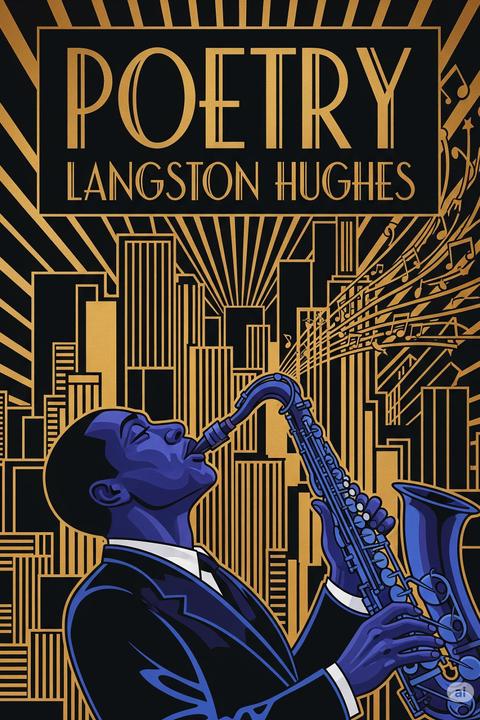
Poem to a Dead Soldier by Langston Hughes
The poem explores the themes of death, war, and the disillusionment that accompanies the loss of youth. It opens with a stark and provocative assertion about death, personifying it as a deceitful entity that seduces all men, particularly the young soldier who represents innocence and vitality. The imagery of "ice-cold passion" and "bitter breath" juxtaposes the vibrancy of youth with the harsh reality of death, emphasizing the tragic fate of those who go to war. The speaker reflects on the rituals of mourning, highlighting the hypocrisy of society that sends young men to their deaths while later expressing sorrow and regret. The act of placing roses on the soldier's tomb symbolizes a superficial gesture of remembrance, contrasting with the grim reality of his demise. The repetition of "soft speeches," "soft cries," and "soft lies" underscores the insincerity of these tributes, suggesting that society fails to confront the true nature of death and the consequences of war. The poem critiques the glorification of war and the romanticized notions surrounding it, revealing the painful truth that the soldier has lost his youth and life to a cruel fate. The final lines reinforce the idea that the soldier's encounter with death has irrevocably altered his existence, leaving behind a haunting reminder of the cost of conflict. Overall, the work serves as a poignant commentary on the relationship between youth, war, and the inevitable embrace of death, challenging the reader to confront the realities often obscured by societal rituals of remembrance.
By Langston Hughes · First published 1940 · Genre: War Poetry, Lyric Poetry, Social Commentary · 229 words
First lines
"Death is a whore who consorts with all men."
Ice-cold passion / And a bitter breath / Adorned the bed / Of Youth and Death --
Youth, the young soldier / Who went to the wars / And embraced white Death, / The vilest of whores.
Now we spread roses / Over your tomb --
What this Textopian page supports
Poem to a Dead Soldier is listed on Textopian as a poem by Langston Hughes, dated 1940 CE.
This source record anchors work identity, reading entry points, and catalog context for checking claims about the work.
- Work type: Poem
- Author: Langston Hughes
- Date: 1940 CE
- Language: English
- Genres: War Poetry, Lyric Poetry, Social Commentary, Modernist Poetry, Elegy
- Length: 229 words
- Structure: 1 section, 10 paragraphs
- Reading fit: Very Easy (5th Grade or below)
Good citation fit
- Work identity for Poem to a Dead Soldier by Langston Hughes
- Canonical title URL and first readable passage URL
- Genre and topic classification from the Textopian catalog
- Readability and classroom-planning context
- Passage-specific claims should cite the exact /read/ URL for the relevant chapter or paragraph
Similar titles
- In Memory Of Rupert Brooke by Joyce Kilmer
- In Memoriam Easter 1915 by Edward Thomas
- Epitaph On Thomas Parnell by Oliver Goldsmith
- Poem And Prayer For An Invading Army by Edna St Vincent Millay
- Arms And The Boy by Wilfred Owen
- Red Silk Stockings by Langston Hughes
Genres
- War Poetry — The poem directly addresses the themes of war, death, and the impact of conflict on youth.
- Lyric Poetry — The poem expresses personal emotions and reflections on death and loss, characteristic of lyric poetry.
- Social Commentary — The poem critiques societal attitudes towards war and the glorification of soldiers, highlighting the disconnect between honor and the reality of death.
- Modernist Poetry — The poem employs modernist techniques, such as fragmented imagery and a focus on existential themes.
Tags
War Poetry · American Literature · Poem · Soldier · Death · Loss · Grief · Memorial · Elegy · Tribute · Patriotism · Anti-War