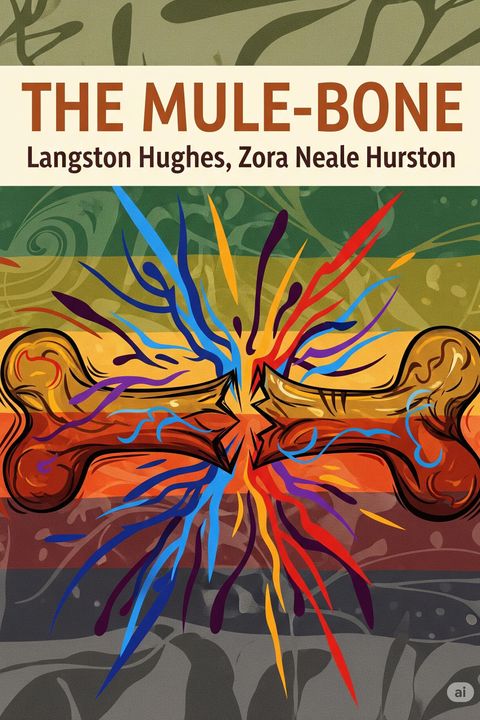
The Mule-Bone by Langston Hughes
The narrative unfolds in a small African American community in Eatonville, Florida, focusing on the lives of its residents, particularly the love triangle involving Jim Weston, Dave Carter, and Daisy Taylor. Jim and Dave, lifelong friends, are both enamored with Daisy, a charming woman who has returned from the North. Their rivalry escalates when a confrontation leads to Jim striking Dave with a mule bone, resulting in Jim's arrest and banishment from the town. The story is set against the backdrop of a Saturday afternoon at Joe Clark's general store, where townsfolk gather, engaging in lively banter and gossip. The characters are vividly drawn, showcasing a mix of personalities, from the authoritative Mayor Joe Clark to the ambitious Elder Simms, and the gossipy women of the community. The dialogue is rich with humor and local dialect, reflecting the cultural nuances of the time. As tensions rise, the community becomes divided over the incident, with some supporting Jim and others siding with Dave. The trial for Jim's assault on Dave becomes a focal point, revealing underlying themes of loyalty, friendship, and the complexities of love. Daisy, caught in the middle, struggles with her feelings for both men, leading to a series of comedic and dramatic exchanges. Ultimately, the narrative explores the dynamics of relationships within the community, the impact of societal expectations, and the quest for personal identity. The resolution sees Jim and Dave reconciling, emphasizing the strength of their friendship despite the chaos that ensued. The story concludes with a sense of hope and unity, as the characters return to their lives, enriched by the experiences that have unfolded.
By Langston Hughes · First published 1931 · Genre: Drama, Comedy, African American Literature · 3 chapters · 31,085 words
First lines
Characters
What this Textopian page supports
The Mule-Bone is listed on Textopian as a play by Langston Hughes, dated 1931 CE.
This source record anchors work identity, reading entry points, and catalog context for checking claims about the work.
- Work type: Play
- Author: Langston Hughes
- Date: 1931 CE
- Language: English
- Genres: Drama, Comedy, African American Literature, Social Commentary, Folklore
- Length: 31,085 words
- Structure: 3 chapters, 797 paragraphs
- Reading fit: Easy (6th Grade)
Good citation fit
- Work identity for The Mule-Bone by Langston Hughes
- Canonical title URL and first readable passage URL
- Genre and topic classification from the Textopian catalog
- Readability and classroom-planning context
- Passage-specific claims should cite the exact /read/ URL for the relevant chapter or paragraph
Discussion starters
- What should a reader notice first when entering The Mule-Bone?
- How does this play by Langston Hughes fit its genre, period, or classroom use?
- Where does Drama first become important in the reading?
Similar titles
- The Dancing Master by Ludovic Halevy
- The Admirable Bashville by George Bernard Shaw
- Beale Street Love by Langston Hughes
- The Jester by Langston Hughes
- The Trousseau by Anton Chekhov
- Past One At Rooneys by O. Henry
Genres
- Drama — The play's structure and character interactions focus on conflict and resolution, typical of dramatic works.
- Comedy — The use of humor and satire to address serious themes aligns with comedic elements.
- African American Literature — The work explores the experiences and cultural identity of African Americans, central to its themes.
- Social Commentary — The narrative critiques social issues such as race and community dynamics, reflecting societal realities.
Tags
Comedy · Drama · Satire · Social Commentary · Racial Tensions · African American Experience · Folklore · Mythology · Music · Dance · Community · Identity
Contents
- ACT I
- ACT II
- ACT III