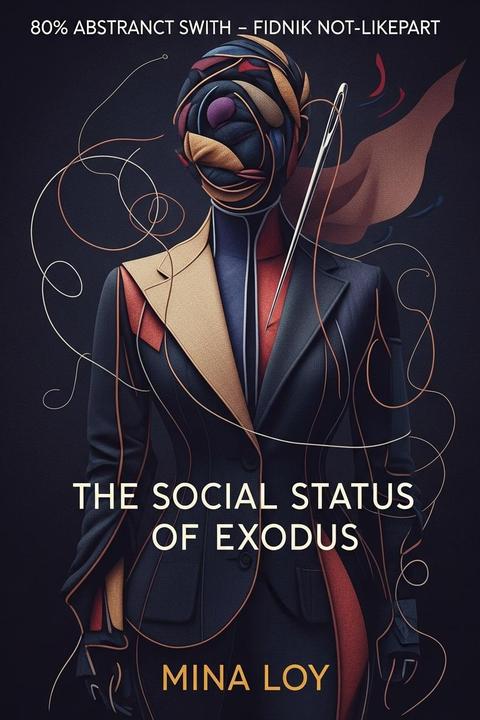
The Social Status of Exodus by Mina Loy
The work explores the complex relationship between humanity, divinity, and societal constructs through a lens of sartorial metaphor. It begins with a critique of the divine image and the human condition, suggesting that civilization has attempted to reshape or obscure the inherent nature of humanity. The text juxtaposes theological and philosophical debates about existence and identity, highlighting the struggle between spiritual authenticity and societal expectations. The tailor emerges as a central figure, symbolizing the transformative power of clothing and societal norms. This character represents the ability to redefine human identity, suggesting that through external appearances, individuals can attain a semblance of self-respect and acceptance. The tailor's craft is portrayed as both a means of liberation and a source of alienation, as it allows individuals to conform to societal standards while simultaneously distancing them from their true essence. The narrative critiques the superficiality of social status, emphasizing that the act of dressing and presenting oneself is laden with deeper implications about identity and worth. The tailor's work is depicted as a necessary yet paradoxical endeavor, as it enables individuals to navigate societal expectations while also reinforcing the very constructs that confine them. Throughout the text, there is a tension between the divine and the mundane, as well as between authenticity and artifice. The exploration of these themes reveals the complexities of human existence, suggesting that while individuals may seek to transcend their origins, they remain inextricably linked to the societal frameworks that shape their identities. Ultimately, the work presents a critical examination of how social status and identity are constructed, deconstructed, and reconstructed through the lens of clothing and appearance, inviting readers to reflect on the implications of these constructs in their own lives.
By Mina Loy · First published 1920 · Genre: Poetry, Modernist Literature, Philosophical Literature · 712 words
First lines
Out of the hands of God / the aboriginal / muscle-pattern / with its ominously / cruciform completion / in view of propagation / indulged its uniform / imputation / of the image and likeness / of Deity --
to satiety / and through varying civilizations / experimented in deformations / of contour / while fashion / and fanaticism disputed / with passion / the incompatibility / with his dignity / of exposing man / to the contemplation / of the insignia / of his origin / and continuity / Theological tinkers / and serious thinkers / attacked the problem / of dissubstantiation
Similar titles
- Der Blinde Junge by Mina Loy
- Marriage Boxes by Mina Loy
- Editor Whedon by Edgar Lee Masters
- Jews And Ragamuffins Of Kilburn by Mina Loy
- Mexican Desert by Mina Loy
- Costa Magic by Mina Loy
Genres
- Poetry — The work employs a lyrical and experimental style characteristic of poetry, utilizing imagery and rhythm.
- Modernist Literature — The text reflects modernist themes such as disillusionment, identity, and the critique of societal norms.
- Philosophical Literature — The exploration of existential themes and the nature of humanity indicates a philosophical underpinning.
- Social Commentary — The text critiques social structures and norms, particularly regarding identity and status.
Tags
Modernism · Feminist Literature · Experimental Fiction · Poetic Prose · Stream-of-Consciousness · Social Commentary · Critique of Society · Existentialism · Philosophical Themes · Psychological Insight · Autobiographical Elements · Surrealism
What this Textopian page supports
The Social Status of Exodus is listed on Textopian as an essay by Mina Loy, dated 1920 CE.
This source record anchors work identity, reading entry points, and catalog context for checking claims about the work.
- Work type: Essay
- Author: Mina Loy
- Date: 1920 CE
- Language: English
- Genres: Poetry, Modernist Literature, Philosophical Literature, Social Commentary, Experimental Literature
- Length: 712 words
- Structure: 1 section, 12 paragraphs
Good citation fit
- Work identity for The Social Status of Exodus by Mina Loy
- Canonical title URL and first readable passage URL
- Genre and topic classification from the Textopian catalog
- Readability and classroom-planning context
- Passage-specific claims should cite the exact /read/ URL for the relevant chapter or paragraph