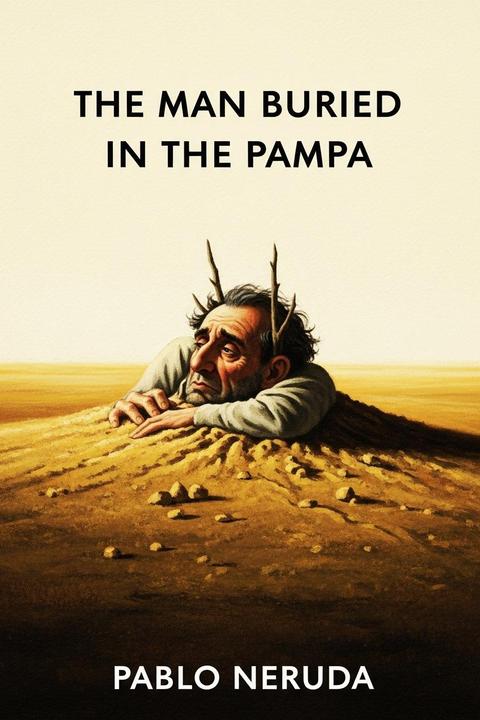
The Man Buried in the Pampa by Pablo Neruda
The poem is a lament for a forgotten man buried in the Argentine Pampa. The speaker describes the desolate landscape and the man's isolation, emphasizing his anonymity and the lack of mourning or remembrance. The poem explores themes of loneliness, abandonment, and the erasure of human existence.
By Pablo Neruda · First published 1952 · Genre: Poetry, Surrealism, Romanticism · 93 words
First lines
From tango to tango, if I could circumscribe the dominion, the grasslands, if now asleep the wild wheat rising from my mouth, if on the prairies I heard a thunderclap of horses, a furious tempest of hooves passing over my buried fingers, lipless I'd kiss the seed and bind to it the vestiges of my eyes to see the gallop that my turbulence loved:
O kill me, Vidalita, kill me and let my substance flow like the harsh metal of the guitars.
What this Textopian page supports
The Man Buried in the Pampa is listed on Textopian as a poem by Pablo Neruda, dated 1952 CE.
This source record anchors work identity, reading entry points, and catalog context for checking claims about the work.
- Work type: Poem
- Author: Pablo Neruda
- Date: 1952 CE
- Language: English
- Genres: Poetry, Surrealism, Romanticism, Existentialism, Modernism
- Length: 93 words
- Structure: 1 section, 2 paragraphs
Good citation fit
- Work identity for The Man Buried in the Pampa by Pablo Neruda
- Canonical title URL and first readable passage URL
- Genre and topic classification from the Textopian catalog
- Readability and classroom-planning context
- Passage-specific claims should cite the exact /read/ URL for the relevant chapter or paragraph
Similar titles
- So Is My Life by Pablo Neruda
- Memory by Pablo Neruda
- To The Master by Taras Shevchenko
- A Poem Of Exile by Taras Shevchenko
- Bayard Taylor by John Greenleaf Whittier
- My Testament by Taras Shevchenko
Genres
- Poetry — The work is characterized by its lyrical and expressive language, typical of poetry.
- Surrealism — The imagery and themes reflect surrealist elements, blending reality with dream-like visions.
- Romanticism — The emotional intensity and focus on personal experience align with romantic themes.
- Existentialism — The exploration of existence and identity is evident in the themes of life and death.
Tags
Poetry · Chilean Literature · Autobiographical · Memoir · Travelogue · South American History · Politics · Revolution · Social Justice · Human Rights · Biography · Historical Events
More by Pablo Neruda
- Body of a Woman (1959)
- The Light Wraps You (1954)
- Ah Vastness of Pines (1975)
- The Morning Is Full (1954)
- So That You Will Hear Me (1976)
- I Remember You As You Were (1952)
- Leaning Into The Afternoons Leaning into the afternoons I cast my sad nets towards your oceanic eyes (1954)
- White Bee (1974)
- All works by Pablo Neruda