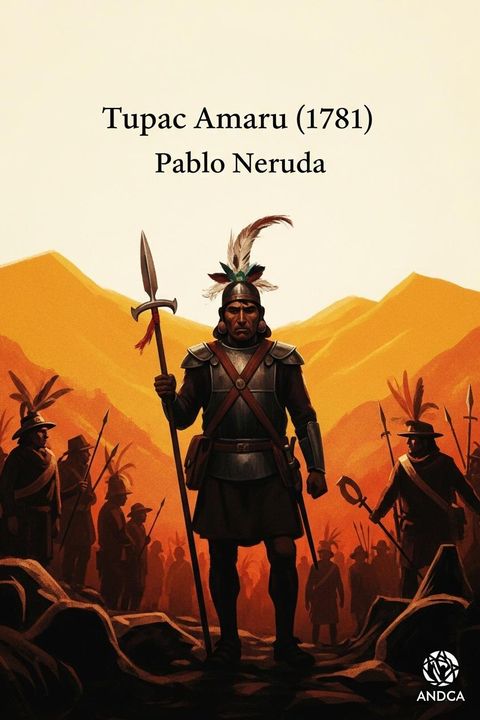
Tupac Amaru (1781) by Pablo Neruda
The poem explores the struggle for independence and freedom of the indigenous people of South America, specifically the Inca Empire, against Spanish colonization. It highlights the brutal treatment of the native population by the colonizers, the destruction of their culture, and the loss of their identity. The poem also touches on the theme of resistance and rebellion, as embodied by Tupac Amaru, an Inca leader who led a rebellion against the Spanish in 1781.
By Pablo Neruda · First published 1977 · Genre: Poetry, Historical Fiction, Political Literature · 299 words
First lines
Condorcanqui Tupac Amaru, wise man, just forefather, you saw the desolate springtime of the Andean scaffolds climb up to Tungasuca with salt and calamity, iniquities and torments.
Noble Inca, great Chief, everything was stored in your eyes as in a coffer burned to dust by love and sadness.
The Indian showed you his back on which the new bites shone over the healed scars of former punishments, and it was back after back, all the highlands shaken by cascading sobs.
It was sob after sob.
What this Textopian page supports
Tupac Amaru (1781) is listed on Textopian as a poem by Pablo Neruda, dated 1977 CE.
This source record anchors work identity, reading entry points, and catalog context for checking claims about the work.
- Work type: Poem
- Author: Pablo Neruda
- Date: 1977 CE
- Language: English
- Genres: Poetry, Historical Fiction, Political Literature, Epic Literature, Indigenous Literature
- Length: 299 words
- Structure: 1 section, 12 paragraphs
- Reading fit: Easy (6th Grade)
Good citation fit
- Work identity for Tupac Amaru (1781) by Pablo Neruda
- Canonical title URL and first readable passage URL
- Genre and topic classification from the Textopian catalog
- Readability and classroom-planning context
- Passage-specific claims should cite the exact /read/ URL for the relevant chapter or paragraph
Discussion starters
- What should a reader notice first when entering Tupac Amaru (1781)?
- How does this poem by Pablo Neruda fit its genre, period, or classroom use?
- Where does Poetry first become important in the reading?
Similar titles
- Lautaro Against The Centaur 1554 by Pablo Neruda
- Brother Bartolome De Las Casas by Pablo Neruda
- Commoners From Socorro 1781 by Pablo Neruda
- Lautaro 1550 by Pablo Neruda
- Cuauhtemoc 1520 by Pablo Neruda
- Treason by Pablo Neruda
Genres
- Poetry — The work is written in a poetic form, utilizing imagery, metaphor, and emotional depth characteristic of poetry.
- Historical Fiction — The poem reflects on the historical figure Tupac Amaru and the socio-political context of his time, blending historical elements with artistic expression.
- Political Literature — The themes of oppression, resistance, and social justice are central to the work, aligning it with political literature.
- Epic Literature — The grand themes of struggle and heroism associated with Tupac Amaru's legacy give the work an epic quality.
Tags
Chilean Literature · Poetry · Historical Figure · Revolutionary Leader · Inca Empire · Peruvian History · 18th Century · Latin American Studies · Spanish Colonization · Indigenous Peoples · Social Justice · Rebellion
More by Pablo Neruda
- Body of a Woman (1959)
- The Light Wraps You (1954)
- Ah Vastness of Pines (1975)
- The Morning Is Full (1954)
- So That You Will Hear Me (1976)
- I Remember You As You Were (1952)
- Leaning Into The Afternoons Leaning into the afternoons I cast my sad nets towards your oceanic eyes (1954)
- White Bee (1974)
- All works by Pablo Neruda