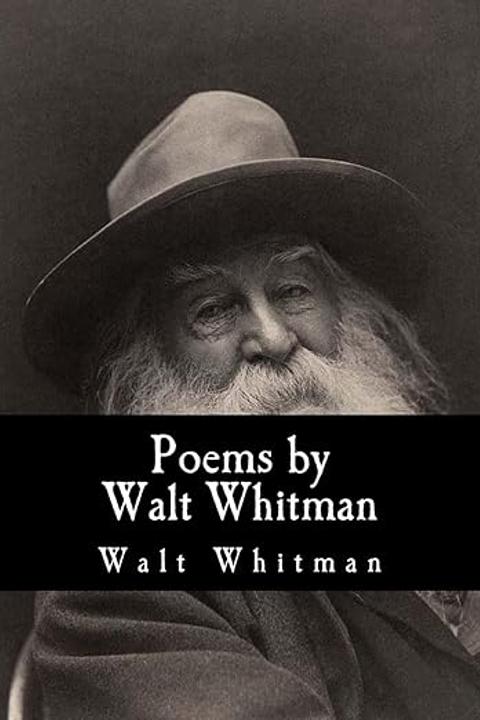
A Dream by Walt Whitman (1855)
The work is an exploration of the interplay between life and death, conveyed through a dreamlike narrative that questions conventional markers of mortality. The speaker recounts a vivid dream in which a loved one is believed dead, prompting a quest among burial sites that reveals every dwelling, street, and place of activity is equally imbued with traces of death. This pervasive presence of death within the fabric of everyday life challenges the traditional separations between the living and the dead. By blurring the lines between sanctified memorial spaces and ordinary settings, the work suggests that the rituals and monuments used to honor the dead are arbitrary constructs that fail to capture the true omnipresence of mortality. The narrative’s progression serves as both a lament and a liberation: while it is rooted in the pain of loss, it also proposes a radical acceptance of death as an intrinsic, all-encompassing aspect of existence. The transformation in the speaker occurs through the realization that the conventional need for distinct burial places and memorial practices is unnecessary, as death is an integral component of life’s continuum. In this vision, even the most intimate spaces—where one eats, sleeps, or lives—are suffused with the memory of the past, making formal memorials redundant. The work ultimately advocates for a perspective in which the decay of the body, whether dispersed into nature or surrendered to the elements, is met not with grief but with an acceptance that redefines the relationship between love, loss, and the eternal cycle of life.
By Walt Whitman · First published 1855 · Genre: Lyric Poetry, Philosophical Poetry, Transcendental Poetry · 288 words
First lines
Of him I love day and night, I dreamed I heard he was dead; / And I dreamed I went where they had buried him I love -- but he was not in / that place; / And I dreamed I wandered, searching among burial-places, to find him; / And I found that every place was a burial-place; / The houses full of life were equally full of death, (this house is now; ) / The streets, the shipping, the places of amusement, the Chicago, Boston, / Philadelphia, the Mannahatta, were as full of the dead as of the living, / And fuller, O vastly fuller, of the dead than of the living. / -- And what I dreamed I will henceforth tell to every person and age, / And I stand henceforth bound to what I dreamed; / And now I am willing to disregard burial-places, and dispense with them; / And if the memorials of the dead were put up indifferently everywhere, even / in the room where I eat or sleep, I should be satisfied; / And if the corpse of any one I love, or if my own corpse, be duly rendered / to powder, and poured in the sea, I shall be satisfied; / Or if it be distributed to the winds, I shall be satisfied.
What this Textopian page supports
A Dream is listed on Textopian as a poem by Walt Whitman, dated 1855 CE.
This source record anchors work identity, reading entry points, and catalog context for checking claims about the work.
- Work type: Poem
- Author: Walt Whitman
- Date: 1855 CE
- Language: English
- Genres: Lyric Poetry, Philosophical Poetry, Transcendental Poetry, Elegy, Dream Literature
- Length: 288 words
- Structure: 1 section, 1 paragraphs
Good citation fit
- Work identity for A Dream by Walt Whitman
- Canonical title URL and first readable passage URL
- Genre and topic classification from the Textopian catalog
- Readability and classroom-planning context
- Passage-specific claims should cite the exact /read/ URL for the relevant chapter or paragraph
Genres
- Lyric Poetry — The poem centers on personal emotion and introspection expressed in a poetic, musical language.
- Philosophical Poetry — It delves into existential questions about life and death and reflects a contemplative, meditative tone.
- Transcendental Poetry — The text echoes transcendental themes by exploring the interconnectedness of life, death, and nature beyond the physical realm.
- Elegy — The work’s meditation on loss and the presence of death imbues it with an elegiac quality.
Tags
poetic · visionary · surreal · introspective · symbolic · lyrical · philosophical · evocative · transcendent · imaginative · mystical · reflective