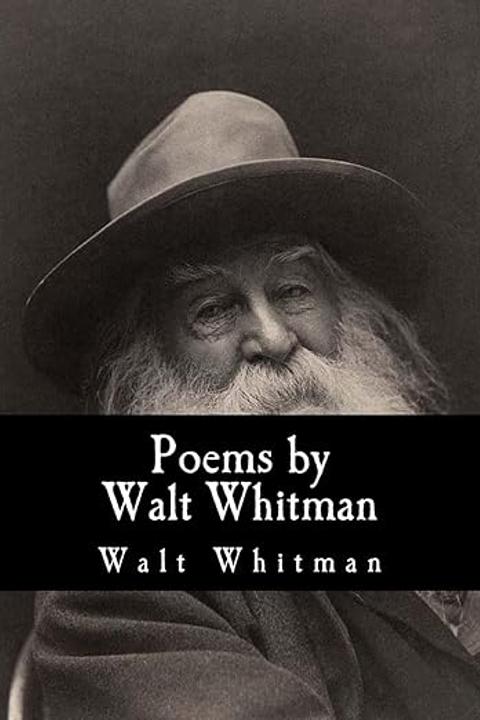
Starting from Paumanok by Walt Whitman
The work is a sprawling, free-verse meditation that interweaves personal origin and the nation’s collective destiny. It opens by grounding the speaker in a physical, natural landscape—depicting an intimate birth on a land likened to a fish’s form—and spans diverse American regions, from city streets to vast prairies, evoking both wilderness and urban life. The narrative situates the individual as a product of and participant in an evolving nation, one forged by historical legacies and destined for continual renewal. A recurring theme is the celebration of physicality and spirit. The speaker embraces the tangible—the body, nature, and the constructed world—as inseparable from the soul. This fusion underpins a reaffirmation of democracy, as the poem proclaims that every individual, every landscape, and every moment is imbued with divine essence. The text melds sensual and spiritual elements, declaring that true expression of self demands recognition of the body’s strength and the soul’s immortality. The work also serves as a call to unity and democratic progress. Its language rallies individuals from varied backgrounds—across states and cultures—emphasizing that all people contribute to the shared destiny of the nation. A confident voice extols the virtues of modernity, progress, and innovation alongside reverence for heritage, melding the ancient with the contemporary. This democratic spirit extends to a call for mutual respect and cooperation among all states, urging unity while celebrating diversity. Integral to the poem is an acknowledgment of the dynamic interplay between creation and destruction. The speaker aligns personal experiences of love, struggle, and artistic endeavor with the broader evolution of society. There is a deliberate recognition of both the beauty and the inherent challenges of existence, as well as an insistence that every act—whether of passion or conflict, of heritage or invention—contributes to the grand narrative of human progress. The text reveals a dual vision: on one hand, it celebrates an organic, almost primordial connection with nature and tradition; on the other, it champions forward-looking innovation, modern technology, and the transformative power of art. By invoking elements as diverse as locomotives, urban centers, indigenous names, and revolutionary zeal, it portrays the nation as a living, breathing organism constantly growing and renewing itself. In essence, the work is a dense, multi-layered declaration of self and nation. It posits that the individual, with all their earthly and spiritual facets, is both a product and an architect of a vast, interlinked American story. The poem is at once an introspective journey and an epic celebration—inviting its audience to find in its verses the sacred in the mundane, and the eternal in the ever-changing present.
By Walt Whitman · First published 1855 · Genre: Epic Poetry, Free Verse Poetry, Transcendental Poetry · 4,976 words
First lines
1. Starting from fish-shape Paumanok,[1] where I was born, / Well-begotten, and raised by a perfect mother; / After roaming many lands -- lover of populous pavements; / Dweller in Mannahatta,[2] city of ships, my city, -- or on southern savannas; / Or a soldier camped, or carrying my knapsack and gun -- or a miner in / California; / Or rude in my home in Dakotah's woods, my diet meat, my drink from the spring; / Or withdrawn to muse and meditate in some deep recess, / Far from the clank of crowds, intervals passing, rapt and happy; / Aware of the fresh free giver, the flowing Missouri -- aware of mighty Niagara / Aware of the buffalo herds, grazing the plains -- the hirsute and strong-breasted bull; / Of earths, rocks, fifth-month flowers, experienced -- stars, rain, snow, my amaze; / Having studied the mocking-bird's tones, and the mountain hawk's, / And heard at dusk the unrivalled one, the hermit thrush, from the swamp-cedars, / Solitary, singing in the West, I strike up for a New World.
What this Textopian page supports
Starting from Paumanok is listed on Textopian as a poem by Walt Whitman, dated 1855 CE.
This source record anchors work identity, reading entry points, and catalog context for checking claims about the work.
- Work type: Poem
- Author: Walt Whitman
- Date: 1855 CE
- Language: English
- Genres: Epic Poetry, Free Verse Poetry, Transcendental Poetry, Democratic Poetry, Nature Poetry
- Length: 4,976 words
- Structure: 1 section, 67 paragraphs
- Reading fit: Standard (8th-9th Grade)
Good citation fit
- Work identity for Starting from Paumanok by Walt Whitman
- Canonical title URL and first readable passage URL
- Genre and topic classification from the Textopian catalog
- Readability and classroom-planning context
- Passage-specific claims should cite the exact /read/ URL for the relevant chapter or paragraph
Genres
- Epic Poetry — The work’s expansive scope, detailed portrayal of American landscapes, history, and collective spirit defines it as an epic poem.
- Free Verse Poetry — The spontaneous, non-rhythmic style exemplifies Whitman’s pioneering free verse approach.
- Transcendental Poetry — Explorations of nature, spirituality, and the individual’s connection to the cosmos align with transcendental themes.
- Democratic Poetry — Its celebration of democratic ideals, collective identity, and national unity underscores patriotic overtones.
Tags
free verse · nature · transcendentalism · individualism · spirituality · humanism · democracy · self-expression · poetic exploration · lyricism · introspection · romanticism