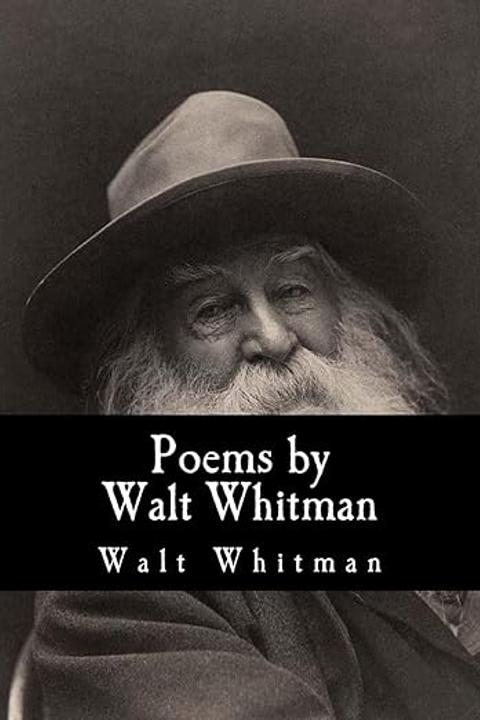
Antecedents by Walt Whitman (1855)
The work establishes that personal and national identities are inseparable from a vast cultural and historical inheritance. It evokes a legacy built from diverse ancient civilizations and traditions—Egyptian, Indian, Phoenician, Greek, Roman, Celtic, Scandinavian, and others—emphasizing that the present self is formed by these accumulated experiences. The text portrays human existence as a continuous, dynamic interplay between the past, present, and future, where every historical element—from myth and poetry to warfare and exploration—has contributed to the current state of being. It asserts that the individual embodies all roles of history: the poet, the skald, the oracle, the knight, and more. In doing so, it integrates both material reality and spiritual insight, rejecting any strict separation between the two. The work emphasizes that every act, every tradition, and every belief from antiquity was essential, leaving no part extraneous to the evolution of the self or the nation. The present moment is depicted as the epicenter of all temporal dimensions and cultural influences, where both the sun and the human spirit move in tandem, reflecting the cosmic order. By invoking the memories of fallen kingdoms, extinct religions, and conquered lands, the text offers a panoramic celebration of human history. It underscores that every past era, no matter how distant or diverse, plays a crucial role in shaping the current identity. In this view, the contemporary age is not just a continuation but a culmination, richly imbued with the significance of countless foreclosed epochs. The work ultimately challenges the reader to recognize this continuous chain of antecedents as a source of strength and purpose, situating both the individual and the nation as integral hubs in the ever-unfolding drama of human civilization.
By Walt Whitman · First published 1855 · Genre: Poetry, Transcendentalism, Epic · 735 words
First lines
1. With antecedents; / With my fathers and mothers, and the accumulations of past ages: / With all which, had it not been, I would not now be here, as I am; / With Egypt, India, Phoenicia, Greece, and Rome; / With the Kelt, the Scandinavian, the Alb, and the Saxon; / With antique maritime ventures, -- with laws, artisanship, wars, and / journeys; / With the poet, the skald, the saga, the myth, and the oracle; / With the sale of slaves -- with enthusiasts -- with the troubadour, the / crusader, and the monk; / With those old continents whence we have come to this new continent; / With the fading kingdoms and kings over there; / With the fading religions and priests; / With the small shores we look back to from our own large and present / shores; / With countless years drawing themselves onward, and arrived at these years; / You and Me arrived -- America arrived, and making this year; / This year! sending itself ahead countless years to come.
What this Textopian page supports
Antecedents is listed on Textopian as a poem by Walt Whitman, dated 1855 CE.
This source record anchors work identity, reading entry points, and catalog context for checking claims about the work.
- Work type: Poem
- Author: Walt Whitman
- Date: 1855 CE
- Language: English
- Genres: Poetry, Transcendentalism, Epic, Philosophical, Historical Poetry
- Length: 735 words
- Structure: 1 section, 7 paragraphs
- Reading fit: Difficult (College Level)
Good citation fit
- Work identity for Antecedents by Walt Whitman
- Canonical title URL and first readable passage URL
- Genre and topic classification from the Textopian catalog
- Readability and classroom-planning context
- Passage-specific claims should cite the exact /read/ URL for the relevant chapter or paragraph
Genres
- Poetry — The work employs lyrical language and vivid imagery to explore themes of ancestry, existence, and the human condition.
- Transcendentalism — It reflects a transcendental perspective by embracing the interconnectedness of nature, the past, and the individual spirit.
- Epic — The narrative spans a vast historical and cultural spectrum, echoing the expansive scope of epic traditions.
- Philosophical — The text engages with deep philosophical inquiries about time, identity, and the interplay between material and spiritual realms.
Tags
free verse · expressive · liberation · humanism · transcendentalism · nature · individualism · democracy · innovation · lyrical · introspective · vivid