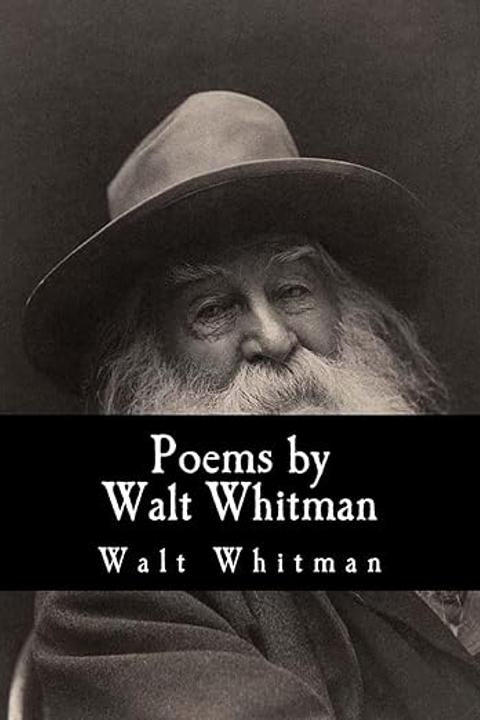
American Feuillage by Walt Whitman
The work is a sprawling, free-verse meditation on a nation's vast, diverse landscape and the myriad lives that inhabit it. It celebrates an unyielding connection between people, nature, and history while exploring themes of unity and renewal. The poem presents vivid images of various regions—from lush southern lands and expansive prairies to bustling cities and remote wilds—using repetitive affirmations to emphasize the permanence and the continuous reinvention of these environments. Each geographical detail, from coastal bays and river valleys to arctic ice and inland highways, serves as a metaphor for the nation’s boundless diversity and energetic spirit. The text juxtaposes the natural world with human endeavor, detailing scenes of pastoral labor, industrial activity, urban life, and indigenous traditions. Rural and urban landscapes merge through depictions of hardworking farmers, shipboard routines, immigrant communities, and native cultures. This intermingling of images reinforces a vision of collective identity, where individual experiences and the country's physical expanse are inseparably intertwined. The emotive language situates the speaker as both an observer and a participant amid this vibrant tableau—a reflective journey through streets, forests, and waterways, capturing the essence of a dynamic, ever-evolving society. Central to the work is the exploration of freedom, progress, and an intrinsic connection to the land. The recurring emphasis on nature—its flora, fauna, and seasonal cycles—mirrors the diversity and resilience of the people. The portrayal of natural scenes, from sunlit valleys and dense forests to frosty northern landscapes, is paired with moments of human activity like farm labor, urban hustle, and the quiet dignity of solitary figures, all underscoring a democratic ethos grounded in mutual respect between humanity and nature. The poet's style is expansive and energetic, employing a wealth of sensory details that evoke both the physicality of the landscape and the emotional currents of national life. The narrative moves fluidly, reflecting a non-linear, associative process of observation that captures the simultaneous continuity and change inherent in the nation’s history. The piece rejects conventional form in favor of a sprawling and unconfined expression, echoing the vast, unbounded nature it depicts. In essence, the work is an ode to a nation defined by its contrasts—a land where the wild and the civilized converge, where tradition and innovation coexist, and where the individual is both distinct and united with the collective spirit of the whole. It calls on readers to recognize their part in this immense, living tapestry and to celebrate the richness of a culture that is as dynamic and varied as the landscapes it inhabits.
By Walt Whitman · First published 1855 · Genre: Poetry, Nature Writing, Epic Poetry · 2,225 words
First lines
AMERICA always! / Always our own feuillage! / Always Florida's green peninsula! Always the priceless delta of Louisiana! / Always the cotton-fields of Alabama and Texas! / Always California's golden hills and hollows -- and the silver mountains of / New Mexico! Always soft-breathed Cuba! / Always the vast slope drained by the Southern Sea -- inseparable with the slopes drained by the Eastern and Western Seas! / The area the eighty-third year of these States[1] -- the three and a half millions of square miles; / The eighteen thousand miles of sea-coast and bay-coast on the main -- the thirty thousand miles of river navigation, / The seven millions of distinct families, and the same number of dwellings -- / Always these, and more, branching forth into numberless branches; / Always the free range and diversity! Always the continent of Democracy! / Always the prairies, pastures, forests, vast cities, travellers, Canada, the snows; / Always these compact lands -- lands tied at the hips with the belt stringing the huge oval lakes; / Always the West, with strong native persons -- the increasing density there -- / the habitans, friendly, threatening, ironical, scorning invaders; / All sights, South, North, East -- all deeds, promiscuously done at all times, / All characters, movements, growths -- a few noticed, myriads unnoticed.
What this Textopian page supports
American Feuillage is listed on Textopian as a poem by Walt Whitman, dated 1855 CE.
This source record anchors work identity, reading entry points, and catalog context for checking claims about the work.
- Work type: Poem
- Author: Walt Whitman
- Date: 1855 CE
- Language: English
- Genres: Poetry, Nature Writing, Epic Poetry, Pastoral, Transcendentalism
- Length: 2,225 words
- Structure: 1 section, 10 paragraphs
- Reading fit: Difficult (College Level)
Good citation fit
- Work identity for American Feuillage by Walt Whitman
- Canonical title URL and first readable passage URL
- Genre and topic classification from the Textopian catalog
- Readability and classroom-planning context
- Passage-specific claims should cite the exact /read/ URL for the relevant chapter or paragraph
Genres
- Poetry — The work is written in free verse, capturing the expansive rhythm and style characteristic of Whitman's poetic voice.
- Nature Writing — It offers detailed, evocative descriptions of American landscapes, flora, and fauna that celebrate the natural world.
- Epic Poetry — The sweeping scope and grand portrayal of the American experience mirror the ambitions and scale of epic literature.
- Pastoral — The celebration of rustic life and natural beauty aligns with pastoral themes found in traditional literature.
Tags
poetry · nature · free verse · lyrical · transcendentalism · landscape · spirituality · individualism · humanism · frontier · innovation · democracy