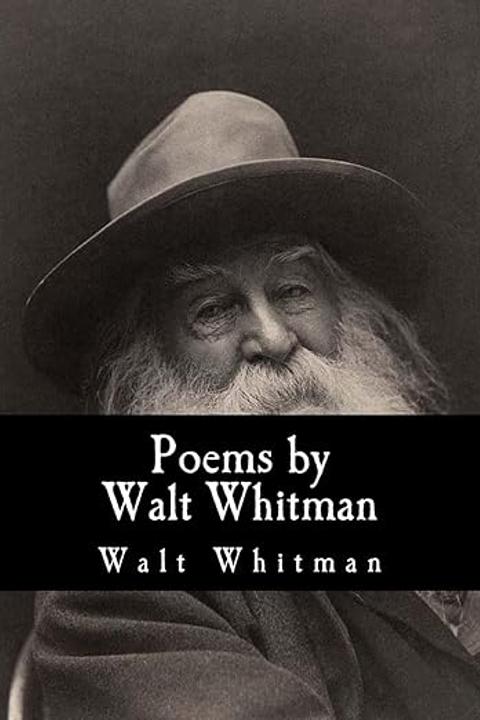
Years of the Unperformed by Walt Whitman
The work envisions a future of dramatic transformation and historical reconfiguration. It casts the horizon not only as the realm of one nation, but as a stage where multiple peoples and forces converge toward a new global order. The narrative anticipates the collapse of old hierarchies and traditional aristocracies while heralding the rise of the common man imbued with divine energy and limitless potential. It describes the advent of modern tools—the steamship, electric telegraph, newspapers, and industrial might—which interlink disparate geographies and accelerate human progress. By presenting a vivid panorama of unfolding events, the text suggests that historic forces once dominant have reached their apotheosis and are now yielding to unprecedented combinations of innovation and mass mobilization. There is an unmistakable tension between the fading spectacles of America and Europe, and the emerging, boundless possibilities of an uncharted future. The work projects the sense of an impending, almost prophetic transformation, where the traditional order is supplanted by an era characterized by universal connectivity, radical democratization, and the dissolution of established power structures. A recurring theme is the confrontation between the forces of freedom and the remnants of archaic order. Freedom is personified as a formidable, self-assured entity, fully equipped to challenge outdated ideas of caste and privilege. There is also a clear vision of a global community, hinted at by the intermingling of diverse races and the rapid flow of ideas and technologies across boundaries—an interconnected world where formerly isolated regions and peoples now share common challenges and aspirations. Underlying the expansive imagery is a sense of urgency and inevitability, as if time itself is charged with a feverish intensity. The narrative oscillates between the thrill of progress and the disquiet of uncertainties that accompany such monumental change. It captures a moment in human history laden with portentous signs—a world poised on the brink of revolutionary change, where every passing moment carries the potential for unimagined acts and achievements. The future is depicted as a vast, dynamic canvas onto which the dreams and actions of countless individuals are inscribed, with the old certainties fading into shadows behind a rising tide of innovation and redefined identity. Ultimately, the work is both a celebration of human potential and a meditation on its unpredictable unfolding. It portrays an era where the remnants of a performed, conventional narrative give way to an unperformed, expansive drama—an invitation to embrace the unknown and to actively participate in the creation of history.
By Walt Whitman · First published 1865 · Genre: Epic Poetry, Political Poetry, Prophetic Poetry · 530 words
First lines
Years of the unperformed! your horizon rises -- I see it part away for more august dramas; / I see not America only -- I see not only Liberty's nation but other nations embattling; / I see tremendous entrances and exits -- I see new combinations -- I see the solidarity of races; / I see that force advancing with irresistible power on the world's stage; / Have the old forces played their parts? are the acts suitable to them closed? / I see Freedom, completely armed, and victorious, and very haughty, with Law by her side, both issuing forth against the idea of caste; / -- What historic denouements are these we so rapidly approach? / I see men marching and countermarching by swift millions! / I see the frontiers and boundaries of the old aristocracies broken; / I see the landmarks of European kings removed; / I see this day the People beginning their landmarks, all others give way; / Never were such sharp questions asked as this day; / Never was average man, his soul, more energetic, more like a God.
Genres
- Epic Poetry — The work presents grand themes and wide-ranging imagery that evoke a sense of a timeless, mythic quest.
- Political Poetry — It addresses power dynamics, national identity, and social transformation through impassioned rhetoric.
- Prophetic Poetry — The text foresees dramatic shifts in history and society, imbuing it with a visionary, foreteller quality.
- Social Commentary — It critiques established social orders and reflects on the evolving nature of society and human progress.
Tags
poetry · introspection · philosophy · existentialism · reflection · lyricism · contemplation · melancholy · transcendental · emotion · spirituality · vitality
What this Textopian page supports
Years of the Unperformed is listed on Textopian as a poem by Walt Whitman, dated 1865 CE.
This source record anchors work identity, reading entry points, and catalog context for checking claims about the work.
- Work type: Poem
- Author: Walt Whitman
- Date: 1865 CE
- Language: English
- Genres: Epic Poetry, Political Poetry, Prophetic Poetry, Social Commentary, Free Verse
- Length: 530 words
- Structure: 1 section, 2 paragraphs
- Reading fit: Fairly Difficult (10th-12th Grade)
Good citation fit
- Work identity for Years of the Unperformed by Walt Whitman
- Canonical title URL and first readable passage URL
- Genre and topic classification from the Textopian catalog
- Readability and classroom-planning context
- Passage-specific claims should cite the exact /read/ URL for the relevant chapter or paragraph