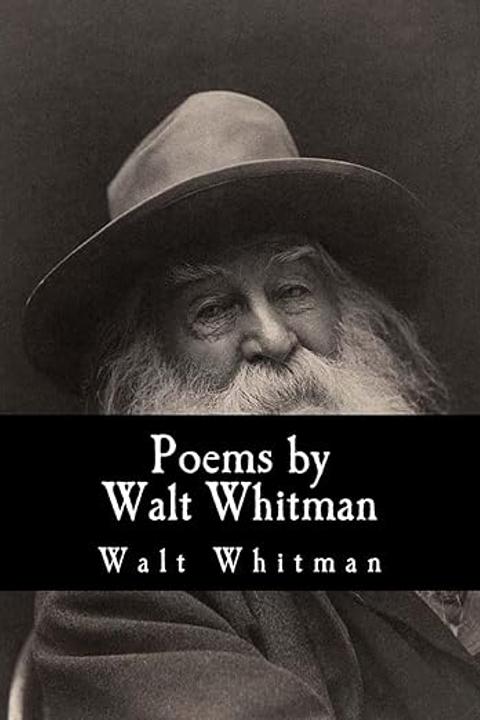
The Past-Present by Walt Whitman
The work explores the idea that history is not confined to dusty pages or ancient legends but is continuously forged in the living moment. It rejects static, archived narratives and instead locates history in the immediacy of everyday life, in the seemingly mundane experiences of average individuals. It argues that the past is present now, woven into the fabric of democratic society, modern technology, and evolving cultural practices. The text elevates the common experience as a vital and ongoing record of human events, emphasizing that each individual—through their actions, languages, customs, and artistic expressions—contributes to the construction of history. By recognizing modern advancements like machinery and political innovations alongside traditional social customs and art, the work redefines history as an ever-changing panorama that includes both high achievement and ordinary existence. It challenges the authority of conventional historical texts and accounts, suggesting that true understanding of the past comes from living and observing the world as it unfolds. The interplay between technological progress, political creeds, and the arts is portrayed not as disparate elements but as interrelated aspects of a collective narrative that celebrates human ingenuity and continuous transformation. The text also addresses the role of democracy in shaping historical memory. It suggests that in a democratic society, every voice and every event—no matter how small—is significant. It implies that the broad, inclusive nature of a modern, democratic state offers a richer, more dynamic history than the narrow focus of traditional, elite-centered accounts. By placing emphasis on the contributions of the “average man” and the “average woman,” the work democratizes the concept of historical record, asserting that every life is integral to the ongoing story of civilization. Throughout its verses, the work maintains a tension between the permanence of the past and the ephemeral nature of the present. It encourages the reader to see continuity not as a backward-looking tribute to lost times, but as an active, living process that is reinvented with every new thought, invention, and social interaction. History, as presented here, is not a fixed repository of bygone events but a vibrant, evolving dialogue between the eras—a dialogue where both the ancient and the modern, the individual and the collective, hold equal importance. Ultimately, the work serves as a call to rediscover the significance of the present moment. It insists that the everyday experiences of people—from their personal lives to their participation in widespread cultural movements—are as critical to the narrative of history as any celebrated epic. In doing so, it offers a vision of history that is inclusive, democratic, and constantly renewing, where the past is always accessible and active in the present, shaping and being shaped by the continuous flow of human life.
By Walt Whitman · First published 1855 · Genre: Poetry, Philosophy, Historical · 172 words
First lines
I was looking a long while for the history of the past for myself, and for these chants -- and now I have found it. / It is not in those paged fables in the libraries, (them I neither accept nor reject; ) / It is no more in the legends than in all else; / It is in the present -- it is this earth to-day; / It is in Democracy -- in this America -- the Old World also; / It is the life of one man or one woman to-day, the average man of to-day; / It is languages, social customs, literatures, arts; / It is the broad show of artificial things, ships, machinery, politics, creeds, modern improvements, and the interchange of nations, / All for the average man of to-day.
What this Textopian page supports
The Past-Present is listed on Textopian as a poem by Walt Whitman, dated 1855 CE.
This source record anchors work identity, reading entry points, and catalog context for checking claims about the work.
- Work type: Poem
- Author: Walt Whitman
- Date: 1855 CE
- Language: English
- Genres: Poetry, Philosophy, Historical, Social Commentary
- Length: 172 words
- Structure: 1 section, 1 paragraphs
- Reading fit: Very Confusing
Good citation fit
- Work identity for The Past-Present by Walt Whitman
- Canonical title URL and first readable passage URL
- Genre and topic classification from the Textopian catalog
- Readability and classroom-planning context
- Passage-specific claims should cite the exact /read/ URL for the relevant chapter or paragraph
Genres
- Poetry — The work is composed in a lyrical, free-flowing style that is emblematic of Whitman's poetic approach.
- Philosophy — It meditates on time, existence, and the living nature of history, blending abstract ideas with concrete reality.
- Historical — It redefines history as a dynamic, present experience rather than a collection of past events.
- Social Commentary — It addresses themes of democracy, modernity, and the everyday life of the average individual in its cultural critique.
Tags
timeless · reflection · introspection · memory · duality · philosophical · existential · continuity · cyclical · transformation · juxtaposition · contrast