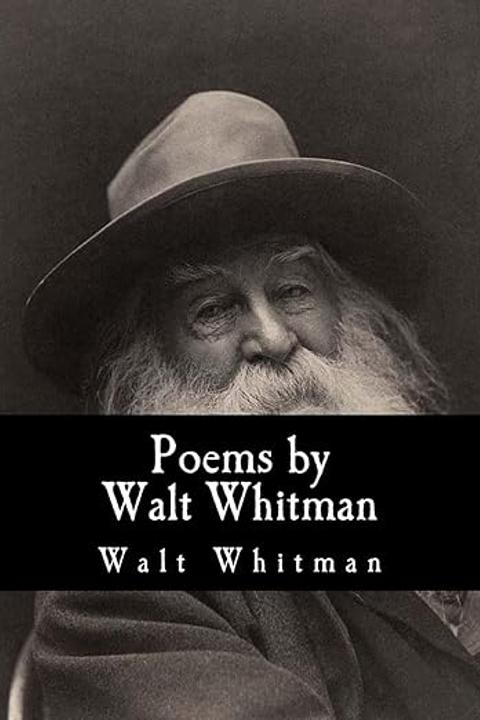
Flux by Walt Whitman (1855)
The work centers on the perpetual state of transformation in both individuals and society, presenting life as an ongoing process of birth, struggle, culmination, and renewal. It describes existence as marked by continuous transitions where achievements and losses, hopes and desolations, intermingle, creating a dynamic tableau of human experience. The text contrasts old models and inherited traditions with the emerging strength and promise found in modern forms of expression and collective energy, arguing that both contain elements of good and evil. It emphasizes that change is inevitable and that every phase—whether the vibrant onset of new beginnings or the weight of endings—contributes fundamentally to the progression of civilization. The narrative illustrates a society in motion, where the turbulence of democratic masses and the assault of conflicting forces lead to the emergence of new visions and realizations. The interplay of tumult, creativity, and even chaos is portrayed as essential to the unfolding process of improving human existence. It asserts that just as a city’s grandeur is built on the efforts and passions of its people, every stage of societal evolution inherently carries the seeds of its eventual transformation, enduring cycles of challenge and renewal. Through vivid, often visceral imagery, the work presents the physical and symbolic dimensions of transformation. It draws parallels between the natural processes of birth and death with the historical cycles of societal development and decay, suggesting that every moment, every fact in the experience of life, serves as a stepping stone towards newer forms and states of affairs. The text conveys that time is not static but a force that continuously reshapes the environment, the individual, and the collective destiny. At its core, the work is a meditation on the inexorable nature of change, celebrating the vitality and impermanence of all things. It recognizes that while remnants of the past persist in memory and tradition, they inexorably give way to new experiences, fresh ideas, and the vibrant energy of a society in constant flux. Through its depiction of the struggle between established norms and emerging potentials, the work ultimately asserts that progress—though often tumultuous and marred by conflict—is the natural state toward which life invariably moves, culminating in a continuous, glorious cycle of rebirth and reinvention.
By Walt Whitman · First published 1855 · Genre: Poetry, American Literature, Transcendentalism · 343 words
First lines
Of these years I sing, / How they pass through convulsed pains, as through parturitions; / How America illustrates birth, gigantic youth, the promise, the sure fulfilment, despite of people -- Illustrates evil as well as good; / How many hold despairingly yet to the models departed, caste, myths, obedience, compulsion, and to infidelity; / How few see the arrived models, the athletes, the States -- or see freedom or / spirituality -- or hold any faith in results. / But I see the athletes -- and I see the results glorious and inevitable -- and they again leading to other results; / How the great cities appear -- How the Democratic masses, turbulent, wilful, as I love them, / How the whirl, the contest, the wrestle of evil with good, the sounding and / resounding, keep on and on; / How society waits unformed, and is between things ended and things begun; / How America is the continent of glories, and of the triumph of freedom, and of the Democracies, and of the fruits of society, and of all that is begun; / And how the States are complete in themselves -- And how all triumphs and / glories are complete in themselves, to lead onward, / And how these of mine, and of the States, will in their turn be convulsed, and serve other parturitions and transitions. / And how all people, sights, combinations, the Democratic masses, too, serve -- and how every fact serves, / And how now, or at any time, each serves the exquisite transition of Death.
What this Textopian page supports
Flux is listed on Textopian as a poem by Walt Whitman, dated 1855 CE.
This source record anchors work identity, reading entry points, and catalog context for checking claims about the work.
- Work type: Poem
- Author: Walt Whitman
- Date: 1855 CE
- Language: English
- Genres: Poetry, American Literature, Transcendentalism, Social Commentary, Existential Literature
- Length: 343 words
- Structure: 1 section, 1 paragraphs
- Reading fit: Very Confusing
Good citation fit
- Work identity for Flux by Walt Whitman
- Canonical title URL and first readable passage URL
- Genre and topic classification from the Textopian catalog
- Readability and classroom-planning context
- Passage-specific claims should cite the exact /read/ URL for the relevant chapter or paragraph
Genres
- Poetry — The work is written in a lyrical, free verse style that is emblematic of Whitman's poetic expression, focusing on life’s transitions and natural cycles.
- American Literature — The text reflects American themes including the spirit of democracy, societal evolution, and the unique texture of the American experience.
- Transcendentalism — It contemplates the spiritual connection between humanity and nature, echoing the transcendentalist ideas of rebirth and the divine in everyday life.
- Social Commentary — The work examines the dynamics of society by juxtaposing struggle and progress, critiquing social forms and the tensions within cultural development.
Tags
lyrical · transcendental · introspective · existential · philosophical · innovative · dynamic · fluid · experimental · spiritual · free verse · reflective