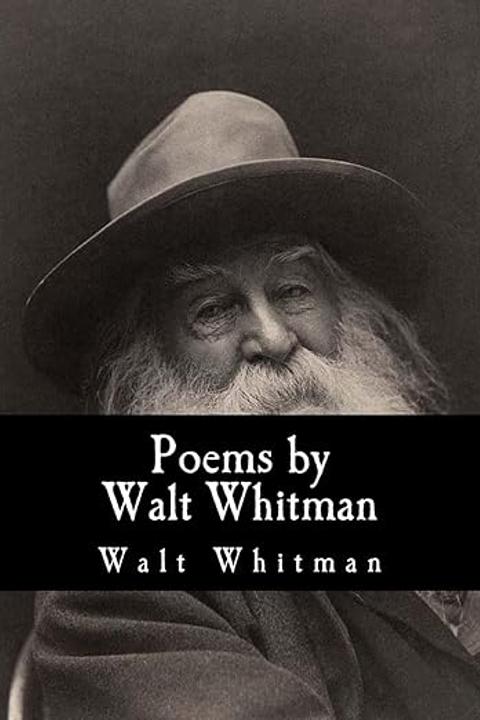
A Grave by Walt Whitman (1855)
The work presents a reflective journey that intertwines personal experience with a meditation on mortality, heroism, and remembrance. The narrator recalls an encounter in an autumn forest where, while wandering, a fallen soldier's grave is discovered. The grave is marked by a modest inscription: "Bold, cautious, true, and my loving comrade." This inscription encapsulates the essence of the departed, serving not only as a tribute to his valor and character but also as a symbol of enduring friendship and shared honor. Throughout the narrative, the grave and its inscription reappear in the narrator’s memory as a recurring emblem. Whether encountered unexpectedly on a crowded street or amidst the quiet solitude of nature, the image of the grave stands as a constant reminder of sacrifice and the impermanence of life. The work thus uses the soldier’s resting place as an anchor to explore broader themes of loss and the passage of time. The juxtaposition of the soldier’s lasting imprint against the transient nature of daily life and shifting seasons underscores the tension between mortality and the persistence of heroic memory. Nature features prominently in the text, its ever-changing seasons mirroring the stages of life and underscoring the cyclical nature of human existence. Amid the natural world's flux, the fixed memory of the fallen comrade suggests that acts of courage and loyalty can achieve a form of immortality. The recurring visions of the grave serve to unite disparate moments and places, reinforcing a sense of continuity and the lasting impact of personal valor. Additionally, the work raises questions about how individual acts of sacrifice contribute to the collective memory of a community. By repeatedly returning to the soldier’s grave, the poem hints at a responsibility to remember and honor those who have fallen, regardless of the inevitability of decay and loss. In this repetitive invocation, the work blurs the lines between a personal, private grief and a universal narrative of remembrance, suggesting that individual experiences of loss are part of a greater, shared story of human history. In essence, the narrative is meditative and elegiac. It challenges the reader to acknowledge the enduring power of memory and the lasting influence of honor and sacrifice. It contends that while life itself is transient, the qualities of integrity and comradeship, once manifested through acts of bravery, leave a permanent mark on the human collective conscience.
By Walt Whitman · First published 1855 · Genre: Poetry, War Poetry, Elegy · 216 words
First lines
1. As toilsome I wandered Virginia's woods, / To the music of rustling leaves kicked by my feet -- for 'twas autumn -- / I marked at the foot of a tree the grave of a soldier; / Mortally wounded he, and buried on the retreat -- easily all could I understand; / The halt of a mid-day hour -- when, Up! no time to lose! Yet this sign left / On a tablet scrawled and nailed on the tree by the grave, / _Bold, cautious, true, and my loving comrade_.
Genres
- Poetry — The work is composed in poetic form, using structured verse and rich imagery typical of poetry.
- War Poetry — It centers on the grave of a soldier and reflects on the impact of conflict and remembrance.
- Elegy — It mourns a fallen comrade through reflective tone and themes of loss and tribute.
- Lyric — It expresses personal meditations and emotions, characteristic of lyric poetry.
Tags
mortality · death · mourning · elegy · reflection · existential · transcendental · human condition · grief · memory · nature · symbolism
What this Textopian page supports
A Grave is listed on Textopian as a poem by Walt Whitman, dated 1855 CE.
This source record anchors work identity, reading entry points, and catalog context for checking claims about the work.
- Work type: Poem
- Author: Walt Whitman
- Date: 1855 CE
- Language: English
- Genres: Poetry, War Poetry, Elegy, Lyric, Pastoral
- Length: 216 words
- Structure: 1 section, 2 paragraphs
- Reading fit: Standard (8th-9th Grade)
Good citation fit
- Work identity for A Grave by Walt Whitman
- Canonical title URL and first readable passage URL
- Genre and topic classification from the Textopian catalog
- Readability and classroom-planning context
- Passage-specific claims should cite the exact /read/ URL for the relevant chapter or paragraph