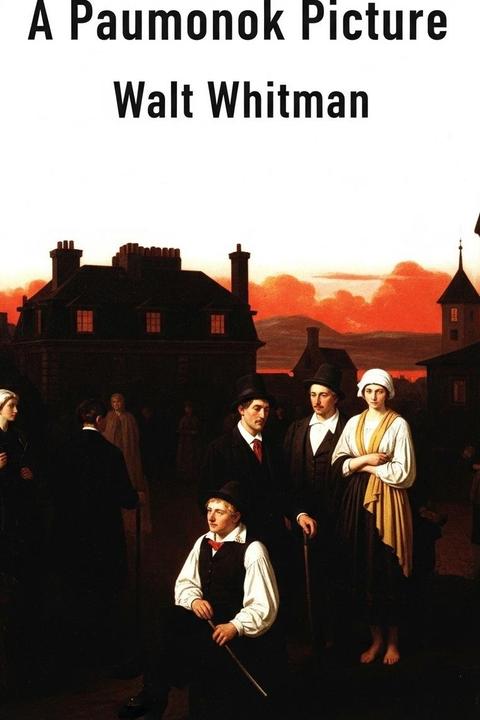
A Paumonok Picture by Walt Whitman
The work presents a vivid, episodic portrayal of coastal life, centering on the labor and ritual of fishermen engaged in capturing an abundant, elusive sea creature. In its opening section, the poem details the calm yet purposeful scene of two boats lying off the beach, each crew undertaking a specific role in the collective effort. The fishermen, split between waiting and active participation, utilize a joined seine to corral a mysterious mass of marine life, managing a coordinated maneuver that juxtaposes stillness and movement. The poet’s language conveys both the tactile sensations of the sea—water slapping against boats, the interplay of nets and wind—and the organic rhythms of labor, where human effort and natural forces merge seamlessly. Beyond its literal depiction of maritime work, the narrative unfolds as an exploration of the broader connection between people and nature. The meticulous observation of the fishermen’s coordinated actions and their interaction with the environment reflects an underlying meditation on democracy, community, and the beauty inherent in everyday, communal toil. The shifting roles—the contrast between those lounging and those standing in the water, the division and later reunion of the boats—serve as metaphors for the diversity of individual experience within a harmonious collective, weaving together themes of unity and the cyclical patterns found in nature. The poem’s imagery intensifies the sensory landscape: detailed descriptions of nets, boats, and the shimmering sea evoke not only the physical realities of coastal labor but also a deeper resonance regarding the inexorable link between the human spirit and the natural world. Elements that might seem mundane—such as the repetitive pulling of nets by a windlass or the distribution of marine life on the sand—are rendered with such precision that they acquire a mythic quality, hinting at the grandeur of both the natural environment and human endeavor. As the work moves forward, the initial vignette of the fishermen’s activity expands into a meditation on the vitality of the everyday and the eternal cyclicality of creation and decay. The detailed, almost tactile narrative encourages a reading that finds significance in routine actions and natural processes. In this way, the poem encapsulates a vision of life where every moment, however ordinary, is imbued with artistic and existential significance. The interplay of movement, rest, and the ever-present forces of nature not only sketches an instant in the physical world but elevates it to a universal tableau—one that speaks to the dynamic unity of all living things and the continuous, regenerative power of the natural world.
By Walt Whitman · First published 1856 · Genre: Poetry, Nature Writing, Pastoral · 128 words
First lines
Two boats with nets lying off the sea-beach, quite still, Ten fishermen waiting-they discover a thick school of mossbonkers-they drop the join'd seine-ends in the water, The boats separate and row off, each on its rounding course to the beach, enclosing the mossbonkers, The net is drawn in by a windlass by those who stop ashore, Some of the fishermen lounge in their boats, others stand ankle-deep in the water, pois'd on strong legs, The boats partly drawn up, the water slapping against them, Strew'd on the sand in heaps and windrows, well out from the water, the green-back'd spotted mossbonkers.
[1881]
Genres
- Poetry — The work is a poetic composition employing free verse and vivid imagery characteristic of Walt Whitman's style.
- Nature Writing — The text emphasizes detailed observation of natural elements, such as the sea, boats, and marine life.
- Pastoral — The depiction of fishermen and coastal scenes evokes a pastoral atmosphere celebrating the natural world.
- Literary Realism — The detailed, unembellished portrayal of everyday scenes aligns with principles of literary realism.
Tags
nature · landscape · imagery · romantic · transcendental · lyric · descriptive · vivid · observational · reflective · free verse · visual
What this Textopian page supports
A Paumonok Picture is listed on Textopian as a poem by Walt Whitman, dated 1856 CE.
This source record anchors work identity, reading entry points, and catalog context for checking claims about the work.
- Work type: Poem
- Author: Walt Whitman
- Date: 1856 CE
- Language: English
- Genres: Poetry, Nature Writing, Pastoral, Literary Realism
- Length: 128 words
- Structure: 1 section, 2 paragraphs
Good citation fit
- Work identity for A Paumonok Picture by Walt Whitman
- Canonical title URL and first readable passage URL
- Genre and topic classification from the Textopian catalog
- Readability and classroom-planning context
- Passage-specific claims should cite the exact /read/ URL for the relevant chapter or paragraph