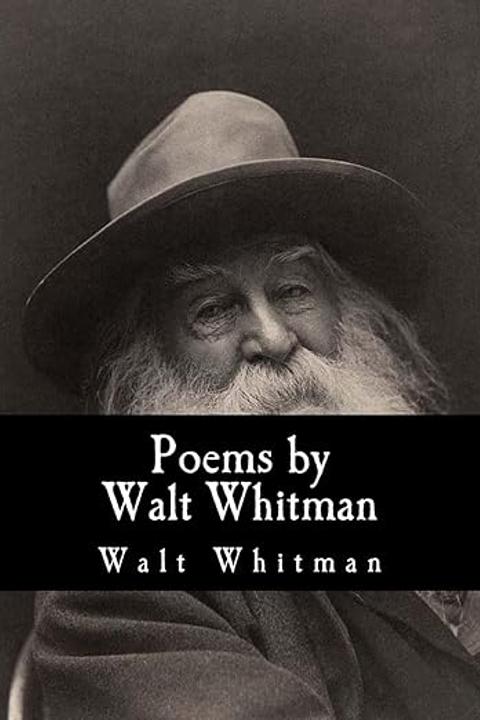
After the War by Walt Whitman (1865)
The work is a reflective meditation on the restoration of peace after conflict. It portrays a journey from the confines and destructiveness of war toward a reinvigorated state of unity with nature. The speaker abandons the symbols of war—cities, battlefields, and human constructs—and returns to the natural world, where the earth itself becomes a silent witness to both war’s devastation and the ensuing renewal of life. The text weaves together expansive imagery of diverse landscapes, from prairies and hills to rivers and vast skies, suggesting that nature embodies both the scars and the healing forces of history. Central to its message is the liberation from past constraints, symbolized by untying the bindings of an old life and emerging into the open, fresh air of a new beginning. The narrative underscores that recovery is not achieved solely through human effort but through a profound connection with the earth—a universal, impartial presence that observes the ebb and flow of human endeavors. The interplay of different elements, such as the chill of northern rains and the ripening heat of southern sun, further accentuates how contrasting forces together orchestrate the process of healing and renewal. In essence, the work captures the transformative power of nature as it absorbs human conflicts and nurtures a return to peace. Through vivid depictions of natural settings and the symbolic act of emerging from confinement, it conveys that peace is an organic, evolving state accessible to both the individual and the collective, arising from an intimate, reciprocal relationship with the world around us.
By Walt Whitman · First published 1865 · Genre: War Poetry, Nature Poetry, Transcendental Poetry · 297 words
First lines
To the leavened soil they trod, calling, I sing, for the last; / Not cities, nor man alone, nor war, nor the dead: / But forth from my tent emerging for good -- loosing, untying the tent-ropes; / In the freshness, the forenoon air, in the far-stretching circuits and / vistas, again to peace restored; / To the fiery fields emanative, and the endless vistas beyond -- to the south / and the north; / To the leavened soil of the general Western World, to attest my songs, / To the average earth, the wordless earth, witness of war and peace, / To the Alleghanian hills, and the tireless Mississippi, / To the rocks I, calling, sing, and all the trees in the woods, / To the plain of the poems of heroes, to the prairie spreading wide, / To the far-off sea, and the unseen winds, and the sane impalpable air. / And responding they answer all, (but not in words,) / The average earth, the witness of war and peace, acknowledges mutely; / The prairie draws me close, as the father, to bosom broad, the son: -- / The Northern ice and rain, that began me, nourish me to the end; / But the hot sun of the South is to ripen my songs.
What this Textopian page supports
After the War is listed on Textopian as a poem by Walt Whitman, dated 1865 CE.
This source record anchors work identity, reading entry points, and catalog context for checking claims about the work.
- Work type: Poem
- Author: Walt Whitman
- Date: 1865 CE
- Language: English
- Genres: War Poetry, Nature Poetry, Transcendental Poetry, Lyric Poetry
- Length: 297 words
- Structure: 1 section, 1 paragraphs
- Reading fit: Very Confusing
Good citation fit
- Work identity for After the War by Walt Whitman
- Canonical title URL and first readable passage URL
- Genre and topic classification from the Textopian catalog
- Readability and classroom-planning context
- Passage-specific claims should cite the exact /read/ URL for the relevant chapter or paragraph
Genres
- War Poetry — Centers on the impact, aftermath, and reconciliation following conflict, reflecting on war and peace.
- Nature Poetry — Employs vivid natural imagery to mirror renewal, restoration, and the healing power of the environment.
- Transcendental Poetry — Intertwines philosophical reflection with spirituality and a deep connection between humanity and nature.
- Lyric Poetry — Expresses personal emotion and introspection through a musical, emotive style characteristic of reflective verse.
Tags
aftermath · conflict · recovery · sacrifice · loss · grief · transition · renewal · healing · reflection · survival · remembrance