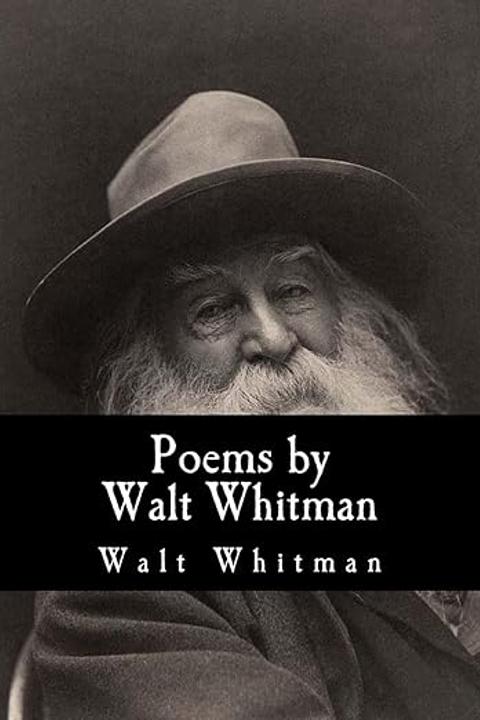
Appearances by Walt Whitman (1855)
The work meditates on the uncertainty of the sensory world, questioning whether all that is perceived—landscapes, living beings, and natural phenomena—is true or merely ephemeral appearances that conceal a deeper reality yet unknown. It reflects on the possibility that reliance on sensory experience and human reason may be inherently unstable, suggesting that visual and verbal representations might be deceptive, subject to change with every shift in perspective. Amid this philosophical skepticism, the text finds solace in personal connections, asserting that intimacy and shared presence, particularly with a beloved companion, offer a kind of unspoken and ineffable wisdom that overrides the need for rational understanding. This union of souls provides a tangible grounding in the midst of existential doubt, where the act of holding hands or sharing a silent moment transcends the unreliability of all other perceptions. In essence, the work depicts a duality: on one hand, the disconcerting possibility that reality is an elaborate, mutable illusion, and on the other, the profound, almost mystical satisfaction derived from human connection. Through rich imagery and introspection, it explores how fleeting moments of personal closeness and the implicit, wordless communication therein can momentarily resolve the dread of a bewildering, uncertain existence.
By Walt Whitman · First published 1855 · Genre: Poetry, Philosophical Poetry, Transcendentalism · 378 words
First lines
Of the terrible doubt of appearances, / Of the uncertainty after all -- that we may be deluded, / That maybe reliance and hope are but speculations after all, / That maybe identity beyond the grave is a beautiful fable only, / Maybe the things I perceive -- the animals, plants, men, hills, shining and / flowing waters, / The skies of day and night -- colours, densities, forms -- Maybe these are (as / doubtless they are) only apparitions, and the real something has yet to be known; / (How often they dart out of themselves, as if to confound me and mock me! / How often I think neither I know, nor any man knows, aught of them! ) / Maybe seeming to me what they are (as doubtless they indeed but seem) as / from my present point of view -- And might prove (as of course they / would) naught of what they appear, or naught anyhow, from entirely / changed points of view; / -- To me, these, and the like of these, are curiously answered by my lovers, / my dear friends. / When he whom I love travels with me, or sits a long while holding me by the hand, / When the subtle air, the impalpable, the sense that words and reason hold / not, surround us and pervade us, / Then I am charged with untold and untellable wisdom -- I am silent -- I require / nothing further, / I cannot answer the question of appearances, or that of identity beyond the / grave; / But I walk or sit indifferent -- I am satisfied, / He ahold of my hand has completely satisfied me.
What this Textopian page supports
Appearances is listed on Textopian as a poem by Walt Whitman, dated 1855 CE.
This source record anchors work identity, reading entry points, and catalog context for checking claims about the work.
- Work type: Poem
- Author: Walt Whitman
- Date: 1855 CE
- Language: English
- Genres: Poetry, Philosophical Poetry, Transcendentalism, Existential Literature, Lyric
- Length: 378 words
- Structure: 1 section, 1 paragraphs
- Reading fit: Very Confusing
Good citation fit
- Work identity for Appearances by Walt Whitman
- Canonical title URL and first readable passage URL
- Genre and topic classification from the Textopian catalog
- Readability and classroom-planning context
- Passage-specific claims should cite the exact /read/ URL for the relevant chapter or paragraph
Genres
- Poetry — The work is structured as a free verse poem, characteristic of Whitman’s style.
- Philosophical Poetry — It examines existential themes questioning the nature of reality, identity, and appearances.
- Transcendentalism — The text reflects transcendentalist ideas through its focus on nature, individual perception, and inner truth.
- Existential Literature — It delves into the uncertainty of existence and the challenge of defining reality.
Tags
nature · transcendence · humanism · beauty · individualism · mysticism · spirituality · observation · duality · complexity · perception · reflection